
HDB aims for smarter, cooler flats with research collaborations
SINGAPORE — The Housing and Development Board (HDB) has signed two research collaborations with companies to make flats more resilient to climate change and better suited to smart technologies.
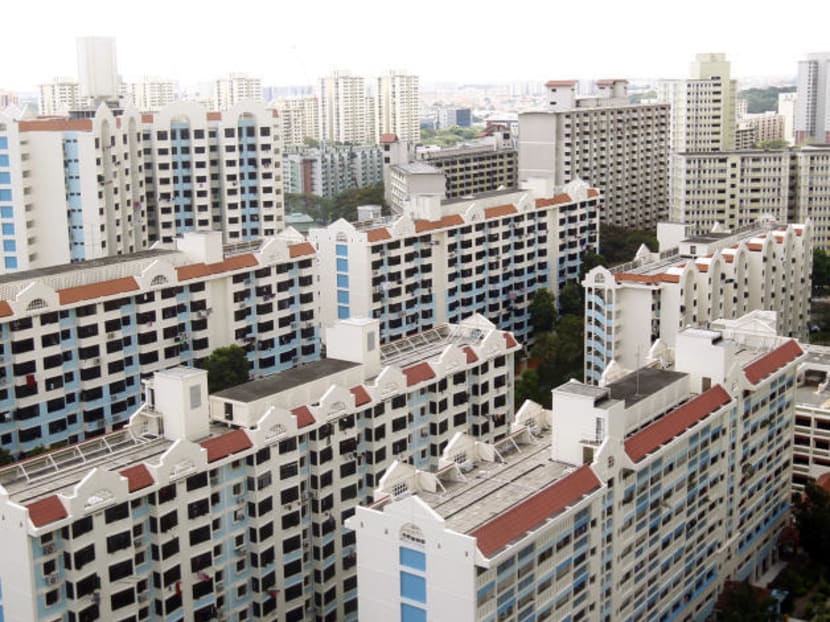
The Housing and Development Board said that rising temperatures have made it more challenging to reduce heat gain in daylight and cool buildings in an energy-efficient manner.



SINGAPORE — The Housing and Development Board (HDB) has signed two research collaborations with companies to make flats more resilient to climate change and better suited to smart technologies.
One, with material science firm Evonik, will study ways to improve the thermal insulation of flats so that they can better deal with rising temperatures and enhance the performance of concrete for 3D printing.
The other, with technology company V-Key, will look into developing an open and secure ecosystem in HDB’s smart-enabled flats that enables the use of a variety of smart appliances across brands.
BETTER HEAT INSULATION
Rising temperatures have made it more challenging to reduce heat gain in daylight and cool buildings in an energy-efficient manner, HDB said in a statement on Tuesday (July 23).
One possible solution: Evonik’s Calostat, a silicon-based material which is sustainable, non-combustible, pressure-resistant and able to repel water.
It is already adopted in developments in Germany, Switzerland and London, and HDB will study the incorporation of the material into the secondary roof panel of HDB buildings to improve its thermal insulation.
Trials will assess how the material will affect other properties of the secondary roof panel, such as its structural strength and water-repelling capabilities, before it could potentially be applied to other parts beyond the roof.
ENHANCING CONCRETE FOR 3D PRINTING
The use of 3D printing could offer more design options for HDB developments, raise construction productivity and reduce the dependency on conventional precast fabrication workers, the housing authority said.
The study with Evonik seeks to improve the strength and workability of such concrete through the use of special additives, which are known to increase the early strength, homogeneity and flowability of the concrete.
This will allow for the smooth laying of concrete and ensure that printed layers are well-bonded.
If successful, this could pave the way for new standards in the concrete pre-mix for 3D-printed components.
SMART-ENABLED FLATS
HDB is also testing the use of digital infrastructure such as smart distribution boards and smart sockets.
HDB’s collaboration with V-Key will study ways to enhance the smart distribution boards in smart-enabled flats, which would be useful for smart home appliances that do not have a built-in gateway.
Such appliances would include smart lighting, motion sensors and smart curtains, so that residents could, for example, have lights switched on and curtains drawn automatically when they step into a room.
Residents could also install a monitoring system for elders at home. This is a system of motion sensors that can detect and learn the movements of these persons and alert caregivers if their regular movements are not detected.
Related topics
HDB housing flats V-Key heat insulation smart homeStay in the know. Anytime. Anywhere.

Subscribe to our newsletter for the top features, insights and must reads delivered straight to your inbox.
By clicking subscribe, I agree for my personal data to be used to send me TODAY newsletters, promotional offers and for research and analysis.






