
Historian Thum questions intention of public hearing ‘grilling’ by Shanmugam
SINGAPORE – Singaporean historian Thum Ping Tjin has questioned the motive behind the “grilling” by Law and Home Affairs Minister K Shanmugam at Thursday’s hearing before the Parliamentary Select Committee for Deliberate Online Falsehoods.
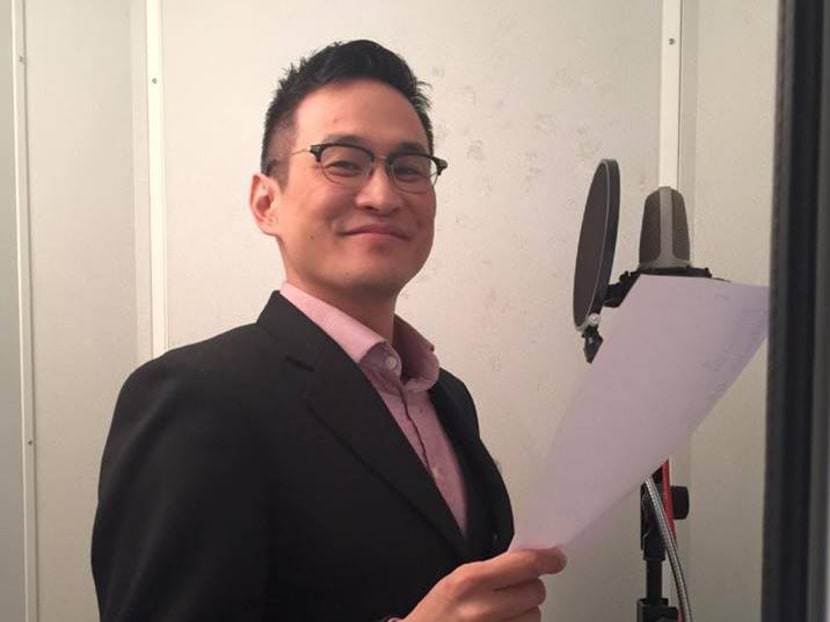
Singaporean historian Thum Ping Tjin has questioned the motive behind the “grilling” by Law and Home Affairs Minister K Shanmugam at Thursday’s hearing before the Parliamentary Select Committee for Deliberate Online Falsehoods. Photo: Thum Pingtjin/Facebook

SINGAPORE – Singaporean historian Thum Ping Tjin has questioned the motive behind the “grilling” by Law and Home Affairs Minister K Shanmugam at Thursday’s hearing before the Parliamentary Select Committee for Deliberate Online Falsehoods.
In a Facebook post on Friday, Dr Thum described the marathon exchange with Mr Shanmugam – lasting about six hours, it was the longest single session before the committee – as a “surreal day”.
The session, which turned testy on occasion, saw both men engaging in a back and forth on Dr Thum’s interpretation of events in Singapore’s history, which he cited in his submission to the panel. This included Operation Coldstore, a 1963 internal security operation that saw more than 100 alleged leftist leaders and trade unionists arrested and detained.
In his submission, which argued against legislation to tackle the problem of fake news, Dr Thum said that historically, Singapore has not had any issues with deliberate falsehoods.
The only falsehood that has been deliberately peddled has come from the People’s Action Party (PAP) Government, which used it for “narrow party political gain”, and he cited Operation Coldstore as one such example.
In his submission, however, Dr Thum said there is no evidence that the detainees were involved in any violent communist conspiracy to overthrow the Singapore government, and that the operation was conducted for political purposes.
In questioning Dr Thum, Mr Shanmugam sought to discredit the academic’s position, saying that he had disregarded evidence from key figures such as CPM secretary-general Chin Peng in his work. Concluding his questioning on Thursday, Mr Shanmugam said Dr Thum had “breached a number of rules” with regard to academic historical processes, and that he had “fallen completely through the standard of an objective historian”.
Yesterday, Dr Thum defended his work in his public post: “My work on Coldstore, and my central argument that the detainees of Coldstore were not involved in any communist conspiracy easily withstood six hours of assault by the Minister for Law and Home Affairs, but I wonder what his motivation was in grilling me about my academic work at a panel that is supposed to be about Deliberate Online Falsehoods.
“The crux of my submission was not addressed. He also avoided any discussion of Operation Spectrum (1987), which is an even clearer case of a deliberate falsehood by the Singapore government.
“Instead, significant resources appear to have been marshalled with the singular purpose of demolishing scholarly work.”
He alleged that his experience would “intimidate and instill fear into anyone who contradicts the official government narrative.”
He also alleged that academic freedom and inquiry were suppressed in Singapore.
TODAY has reached out to the Select Committee for their response to Dr Thum’s comments.
Stay in the know. Anytime. Anywhere.

Subscribe to our newsletter for the top features, insights and must reads delivered straight to your inbox.
By clicking subscribe, I agree for my personal data to be used to send me TODAY newsletters, promotional offers and for research and analysis.






