
Jail for woman, 47, who used forged documents to trick housemate into lending her over S$400,000
SINGAPORE — A woman was sentenced to 20 months’ jail on Tuesday (Feb 6) after she used various forged documents to pretend to be wealthy to trick her housemate into lending her large sums of money.
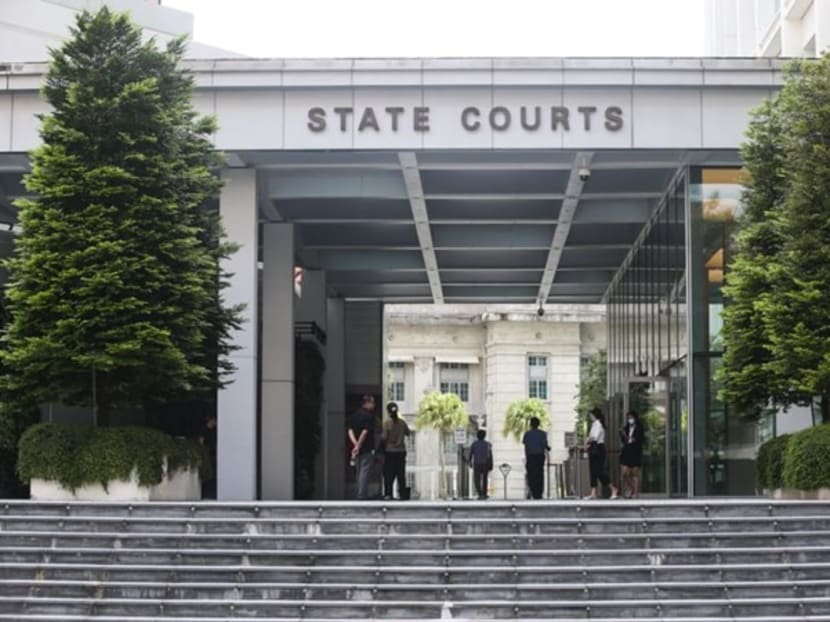
File photo of the Singapore State Courts.


This audio is AI-generated.
- Tjheng A Liem used various forged documents such as a land title to trick her housemate into believing that she was wealthy
- She did this with the goal of making the man comfortable to lend her large sums of money
- The housemate, a fellow Indonesian national, eventually lent her more than S$400,000 in some 70 transactions
- On Tuesday (Feb 6), Liem, 47, was sentenced to 20 months' jail for forgery-related offences
- The judge noted that the accused has made "very substantial" restitution, resulting in a lighter sentence


SINGAPORE — A woman was sentenced to 20 months’ jail on Tuesday (Feb 6) after she used various forged documents to pretend to be wealthy to trick her housemate into lending her large sums of money.
In November, Tjheng A Liem, a 47-year-old Indonesian, pleaded guilty to five forgery-related charges, with another seven similar charges taken into consideration for sentencing.
Her case was adjourned for sentencing to Tuesday after the judge granted Liem time to settle her affairs and make further restitution to her victim.
Through her ruse, the woman managed to borrow over 4.63 billion Indonesian rupiah and S$10,000 — roughly equivalent to more than S$400,000 at prevailing exchange rates — from the victim.
In its original submission in November, the prosecution sought a jail term of between 32 and 40 months.
On Tuesday, in view of almost complete restitution Liem had made to the victim since November, the prosecution asked for a shorter term of between 22 months and 26 months.
WHAT HAPPENED
The court heard earlier that Liem got to know the victim, an Indonesian man, sometime in September 2021 when they were living in the same housing unit at People’s Park Complex in Chinatown.
They became friends and Liem later told her housemate that she had excess money from selling a property and some company shares, among other assets.
Liem also claimed that her bank accounts had been frozen by Singapore tax authorities as she had "overdue taxes".
The court heard that Liem told the victim these stories to lead him to believe that she was wealthy, so that he would be more willing to lend money to her.
Liem later asked to borrow money from him while telling him that she had some personal problems. The housemate agreed, because he was hoping that he could eventually do business with her.
To sustain his belief that she was wealthy, she instructed someone based in Indonesia to help her forge several documents, which she then showed to the housemate.
It is not clear if any legal action is being taken against the person who helped her do this.
The forged documents, produced from about January 2022 onwards, included a property title deed, legal documents and bank letters.
One fake document purportedly showed that she was to receive in excess of S$4 million for selling a private property.
Sometime in April 2022, she showed the housemate a forged cheque that she said she was going to issue in his name, to convince him that she had instructed that part of the property sale proceeds would be channelled to him.
However, seeing that she had “constantly made excuses” to delay repayment of her loan, the housemate began suspecting that she was cheating him and made a police report in September 2022.
By that time, he had already lent her the equivalent of roughly more than S$400,000 in total — in more than 70 transactions.
RESTITUTION DOES NOT WARRANT LIGHT SENTENCE
In November, the court heard that Liem had returned 1.375 billion rupiah (S$117,300) to the victim.
On Tuesday, the prosecution noted that a total of 4.64 billion rupiah in restitution has been made by the accused, with a total outstanding amount of about S$9,300 from the original amount scammed.
However, the prosecution noted that restitution is but one of the factors in Liem's offending.
She had also engaged another person to forge multiple documents to keep up her deception, which indicates premeditation.
The nature of the documents forged was also “significant" as they “affect the integrity and trust reposed in” the authorities and related institutions whose names were misused in the fraudulent documents, the prosecution submitted.
In sentencing, District Judge Elton Tan said the extent of deception was “considerable and showed a degree of sophistication”.
“It did not consist of a single lie, but rather layers of deception,” said the judge.
District Judge Tan noted that Liem had made “very substantial” restitution.
While the judge accepted that the restitution was indicative of Liem’s remorse, resulting in a less harsh sentence, “it does not mean that the accused need not be punished at all or should only be punished lightly”, reiterating the aggravating factors mentioned.
After the sentencing, Liem, who was not represented by a lawyer and addressed the court through an Indonesian interpreter, asked to start her jail term at a later date.
She said that she had borrowed money from her friends in order to make restitution to the victim, and would need time to sell properties in Indonesia and clear off her debt before serving her sentence.
The judge granted a deferment of her sentence to March 5.
For each forgery-related charge, she could be jailed for up to 10 years and fined.
Related topics
court financial crime cheatStay in the know. Anytime. Anywhere.

Subscribe to our newsletter for the top features, insights and must reads delivered straight to your inbox.
By clicking subscribe, I agree for my personal data to be used to send me TODAY newsletters, promotional offers and for research and analysis.





