
Keppel bribery: Witness' unwillingness to testify, an individual's denial of wrongdoing hampered prosecution of ex-senior executives, says Indranee
SINGAPORE — The unwillingness of a foreign witness to give evidence in Singapore and another individual’s denial of wrongdoing were among the hurdles faced by the prosecution in mounting a case against six senior management staff members of Keppel Offshore and Marine (O&M).
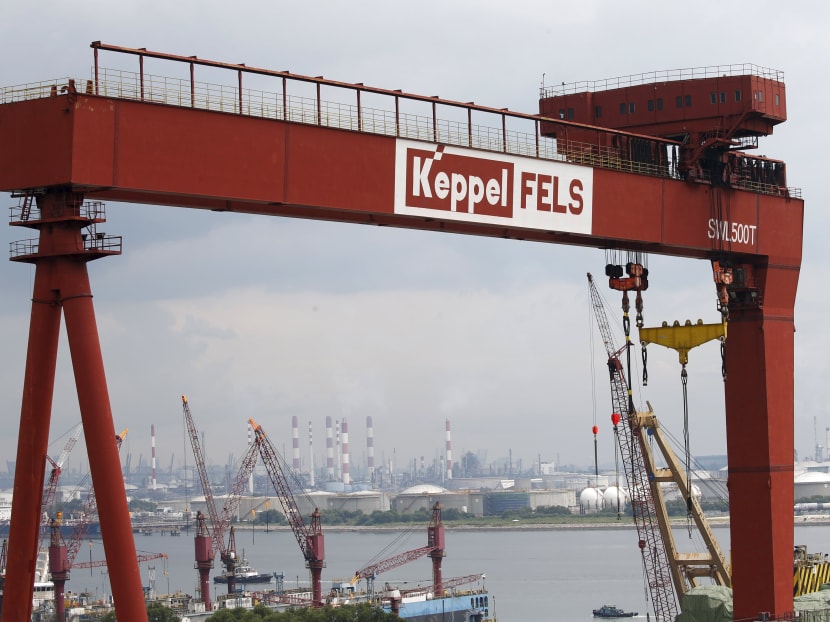

- Ms Indranee Rajah, Minister in the Prime Minister's Office, gave reasons why six former Keppel Offshore and Marine executives were given stern warnings in a bribery case
- She gave more details on why the Singapore authorities were unable to gather enough evidence, despite some witnesses' confession overseas
- She explained why it would not be prudent for public prosecutors to file charges when they had not enough evidence


SINGAPORE — The unwillingness of a foreign witness to give evidence in Singapore and another individual’s denial of wrongdoing were among the hurdles faced by the prosecution in mounting a case against six senior management staff members of Keppel Offshore and Marine (O&M).
Responding to questions by Members of Parliament (MPs) from both sides of the aisle on Monday (Feb 6), Ms Indranee Rajah, Minister in the Prime Minister’s Office, said that the Corrupt Practices Investigation Bureau (CPIB) issued stern warnings to the unnamed individuals instead of proceeding to charge them.
Ms Indranee also said that from 2017 to 2021, an average of 138 warnings were issued and 139 individuals were prosecuted each year.
“Stern warnings are not unusual, being used in cases where there are evidential difficulties or little public interest to prosecute.”
As a matter of policy, CPIB does not disclose names of individuals unless they are charged in court, to avoid prejudicing that individual’s right to due process and also avoid any presumption of guilt, she added.
She welcomed any MP who felt that this practice should be changed to step forward, noting that it would be a major change in policy.
“But please note, if members want a change, then it cannot be only for this case, it must be for all future cases.”
WHY IT MATTERS
Keppel O&M — part of Keppel Corporation, one of the largest conglomerates here — had allegedly conspired with others between 2001 and 2014 to pay large bribes to officials of Brazilian state-owned oil company Petrobras to influence the securing of 13 projects in Brazil.
The illegal payments were purportedly concealed through consulting agreements with shell companies, with Keppel O&M and its related companies earning profits of more than US$350 million (S$460 million) from business corruptly obtained in Brazil.
These facts were admitted by Keppel O&M in an agreed statement of facts it signed with the United States Department of Justice in 2017, as part of a deferred prosecution agreement.
As part of a global resolution involving the US Department of Justice and the authorities in Brazil and Singapore, Keppel O&M paid US$422 million in fines.
CPIB in January issued stern warnings to the six former senior management staff members of Keppel O&M.
Keppel O&M also received a conditional warning in lieu of prosecution.
The affair has in the past been dubbed a "black eye to Singapore Inc" given the country's clean reputation on corruption.
WHY THERE WAS A LACK OF EVIDENCE
Ms Indranee outlined the key reasons why there was not enough evidence for the prosecutors to mount a charge against the individuals:
- A "foreign witness" had given evidence in other proceedings that could have been relevant in establishing the offences in Singapore
- However, the said witness was not willing to give evidence here
- In addition, an individual had entered a plea bargain in another jurisdiction in relation to his involvement in the bribery case
- “When this individual was investigated by CPIB on his return to Singapore, he denied knowing that commissions paid to the agent in Brazil were paid out as bribes,” Ms Indranee said
- He also did not implicate himself or others during CPIB investigations
The individual who entered a plea bargain relates to former senior member of Keppel O&M legal department Jeffrey Chow, who in 2017 cut a deal with US authorities to help prosecutors in their probe of the company and other former executives, reported Reuters.
According to a court document filed in August 2017, Chow was charged for creating and executing false agreements for the company, which falsely represented that payments were being made to an agent for his services, when in fact portions of the payments were being paid as bribes.
Ms Indranee also said: “Even if the (public prosecutor) applies to a Singapore court to admit the plea agreement, the agreement did not identify any specific individuals and was made in the context of a plea bargain, and will be given limited weight without further supporting evidence and in the face of potentially conflicting oral testimony.”
Dr Tan Wu Meng, an MP for Jurong Group Representation Constituency, asked whether the Attorney-General and public prosecutors had assessed that “prosecution would be an uphill task in and of itself, or outright impossible given the available facts”.
Ms Indranee clarified that before filing charges, the test applied was whether there was a reasonable prospect of obtaining a conviction.
“Otherwise, if you just go around filing charges with insufficient basis, that would not make for a strong justice system,” she said.
AGC (Attorney-General's Chambers) thus felt that it was not able to get over the threshold in this particular case.
Ms Indranee also called upon MPs who felt that the public prosecutors should have proceeded to bring charges against the individuals, given the reality of the situation, to let her know and give her the reason for them taking such a stance.
WERE KEPPEL’S BOARD MEMBERS AWARE AT MATERIAL TIME?
Leader of the Opposition Pritam Singh asked whether investigations had found that Keppel’s board of directors at the material time had “constructive knowledge” of corrupt payments made to secure contracts in Brazil.
The Workers’ Party (WP) chief also asked about the total number of mutual legal assistance requests sent to other jurisdictions and their outcome.
In her responses:
- Ms Indranee said that constructive knowledge of an offence does not constitute an offence under the Prevention of Corruption Act
- As such, “there's no reason for CPIB to be investigating this” since it only investigates offences under the Act
- Ms Indranee reiterated her earlier replies that three mutual legal assistance requests were sent to Brazil to secure evidence and one more to another foreign authority
“They haven't yielded the evidence that could be used to secure conviction, or the responses haven't been helpful,” she said
“Whatever CPIB has been able to do or to uncover to us in its investigations in Singapore with respect to Keppel, it has done.”
She stressed that the problem lies in the unavailability of key material witnesses.
“That is the hurdle that they have not been able to overcome,” she added.
DEALING WITH BRIBERY OVERSEAS
Aljunied Group Representation Constituency (GRC) MP Gerald Giam asked if there had been occasions where the Government was aware of Singaporeans paying bribes to foreign officials but decided not to take them to task on the basis that bribery is sometimes seen as necessary to win contracts in countries where corruption in rife.
In her response, Ms Indranee repeated the Government’s strict stance against corruption.
- She said that the authorities will investigate if it comes to their attention that an act of bribery or an offence has been committed
- The authorities will also pursue such cases in court if there is enough evidence to do so
- “If the suggestion is that we're somehow condoning bribery overseas, the answer is no,” she said
- She noted that Singapore companies overseas operate in a myriad of environments with different business practices
- “However, what we can do is insulate our companies and our system against corruption,” she said
- “Our companies must find a way to do business cleanly wherever they do business. And people must know that's how we operate,” she added
STERN WARNING A ‘SOMETHING IN BETWEEN’
Mr Leon Perera, an Aljunied GRC MP, asked what was the basis of issuing stern warnings to six of Keppel’s executives, given “the insufficiency of evidence to mount charges”.
In her reply, Ms Indranee said that such warnings are issued when “you can't say that you give a complete, clean bill of health but at the same time, you don't have enough to clear the evidentiary hurdle”.
- She said that three options are available in such circumstances: Do nothing at all, bring charges while not having enough evidence, or a “something in between”
- Giving a stern warning is a signal or a marker by the AGC to say that it knows something is “not entirely right” but it does not have enough to mount a charge
- If the AGC had “thrown up its hands” and closed investigations, “that, too, would not have been the correct thing to do,” she added
Related topics
Keppel O&M bribery ParliamentStay in the know. Anytime. Anywhere.

Subscribe to our newsletter for the top features, insights and must reads delivered straight to your inbox.
By clicking subscribe, I agree for my personal data to be used to send me TODAY newsletters, promotional offers and for research and analysis.






