
'Behave, or I'll call the police!': Kids told 'instrumental lies' more likely to lie to parents, NTU study finds
SINGAPORE — Parents who lie to their children to make them better behaved may indirectly encourage their young ones to lie as well, a new study has found.


This audio is AI-generated.
- A new study by Nanyang Technological University researchers found that "parenting by lying" may indirectly encourage children to lie
- "Instrumental lies", such as false threats or promises, were found to make children more likely to lie to their parents
- However, in the case of white lies, children were more likely to lie to their parents only if they knew the parents had lied to them
- The findings suggest that kids exposed to instrumental lies may have learnt that such lies are effective in achieving a certain purpose


SINGAPORE — Parents who lie to their children to make them better behaved may indirectly encourage their young ones to lie as well, a new study has found.
Results from the study — done by psychology researchers at Nanyang Technological University (NTU) — suggest that the more children are told such "instrumental lies", the more likely they are to lie to their parents.
This happens regardless of whether the children knew the parents were lying to them, the university said in a news release on Wednesday (Feb 7).
An instrumental lie is a type of "parental lie" told to encourage behavioural changes.
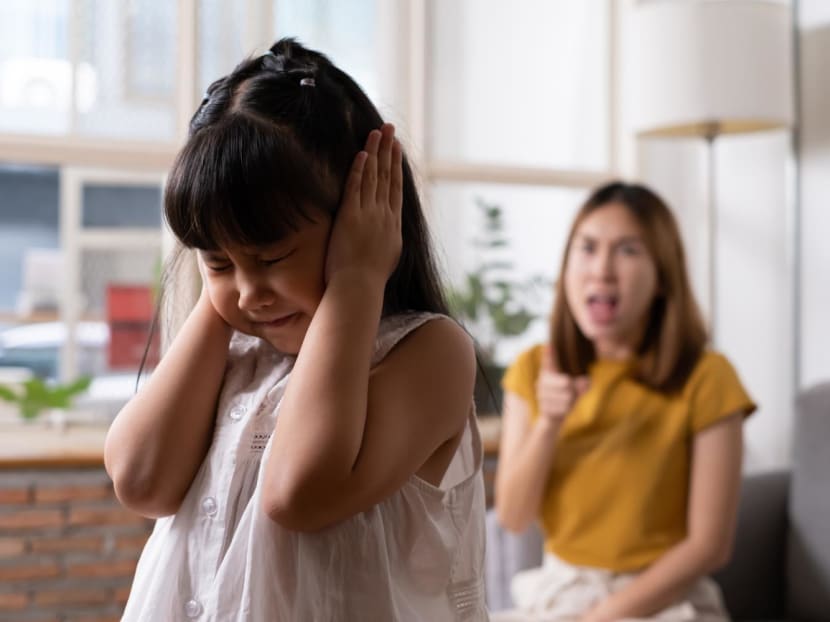
This may take the form of a false threat or promise, for example, lying about calling the police when a child misbehaves, or dangling a Disneyland trip in return for finished homework.
Even white lies, another type of lie told to instil positive emotions in children, were also found to make children more likely to lie to their parents.
In contrast to an instrumental lie, however, this outcome arises only when children know they have been told a white lie — for example, if they are complimented for a job well done even though that is not the case.
The study was led by Associate Professor Setoh Peipei from the psychology division at NTU’s School of Social Sciences.
Other members of the research team included PhD student Petrina Low at NTU and Dr Yena Kyeong, a visiting scholar at NTU’s Early Cognition Lab.
HOW THE STUDY WAS CONDUCTED
To examine how parental lying affects dishonesty in children, the researchers chose to focus on instrumental and white lies because earlier research had shown that they appear commonly across different cultures, NTU said.
They surveyed 564 parent-child pairs in Singapore. The participants were drawn from the Growing Up in Singapore Towards Healthy Outcomes (Gusto) study — a large birth cohort study launched in 2008.
The researchers picked children aged 11 to 12, along with one of their parents.
That age group was chosen "because it is when children’s concepts of lying become more sophisticated", the university said.
The participants were then surveyed independently through questionnaires to gather data on lying behaviours from both the perspectives of the child and parent.
In the first questionnaire on parental lying, the participants were given a list of instrumental and white lies.
Parents were asked, on a scale of one to five if they have said something similar to their children, with one indicating strongly disagree and five indicating strongly agree.
The children were also asked to score on the same five-point scale whether they have been told similar lies, and if so, how much they believed in these lies.
A second questionnaire was done to assess children’s lying behaviour.
On a scale of one to five, the children were asked how often they lied to their parents, while parents were asked how often their children lied to them, with one indicating never and five indicating always.
The scores for each participant were then calculated and statistically analysed to find out how parental lying relates to children’s lying, and how this relationship is affected by children’s belief in these lies.
HOW PARENTAL LYING AFFECTS CHILDREN
The study found that children exposed to instrumental lies may have learnt that such lies were effective in achieving a certain purpose, "therefore socialising them to use more lies", NTU said.
Another possible explanation is that the use of instrumental lies, which are often coercive in nature, may have resulted in the development of negative feelings in children.
This can "potentially (strain) parent-child relationships and thus (contribute) to a higher likelihood of children lying to their parents", the findings showed.
When it came to white lies, however, children were more likely to lie to their parents, but only if they knew the parents had lied to them.
"This suggests that the way children develop lying behaviours could depend on the way they understand and process different types of lies told to them," Assoc Prof Setoh, who is also director of NTU’s Early Cognition Lab, said of the study.
She added: "Given that parents are role models and educators to their children, parents' lying behaviours could indirectly encourage children how to lie.
"These findings should give parents pause when it comes to parenting by lying, even if the lies they tell their children may be interpreted as benign."
Related topics
lying children parentingStay in the know. Anytime. Anywhere.

Subscribe to our newsletter for the top features, insights and must reads delivered straight to your inbox.
By clicking subscribe, I agree for my personal data to be used to send me TODAY newsletters, promotional offers and for research and analysis.





