
Little India riot: Officer cannot recognise man whose arrest he ordered
SINGAPORE — The police officer who ordered the arrest of a man who had insisted on entering an off-limits area during the Little India riot last year admitted yesterday that he could not recognise him now.
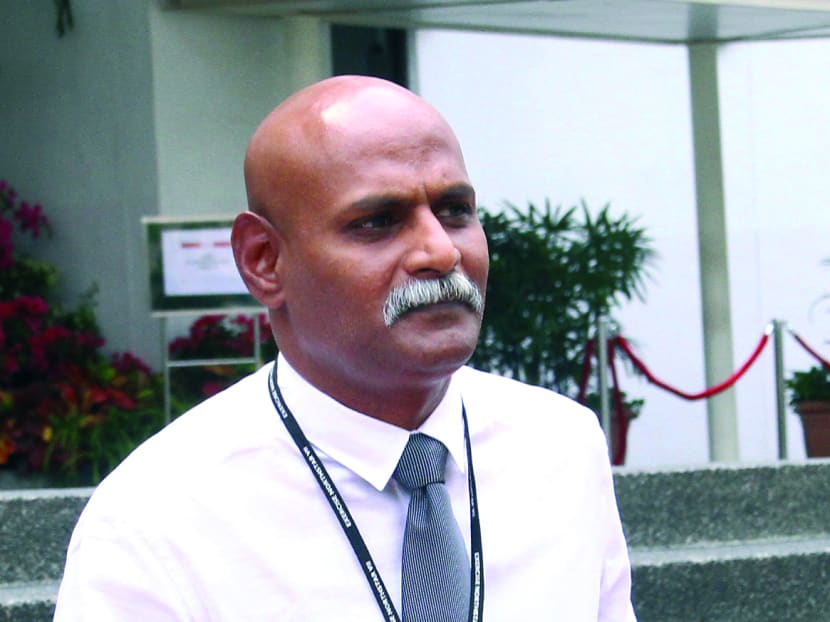
Deputy Superintendent of Police (DSP) N Subramaniam testifying in court yesterday. Photo: Ernest Chua

SINGAPORE — The police officer who ordered the arrest of a man who had insisted on entering an off-limits area during the Little India riot last year admitted yesterday that he could not recognise him now.
Deputy Superintendent of Police (DSP) N Subramaniam’s testimony emerged during cross-examination by defence lawyers who are trying to prove that construction worker Mahalingam Thavamani had not obstructed the police officer from dispersing the crowd that night.
The 26-year-old, who is the first to claim trial among the 25 charged for their role in the Dec 8 riot, had his rioting charge downgraded to obstructing a public servant on the first day of his hearing on Monday.
Under Section 152 of the Penal Code, anyone who obstructs a public servant in the course of his work dispersing an unlawful assembly or suppressing a riot faces a jail term of up to eight years and/or a fine.
Yesterday, DSP Subramaniam told the court that the police had barred entry to Belilios Road that night, as they tried to quell the mayhem. However, Mahalingam was “insistent” on entering, resulting in four or five other Indian nationals joining in to question the restriction, he added.
“(Mahalingam) was becoming agitated, his tone grew louder and (he) was adamant that he wanted to enter Belilios Road,” said DSP Subramaniam, adding that the Indian national did not say why he wanted to do so.
“Sensing that the situation was becoming tense, I went forward and advised (him) that he cannot enter ... and that he should leave.”
Instead, the crowd became rowdy and disobeyed instructions to disperse, he added.
Assessing the situation to be “escalating”, DSP Subramaniam decided to arrest Mahalingam since “no advice or persuasion was going to make him change his mind”.
Defence lawyer B J Lean, however, argued that his client was not trying to enter the area.
Instead, he was trying to tell the officers that he wanted to wait for his younger brother, who had gone into the area to relieve himself, the lawyer said.
In response, DSP Subramaniam said he did not hear anything of the sort. The court heard that DSP Subramaniam enlisted the help of a police intelligence officer, who cannot be named because of the nature of his work, to make the arrest.
Asked if he could recognise Mahalingam, however, DSP Subramaniam said he could not because their encounter was “brief”.
Special Operations Command Operations Officer Lim Ke Wei, who was nearby and had assisted in the arrest, also told the court that he cannot recognise the Indian national.
The hearing continues today. Mahalingam’s friends who were with him that night are expected to take the stand.
To date, six Indian nationals have pleaded guilty to failing to disperse during the riot and were sentenced to between 15 and 18 weeks’ jail each. The cases against 18 others, excluding Mahalingam, are pending.
Related topics
riotStay in the know. Anytime. Anywhere.

Subscribe to our newsletter for the top features, insights and must reads delivered straight to your inbox.
By clicking subscribe, I agree for my personal data to be used to send me TODAY newsletters, promotional offers and for research and analysis.






