
M Ravi’s legal challenge against EP scheme dismissed
SINGAPORE — The High Court has dismissed the legal challenge mounted by non-practising lawyer M Ravi on changes to the Elected Presidency scheme, on the grounds that he had no standing on the matter to submit the application.
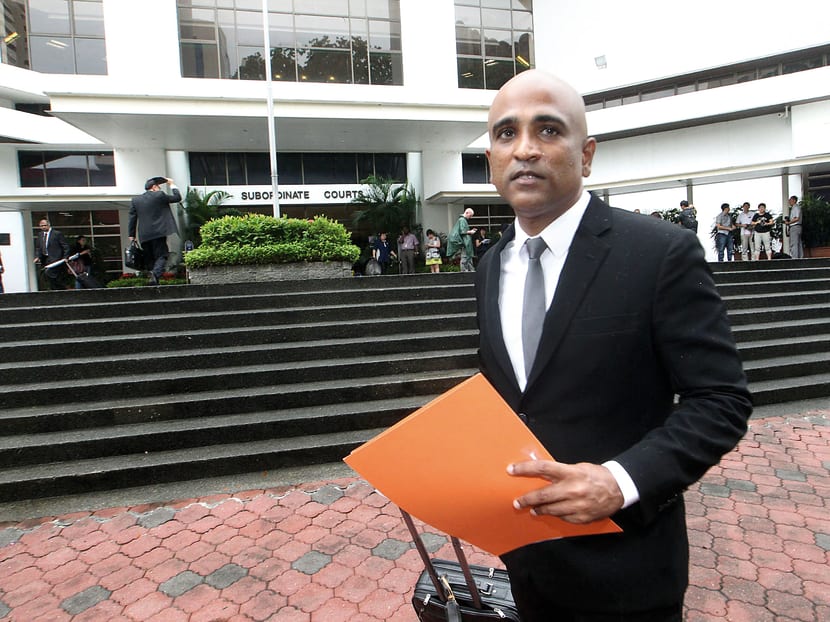
Lawyer M Ravi outside the Subordinate Courts. TODAY file photo

SINGAPORE — The High Court has dismissed the legal challenge mounted by non-practising lawyer M Ravi on changes to the Elected Presidency scheme, on the grounds that he had no standing on the matter to submit the application.
The amendments to the scheme were legally passed and effective, the court ruled on Thursday (June 15) after hearing in chambers. Mr Ravi was ordered to pay S$6,000 in legal fees, and reimburse the Attorney-General’s Chambers (AGC) for costs.
Mr Ravi, who had argued that reserving elections for particular races goes against the Constitution, has seven days to file an appeal against the outcome. TODAY understands he plans to do so.
The court said that as a private citizen, Mr Ravi had no legal standing to mount the challenge on a public law matter, as he did not meet at least one of the criteria set out, such as having personal interest in the matter, or having suffered special damages.
Mr Ravi had also argued that the qualification criteria to run for presidency, and reserving an election for a community that has not held the office for five or more consecutive terms were unconstitutional. But the court disagreed.
He also made applications to have the case heard in an open court, and for the hearing to be postponed as he had needed more time. These applications were also dismissed. He also applied, unsuccessfully, to disqualify Deputy Attorney-General Hri Kumar — who was representing the AGC yesterday — on grounds that he was conflicted in his role. Mr Hri Kumar was formerly a Member of Parliament who stepped down in 2015.
Mr Ravi was the second person to mount a legal challenge against the changes recently passed to the Elected Presidency scheme. His legal challenge focuses on the constitutionality of reserving election cycles for particular racial groups.
Mr Ravi had argued that allowing a reserved election to be triggered when a minority race has not been elected president for five consecutive terms is “discriminatory”, as it “deprives citizens the equal right to political participation, and to stand for public office of the Elected Presidency, even if they possess the appropriate qualifications”.
Last month, former presidential candidate Tan Cheng Bock launched a legal challenge on a different aspect of the changes. Dr Tan is arguing that there has not been a long enough hiatus to trigger a reserved election, as the Government had done for the coming polls in September, for the Malay community. Dr Tan’s case will be heard in the High Court on June 29.
Stay in the know. Anytime. Anywhere.

Subscribe to our newsletter for the top features, insights and must reads delivered straight to your inbox.
By clicking subscribe, I agree for my personal data to be used to send me TODAY newsletters, promotional offers and for research and analysis.






