
Guidelines for laundry industry in the works: CASE
SINGAPORE — After surveying 30 laundry businesses across the island, the Consumers Association of Singapore (CASE) said it will be looking into a standard set of guidelines in industry practices for shops to better inform customers of their terms and conditions over liability claims.
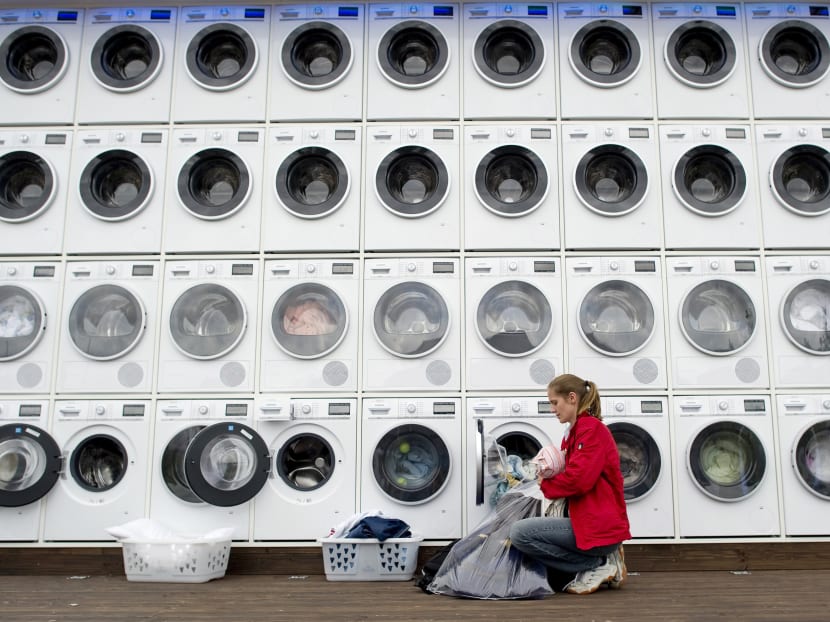
AFP file photo

SINGAPORE — After surveying 30 laundry businesses across the island, the Consumers Association of Singapore (CASE) said it will be looking into a standard set of guidelines in industry practices for shops to better inform customers of their terms and conditions over liability claims.
Following feedback that there were some shops refusing to pay compensation to customers after their items were damaged or misplaced from cleaning, CASE had sent out mystery shoppers to observe the practices of 30 shops.
While 29 out of 30 shops had some form of liability coverage for consumers written in their terms and conditions, 27 had failed to explain them clearly to customers. Only seven shops asked for consumers’ signature as acknowledgment, CASE said in a press release today (Dec 16).
It noted that some shops did not specify the extent of their liability coverage and liability cap, but most did limit their liability to a certain multiple of the rate charged for cleaning the article.
For example, most shops stated that they would pay 10 times the cleaning charge for each article, if the amount did not exceed a stated liability cap.
The survey also found that 21 shops had liability coverage for both loss and damage of items, five shops had liability coverage for lost items only, and three shops did not state the extent of their liability coverage.
“Based on the results of the survey, CASE believes that there is a need for the adoption of a standard set of guidelines on industry practices for the laundry industry and plans to look further into the matter,” the consumer watchdog said.
From January 2012 to November this year, CASE said it had handled 71 complaint cases.
About 60 per cent of the disputes were related to unsatisfactory services, where customers’ items were misplaced or damaged after being sent for cleaning and they had difficulty seeking compensation.
In one case, a customer who had sent in 14 sarees worth over S$600 each for cleaning discovered later that six of them were torn and had burn marks from ironing.
After admitting fault on the part of the shop’s staff, the owner refused to offer cash compensation, and offered uncollected second-hand sarees instead.
When TODAY contacted some of the laundry outlets surveyed, shopowners said they were satisfied with their current practice of printing out their terms and conditions in receipts or bills given to customers.
If items are damaged, they would usually work out compensation on a case-by-case basis with customers.
Long-time family business Choon Kee Laundry, which was highlighted by CASE for not having a standard set of terms and conditions for consumers, said it works on the basis of trust.
The shopowner, who only wanted to be known as Mr Cheong, said he usually works out an arrangement for his long-time regular customers to pay half the value of the item.
Mr Alex Sng, part-owner of Ocean Laundry, said his shop pays 10 times the cleaning fee for lost and damaged items, but will work out compensation with customers if the item is very
expensive.
Ms Rose Lim, manager of Rosabelle Launderette, noted that sometimes customers are not receptive to warnings of possible damage.
“For example, the lifespan (of blackout curtains) is very short. So each time we tell customers, they will … think we’re no good and go to another (shop).
“If it’s really our mistake, we have to compensate and we negotiate. But certain things are (related to) wear and tear, and there are some customers still insist it’s our fault,” she added.
When asked about the shops’ practice of including terms and conditions in their receipts, CASE executive director Seah Seng Choon said shops should still “highlight to the consumers the essential terms and conditions, and make sure the font (is in a) size that people can read”.
“The other thing is they are not transparent in disclosing compensation arrangement. These things are not clear to consumers and usually it will result in disputes later on when the clothes are lost, damaged or badly handled,” said Mr Seah. He added that there should be a code of practice for laundry shops to adhere to.
And if items could be damaged from cleaning, shops should be “ethical enough to ... clearly tell customers” and let them decide, Mr Seah said.
Stay in the know. Anytime. Anywhere.

Subscribe to our newsletter for the top features, insights and must reads delivered straight to your inbox.
By clicking subscribe, I agree for my personal data to be used to send me TODAY newsletters, promotional offers and for research and analysis.