
Multiculturalism a cornerstone of S’pore identity: Ong Ye Kung
SINGAPORE — The sense of being a Singaporean cannot be divorced from being multicultural and celebrating that fact, Minister for Education (Higher Education and Skills) Ong Ye Kung said on Sunday (Jan 5) at an interfaith gathering to celebrate Chinese New Year.
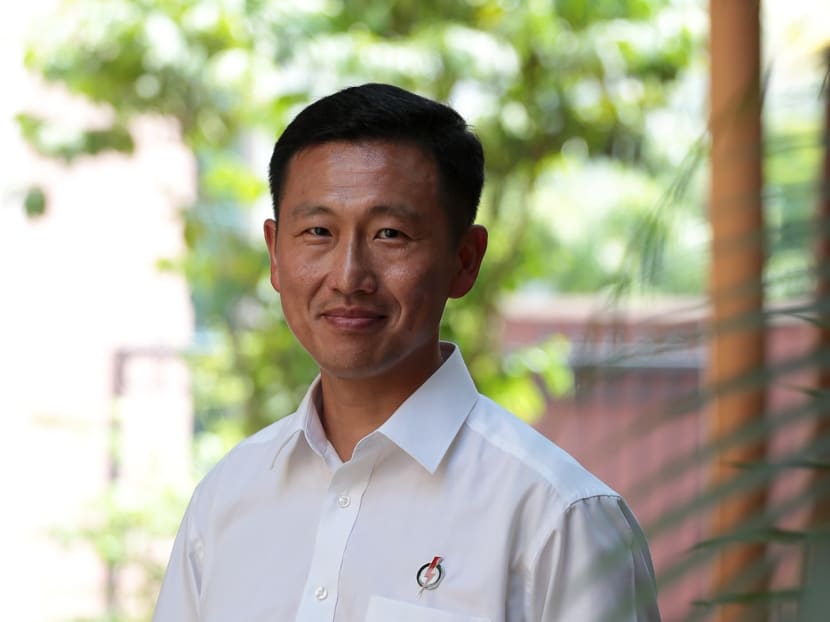
PAP candidate for Sembawang GRC Ong Ye Kung poses for a photo after a press conference on August 14, 2015. Photo: Jason Quah/TODAY

SINGAPORE — The sense of being a Singaporean cannot be divorced from being multicultural and celebrating that fact, Minister for Education (Higher Education and Skills) Ong Ye Kung said on Sunday (Jan 5) at an interfaith gathering to celebrate Chinese New Year.
He reaffirmed that Singapore is a country for every community, with meritocracy as one of its key organising principles.
“The majority don’t overrule the principle of equality, and the minorities don’t exclude themselves,” Mr Ong told an audience of 240 at the Furama RiverFront hotel. “After 51 years of independence, I believe these values and ideas have sunk deep roots in our collective consciousness.”
He is the latest Cabinet minister to reiterate the call to guard against xenophobia and preserve a large common space in Singapore, amid a trend towards religious extremism around the world and rising political rhetoric propounding an insular worldview.
Last week, for instance, Law and Home Affairs Minister K Shanmugam said at a symposium that given the racial demographics here, majoritarianism could take hold unless the Government and the majority continue to commit to not engage in racial politics.
As a small, open country, what is happening elsewhere can affect sentiments here. And Singapore is in a diverse region without a unifying culture, unlike the Arabian, Indian, European or Chinese civilisations, said Mr Ong.
South-east Asia is at the intersection of major civilisations instead. Major religions from Hinduism to Islam have “precipitated thick layers of identity traits in the region throughout history — and Singapore is at the centre of it all”.
Building a cohesive society is a delicate task, and countries with far longer histories are also grappling with the challenge, added Mr Ong, who is also Second Minister for Defence.
“We need to uphold the principle of equality and build a shared sense of being as a nation, but without going overboard or adopting an extreme ideology to the extent of disregarding or becoming disrespectful to the identities and cultures of individual communities,” he said.
“We don’t profess to be perfect or an example for other countries to follow, but we’ll always strive for a more equal, just and cohesive Singapore society.”
Mr Ong said values are “caught, not taught” and transmitted more often through day-to-day activities and, to a lesser extent, through classroom lessons.
Nonetheless, Singapore’s educational system imparts respect for the different races and religions, such as through reciting the Pledge, learning one’s mother tongue, National Education lessons and learning journeys to temples, mosques, churches and places such as Little India and Arab Street.
“These activities are probably not enough, but they provide the foundation for every pupil to discover and appreciate Singapore’s diversity further later on in life,” he said.
Religious and community leaders must also lead by example and promote interfaith understanding, added Mr Ong. Representatives of nine religions did this on Sunday through a silent prayer together on stage.
Venerable Master Chin Kung, a Buddhist monk from the Mahayana tradition, also spoke of the need for religions to learn from one another to build world peace.
There is a need to explain teachings clearly, so followers have a clear understanding of their religion and will not be manipulated, said Master Chin Kung, who was born in China and who founded the Hwa Dzan monastery and Pure Land learning centres worldwide.
A series of 10 booklets, each consisting of 360 verses from the holy texts of major religions, including Christianity, Judaisim, Jainism, Buddhism, Islam, Hinduism and Taoism, was presented on Sunday.
The project began in November and was led by religious groups in Toowoomba, Australia, with help from individuals in Singapore and Hong Kong.
The publication, called 360, is scheduled to be presented at the United Nations Educational, Scientific and Cultural Organisation in September.
Stay in the know. Anytime. Anywhere.

Subscribe to our newsletter for the top features, insights and must reads delivered straight to your inbox.
By clicking subscribe, I agree for my personal data to be used to send me TODAY newsletters, promotional offers and for research and analysis.






