
NEA officers to get greater powers to enforce no-smoking rules, S’pore could get more no-smoking zones
SINGAPORE — National Environment Agency (NEA) officers will be given greater enforcement powers to enter smoking-prohibited places such as nightclubs and pubs to investigate smoking-related offences, after a Bill to amend the Smoking (Prohibition in Certain Places) Act was passed in Parliament on Monday (Sept 10).
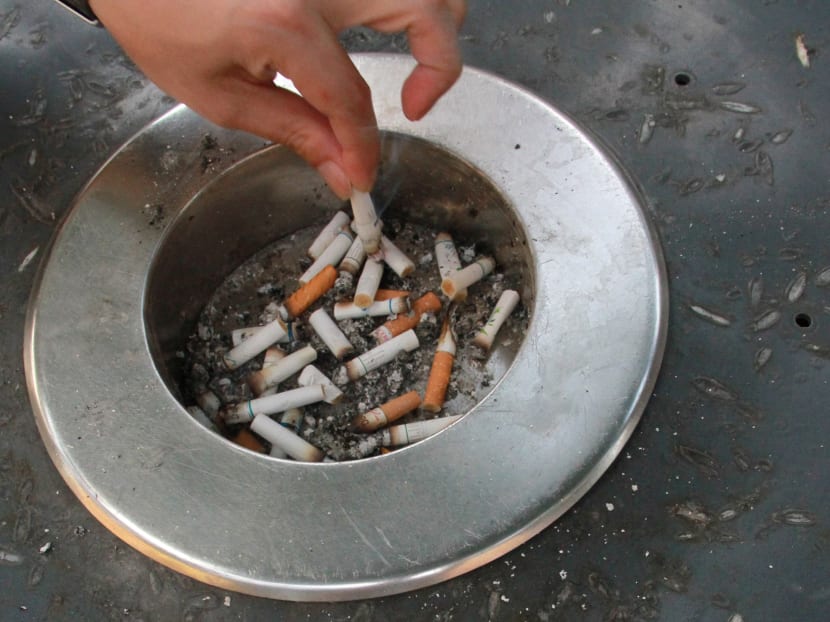



SINGAPORE — National Environment Agency (NEA) officers will be given greater enforcement powers to enter smoking-prohibited places such as nightclubs and pubs to investigate smoking-related offences, after a Bill to amend the Smoking (Prohibition in Certain Places) Act was passed in Parliament on Monday (Sept 10).
The changes could also see the agency implement smoking bans in certain areas in Singapore.
Detailing the changes to the Act, Dr Amy Khor, Senior Minister of State for the Environment and Water Resources, said that NEA officers will be given powers to enter, without a warrant, smoking-prohibited places to investigate instances when the rules have been flouted.
"NEA can invoke the power of entry at all reasonable times, such as the operating hours of the place, or at any time if there is reasonable belief that an offence under the Act has been committed there," she said.
Currently, officers have to seek permission from the managers of such premises before they can enter to investigate.
Dr Khor noted that while most managers have been cooperative, some have hindered the officers' investigations by denying them entry.
Some officers have even reported being physically and verbally abused. Dr Khor said that anyone found guilty of such abuses will now face a fine of up to S$2,000 for the first offence. Subsequent offenders will be liable to a maximum fine of S$5,000, and/or a maximum of three-months' jail.
"These amendments aim to deter uncooperative smokers from hindering the agency's enforcement efforts, and underscores our firm stance against abusive and uncivil behaviour," she added.
Under the current Environment Public Health Act administered by the NEA, it is also an offence to obstruct or hinder an authorised officer from carrying out his duties. Penalties for doing so include a fine of up to S$5,000 for first-time offenders. Subsequent offenders can be fined up to S$10,000, and/or jailed a maximum of three months.
Dr Khor said that the Bill will also clarify that officers will be allowed to obtain audio, visual and physical evidence from the premises of a smoking-prohibited place for the purpose of prosecuting suspected breaches.
However, she reassured the House that restrictions will be in place to prevent the abuse of power. Authorised officers will not be allowed to make forcible entry under any circumstances, and the powers can only be exercised for the purposes of enforcing the laws under the Act.
She added that authorised officers will only be allowed to take possession of materials related to the suspected offence, and that the evidence will only be made available to officers directly involved in the investigation.
In her speech on Monday, Dr Khor also spoke about the possibility of extending No-Smoking Zones (NSZ) to other parts of Singapore. This will be done after the authorities study the effectiveness of an upcoming smoking ban on Orchard Road, which was originally scheduled for July 1.
TODAY had reported that some businesses in the popular shopping belt required more time to make the necessary preparations. The new enforcement date of the smoking ban will be decided later, the NEA said.
Within the NSZs, it is illegal to smoke at any publicly accessible place, including along uncovered footpaths and pedestrian crossings.
The penalties for unlawful smoking within a NSZ are similar to those imposed in other smoking-prohibited places. Those caught smoking in such places are liable to a composition sum of S$200, or up to S$1,000 if they are convicted in court.
While Dr Khor said that building managers may have designated smoking areas (DSAs) within their compounds to provide a reprieve for smokers, the authorities will conduct a periodic review to "guard against a proliferation of DSAs", and to ensure they are effective in containing second-hand smoke.
Several Members of Parliament (MPs) spoke in support of the Bill on Monday, though they also raised questions on whether more could be done to prohibit smoking, particularly at home.
Mr Louis Ng, MP for Nee Soon Group Representation Constituency (GRC), pointed out that children of smokers are more likely to pick up the habit, while Fengshan MP Cheryl Chan recounted how one mother in her ward had to keep her windows closed to protect her children due to a neighbour's second-hand smoke.
Dr Khor said that while indiscriminate smoking is distressing, homes are private spaces. "Not everyone will support the view that the Government should intrude into one's private space when it comes to smoking," she said, though she urged smokers to be considerate to their neighbours.
While there have been suggestions to set up smoking rooms, Dr Khor said that the rooms may reduce exposure to second-hand smoke, but will not eliminate it completely.
She added that smoking-rooms are now only allowed in certain premises such as office buildings and public entertainment outlets. They must also meet requirements such as having separate ventilation, and not allowing employees to work in them.
Stay in the know. Anytime. Anywhere.

Subscribe to our newsletter for the top features, insights and must reads delivered straight to your inbox.
By clicking subscribe, I agree for my personal data to be used to send me TODAY newsletters, promotional offers and for research and analysis.






