
New 8ha extension, year-long celebrations as Singapore Botanic Gardens marks 160th year
SINGAPORE — The Singapore Botanic Gardens will be made bigger when a new area opens late this year at its southern periphery near Farrer Road and Holland Road, the National Parks Board announced on Wednesday (Jan 9).
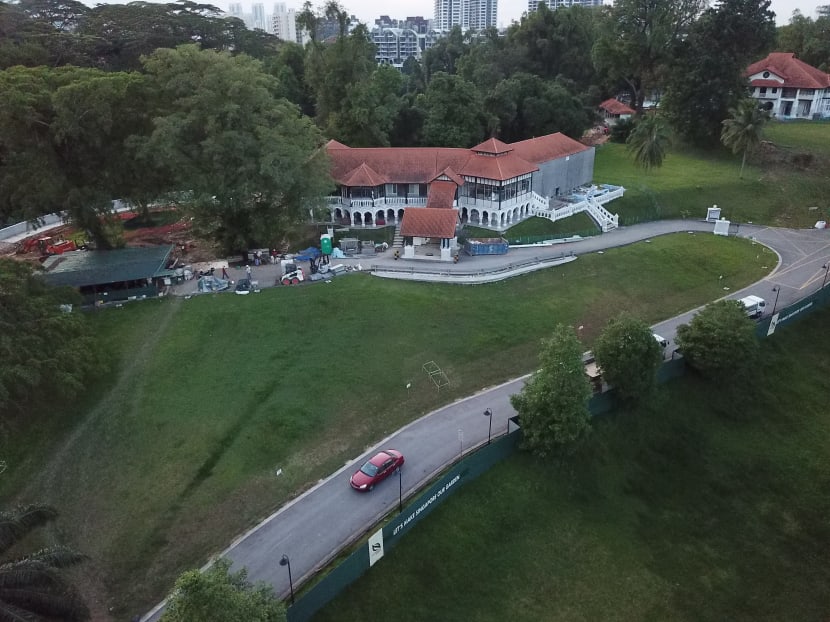
Singapore's oldest surviving colonial-era bungalow, the Gallop House No 5, is located in the Gallop extension. The 8ha extension will open in late 2019.

SINGAPORE — The Singapore Botanic Gardens will be made bigger when a new area opens late this year at its southern periphery near Farrer Road and Holland Road, the National Parks Board announced on Wednesday (Jan 9).
The 8ha extension, which is about the size of 11 football fields, was set to be ready end of last year, but is now opening later to give more time for ongoing environmental studies, community feedback and construction works.
TODAY understands that addressing the concerns of residents nearby was one of the reasons behind the delay.
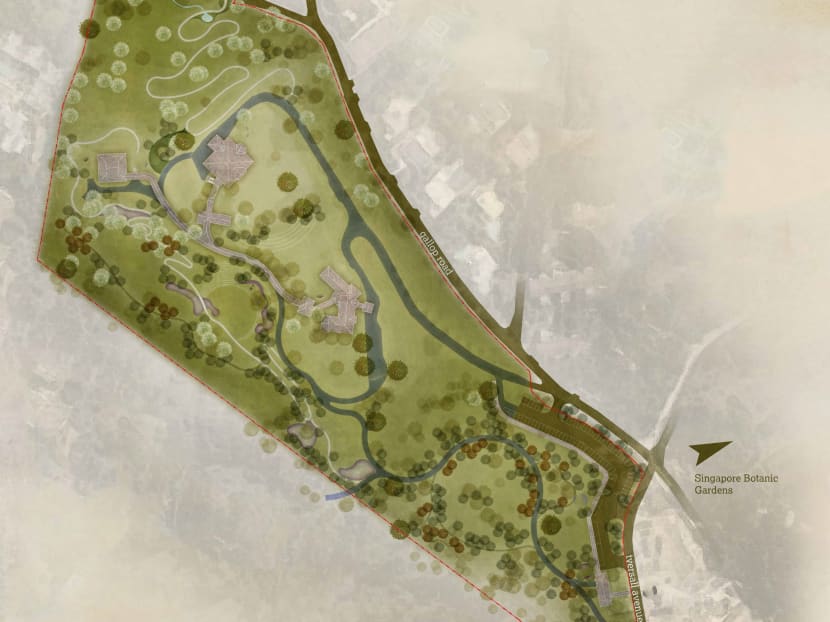
The extension along Gallop Road, which is also bounded by Tyersall Avenue, will expand the Botanic Gardens to 82ha — the largest in its 160-year history.
Accessible from the Farrer Road MRT Station, the new area will act as a buffer against urban development for the native flora and fauna within the gardens’ United Nations Educational, Scientific and Cultural Organisation (Unesco) World Heritage Site.
Besides housing at least half of the world’s species of dipterocarps forest trees — which are mainly tropical lowland rainforest trees — the extension will feature a play area, streams and two conservation buildings.
As the area prepares for a delayed opening, the year-long 160th anniversary programme will go on, with a series of festivals, concerts, workshops and guided tours, including a two-week exhibition on the significant milestones of the Botanic Gardens, dating from 1859.
On Wednesday, Minister for National Development Lawrence Wong presented Heritage Tree plaques to major donors who have contributed at least S$1 million each to the Garden City Fund at the launch of the 160th-anniversary celebrations.
These major donors include Como Foundation, HPL, Keppel Corporation and OCBC Bank, with a cumulative donation of more than S$10 million over the past five years.
NEW FEATURES AT THE GARDENS
The OCBC Arboretum will conserve around 200 to 300 species of dipterocarp forest species, which form the backbone of the region’s tropical forests and are ecologically critical.
A play area called the Como Adventure Grove for children to learn about native flora and fauna.
The Gallop House No 5 at the OCBC Arboretum, a conservation building which is the oldest surviving colonial-era bungalow in Singapore. It will be the site for the forest discovery centre featuring interactive displays about the ecology of Singapore’s forests.
The Gallop House No 7, another conservation building, was restored by the Government in 2012 and will house the Botanical Art Gallery, which displays botanical illustrations from botanic gardens and galleries around the world in various art forms, including watercolours, ink drawings and woodblock carvings.
Gallop Valley with meandering streams and softer foliage.
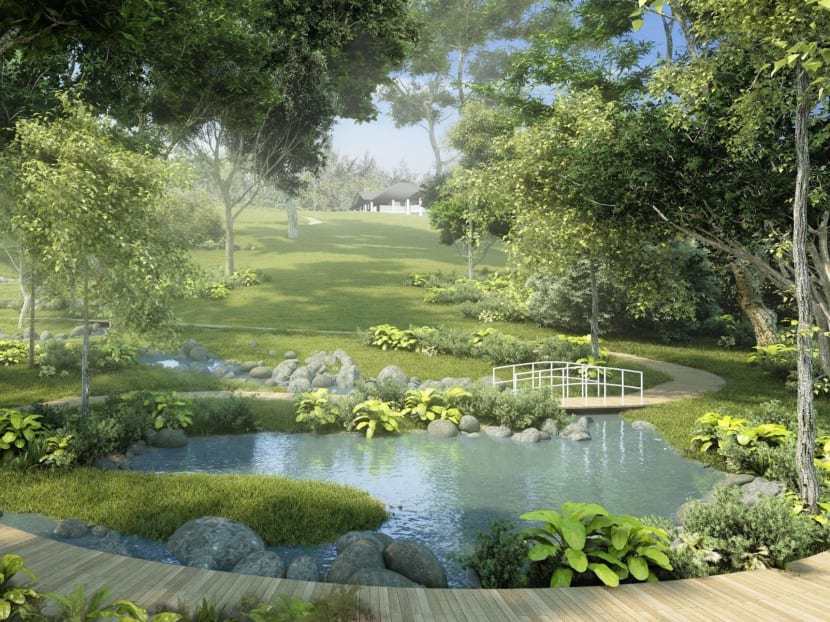
A restored ridge-top habitat which features a hiking trail.
A 200m-long barrier-free bridge over Tyersall Avenue connecting the 10ha Learning Forest (a secondary forest) to the Gallop extension.
LINE-UP OF ACTIVITIES
The Singapore Botanic Gardens Celebrates 160 Years Exhibition from Wednesday to Jan 25.
A Songs of Spring concert by the Singapore Chinese Orchestra on Jan 12.
A free sketching workshop on Jan 19.
Two biodiversity investigative workshops during the March school holidays.
The Singapore Botanic Gardens Heritage Festival in July.
Movie screenings at the EcoLake Lawn.
A year-long series of other festivals, concerts, workshops and guided tours.
BACKGROUND
The Singapore Botanic Gardens was established in 1859 and was inscribed as Singapore’s first Unesco World Heritage Site in 2015.
There are more than 10,000 types of plants housed at the Botanic Gardens.
Operated by the National Parks Board, the Botanic Gardens has more than five million visitors yearly.
The Jacob Ballas Children’s Garden within the grounds is the largest children’s garden in Asia.
The century-old Learning Forest opened last year after a S$30 million restoration. There are more than 700 plant species, some rare or even once-extinct, and more than 200 species of fauna. In the 19th century, the site was used for the cultivation of gambier and pepper before it was used for large residential estates before being set aside as part extension plans in 2009.
Stay in the know. Anytime. Anywhere.

Subscribe to our newsletter for the top features, insights and must reads delivered straight to your inbox.
By clicking subscribe, I agree for my personal data to be used to send me TODAY newsletters, promotional offers and for research and analysis.






