
Facility launched to provide airborne troopers with safer training
SINGAPORE — A new facility to provide safer and more effective training for airborne troopers was launched by Defence Minister Ng Eng Hen at Pasir Ris Camp this afternoon (Dec 1).
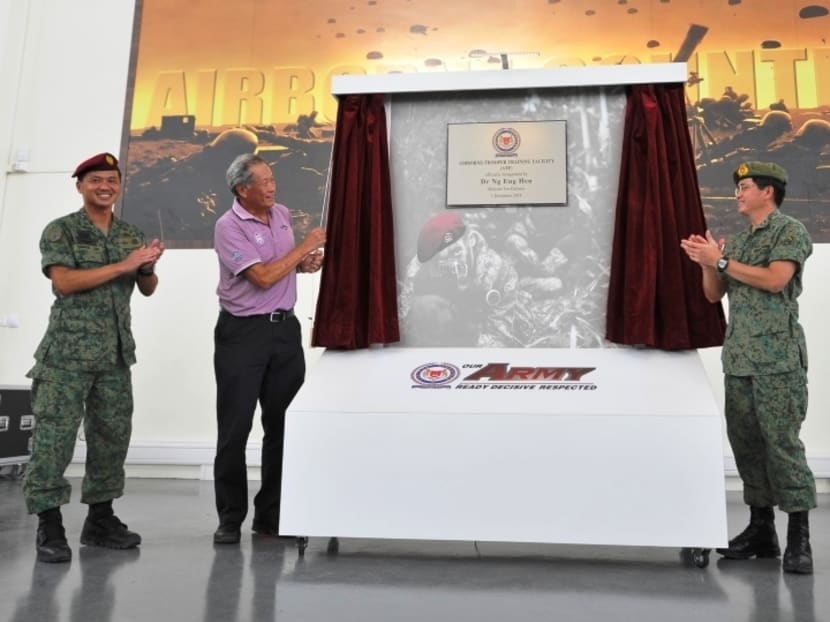


SINGAPORE — A new facility to provide safer and more effective training for airborne troopers was launched by Defence Minister Ng Eng Hen at Pasir Ris Camp this afternoon (Dec 1).
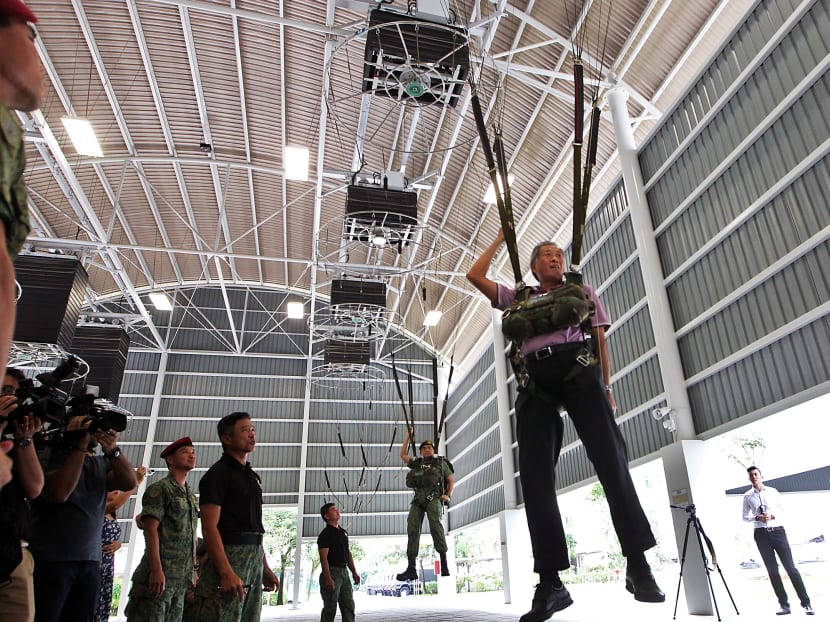
Covering the size of more than two football fields, the Airborne Trooper Training Facility (ATF) provides realistic training through the use of technology to simulate actual airborne experience.
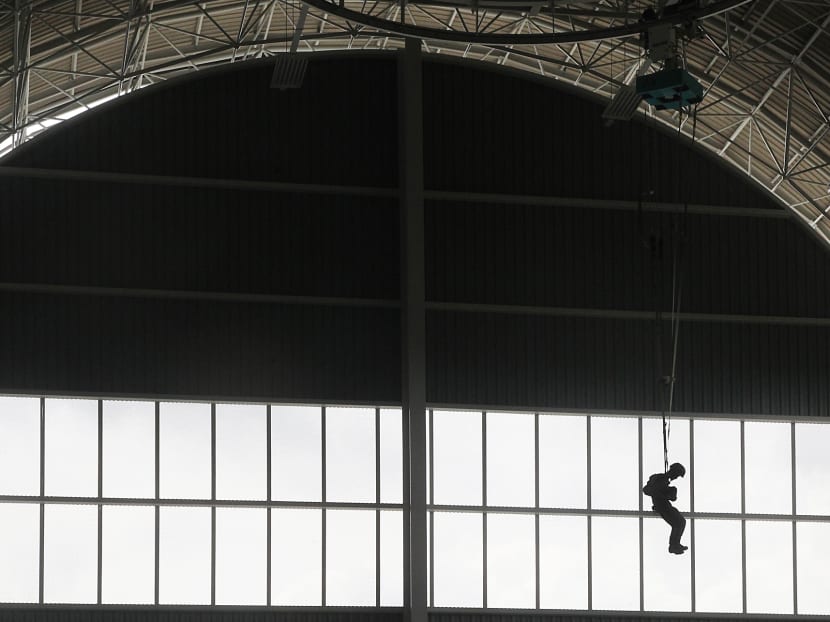
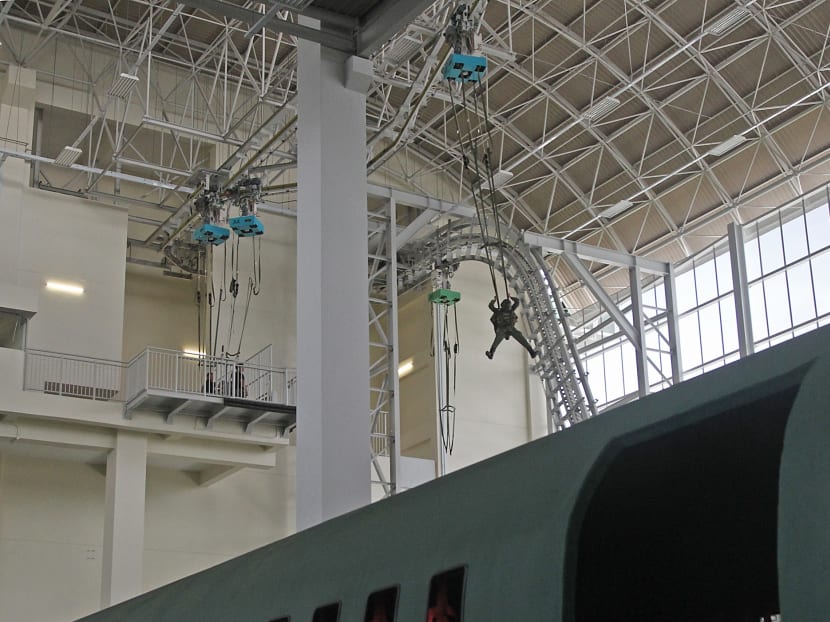
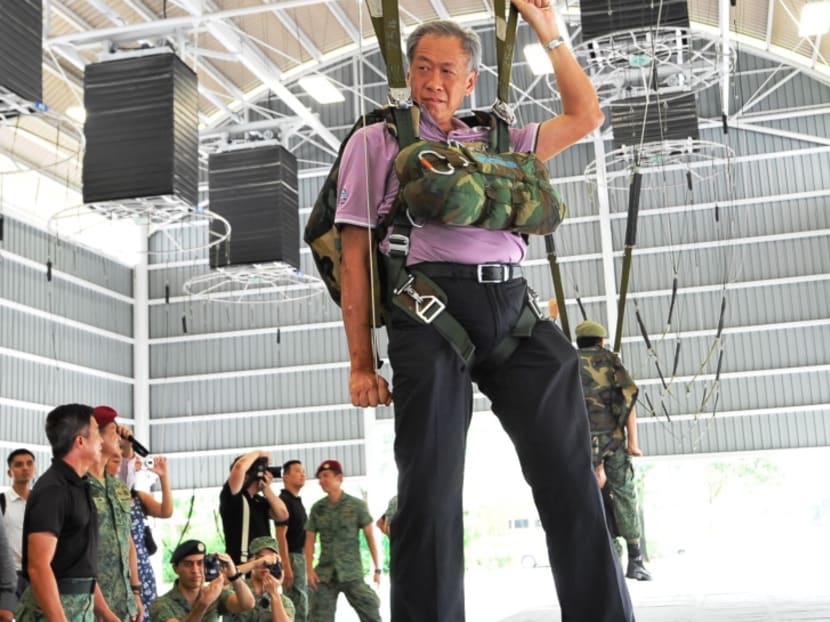
As part of the training, trainees are moved along a belt at a height of 11.2m to simulate the entire process of aircraft exit, descent and landing.
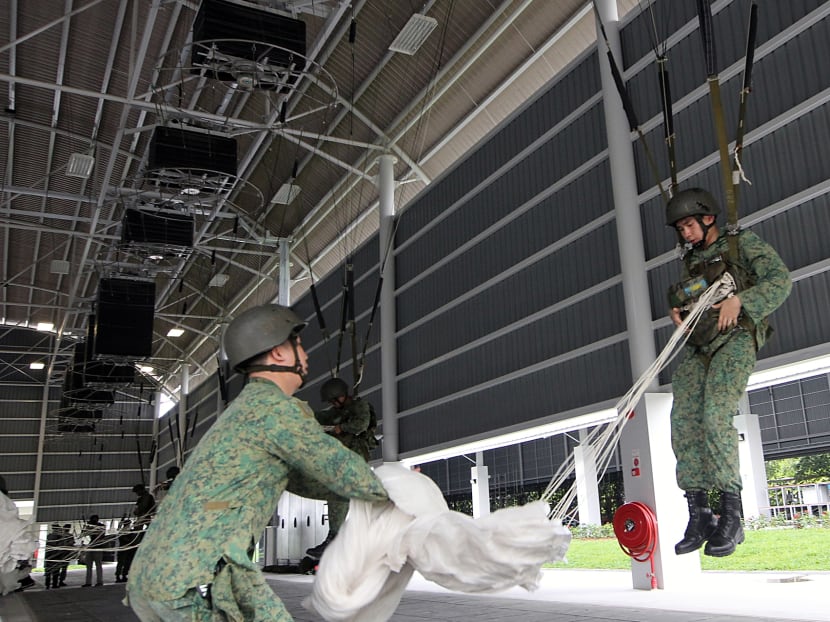
Troops will be taught to land more effectively and safely in a progressive manner at the landing trainer system, where they are dropped from varying heights of 4m to 8m.
They will also learn how to react to unfavourable situations in mid-air — such as “steering” the parachute in response to adverse wind conditions — via automated simulations at the new rotational trainer system.
The ATF, which can train up to 160 troops for each course, is an improvement from the current airborne and rappelling facilities at Hendon Camp, which has been used since the 1990s.
At the old facility, trainees are manually hoisted off the ground by their peers, performing drops from a fixed height. Various stages of the paradrop are also simulated at different stations.
In contrast, hoisting, dropping and simulated steering at the ATF will be automated. Apart from dropping trainees from varying heights, instructors are able to adjust speeds at which trainees land and control the amount of drag they feel, allowing for progressive training.
Some 80 trainees from the four-week SAF Basic Airborne Course have been using the new facility since Nov 17.
“For beginners, we can actually allow a more progressive training for them. For those trainees who are more advanced, they can proceed to actual height and the actual rate of descent,” said Chief Commando Officer Colonel Simon Lim.
As a result, trainees will be more confident and proficient when they jump off a real aircraft, resulting in safer training, said Col Lim, who also commands the Special Operations Task Force.
Trainees who do not land properly can suffer injuries such as twisted ankles, especially when they land on hard ground, said Master Warrant Officer Oh Beng Lee, the officer commanding the Static Line Wing Special Operations Training Support Centre.
Said Dr Ng of the ATF: “I think it is a good training facility and very realistic. (It) gives me confidence that if ever they are called upon ... the commandos will be able to execute their task properly.”
The facility, developed by the Singapore Armed Forces (SAF) in partnership with Defence Science and Technology Agency (DSTA), is currently managed by both as well. Planning started back in 2008 and construction started “two to three years” ago, Col Lim told reporters.
As part of the planning, the SAF had visited foreign parachute schools, such as those of the United States and French militaries, said Col Lim. At the same time, they also sought expertise from DSO National Laboratories and DSTA.
Unlike the Hendon facility, the new training facility is almost entirely housed indoors, allowing soldiers to train regardless of rain or shine, day or night.
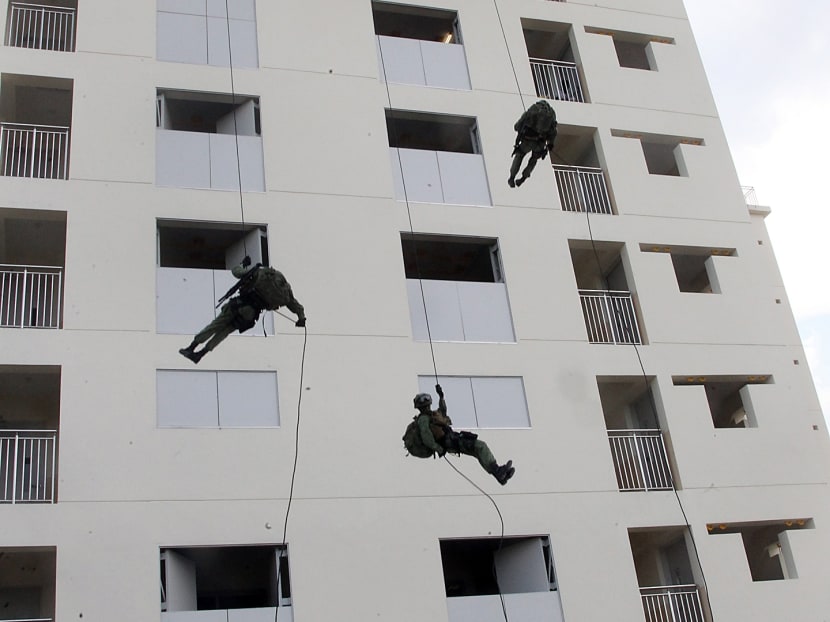
A new rappelling training facility has also been built next to the parachute training area, allowing airborne troopers to hone both skills in the same location.
Stay in the know. Anytime. Anywhere.

Subscribe to our newsletter for the top features, insights and must reads delivered straight to your inbox.
By clicking subscribe, I agree for my personal data to be used to send me TODAY newsletters, promotional offers and for research and analysis.






