
Updated SMRT app shows warnings on train, station congestion
SINGAPORE — In an effort to soothe increasingly vocal complaints from commuters caught in train delays, rail operator SMRT has rolled out an improved mobile application, which includes a feature estimating the number of trains commuters will have to miss before they can get on board.
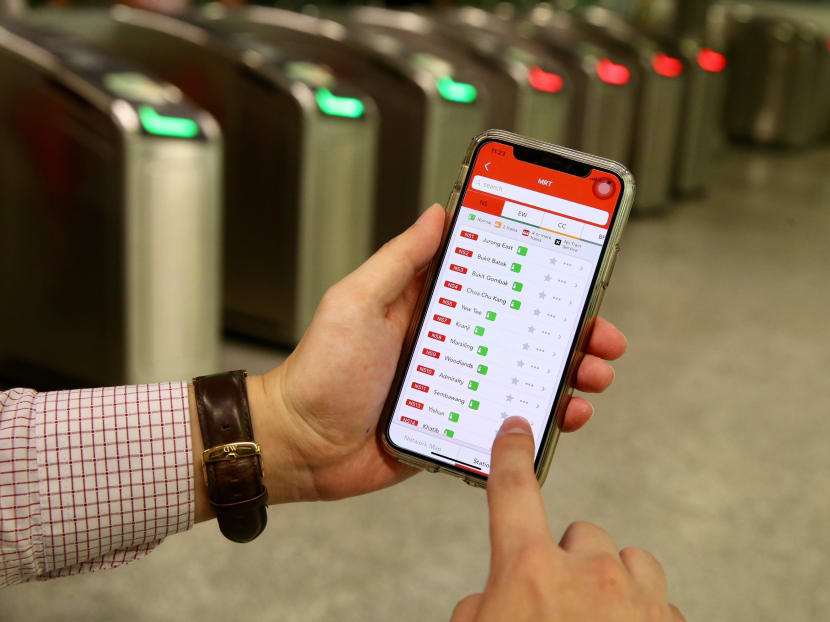
Close-up of SMRTConnect 3.0, taken during the launch of SMRT’s newest multi-modal transport mobile application and new SMRT Commuter Experience Touchpoints Initiatives at Somerset MRT station on Feb 5, 2018. Photo: Koh Mui Fong/TODAY



SINGAPORE — In an effort to soothe increasingly vocal complaints from commuters caught in train delays, rail operator SMRT has rolled out an improved mobile application, which includes a feature estimating the number of trains commuters will have to miss before they can get on board.
A new train-frequency indicator on the latest version of the SMRTConnect app, unveiled on Monday (Feb 5), shows various colour codes that reflect varying degrees of congestion in stations along the North-South, East-West and Circle lines.
A green icon indicates normal service, while an amber indicator means commuters have to wait for two trains before they can board.
Red indicates four or more trains, and a black icon marked with a cross means there is no train service.
Currently, these indicators are based on assessments of crowds by crew at the stations during peak and off-peak periods.
In time, the operator plans to tap data and video analytics to gauge the crowds at MRT stations, amassing information from fare gates, camera feeds in the stations and Wi-Fi access points to give speedier updates on train services. It aims to roll out these improvements later this year.
The operator said the latest improvements to the app, which was launched in 2012 and downloaded more than 500,000 times, were made in response to feedback from riders over imprecise train arrival and wait times, especially during delays.
The updated app also allows commuters to check for real-time train and bus arrival times at MRT stations and bus stops.
It includes information on bus services from all four bus operators — SBS Transit, SMRT Buses, Tower Transit and Go-Ahead Singapore — an improvement from earlier versions which showed only information on SMRT’s buses.
Speaking at the launch of the improved app at Somerset MRT Station, SMRT president and group chief executive Desmond Kuek acknowledged that the operator did not always get things right.
“People are annoyed when we do not warn them ahead of time about slower train service because of the speed restrictions that we have to impose for safety reasons when we are repairing certain stretches of track,” he said.
The biggest bugbear among commuters is that they fail to get accurate information about train arrival and wait times, he said, adding that the operator understands “the frustration of our commuters and we will fix this”.
Recognising the disconnect between estimates on delays and what commuters encounter on the ground, Mr Kuek said the hope is that the upgraded app would resolve this with more precise updates on services.
Among the other new features on the app, which is available for both Apple and Android devices, are 180-degree views of major MRT station exits so commuters can find their way around better.
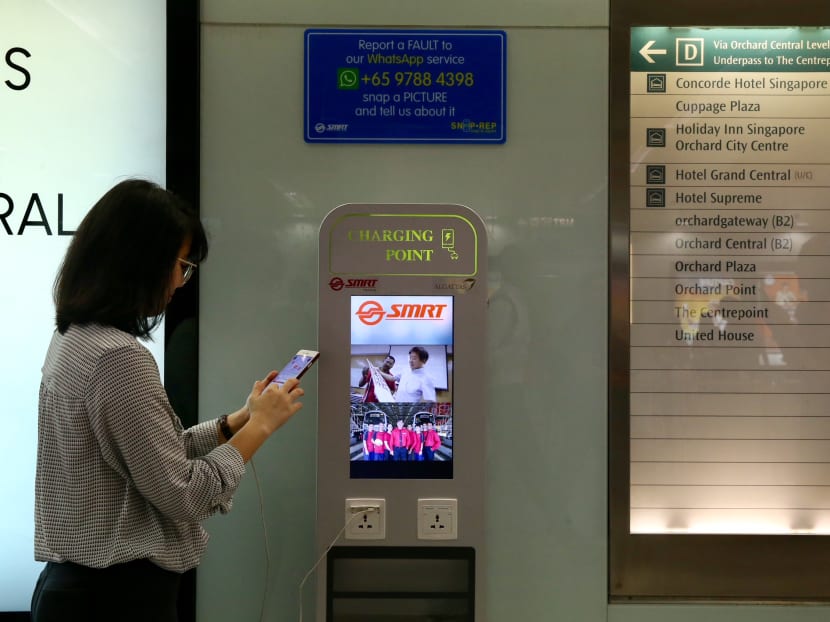
The operator recently also unveiled new initiatives in stations, including four-sided panels near station entrances to allow commuters to get information on, among other things, nearby landmarks and tickets at a glance, as well as new digital displays at the Passenger Service Centres to update commuters on train services and answer common questions, such as those requesting directions to nearby buildings.
These initiatives are in place at the Tanjong Pagar, Somerset and Bugis MRT Stations. Plans are afoot to roll out the digital displays to 15 other stations with high human traffic along the North-South and East-West lines by April.
In the middle of this year, the operator will also introduce electronic travel slips at all MRT stops for commuters requiring proof of travel during a train service disruption. This obviates the need to queue at stations to get a printed slip.
In November last year, the Land Transport Authority said it was looking into how operators manage announcements on service delays, after irate commuters voiced displeasure on social media that rail operators SMRT and SBS Transit have not been prompt or consistent in alerting commuters to disruptions.
Rail operators are required to inform passengers of delays of more than 10 minutes at peak hours and those exceeding 15 minutes during off-peak periods via regular announcements in stations and trains. If delays worsen, information should be disseminated via social and mainstream media.
Stay in the know. Anytime. Anywhere.

Subscribe to our newsletter for the top features, insights and must reads delivered straight to your inbox.
By clicking subscribe, I agree for my personal data to be used to send me TODAY newsletters, promotional offers and for research and analysis.






