
New, stricter standards to cut MRT waiting time by 25%
SINGAPORE — From next year, commuters can expect trains to arrive more frequently on certain MRT lines, as stricter rail operating standards that aim to cut commuter waiting times by 25 per cent during morning peak hours kick in.
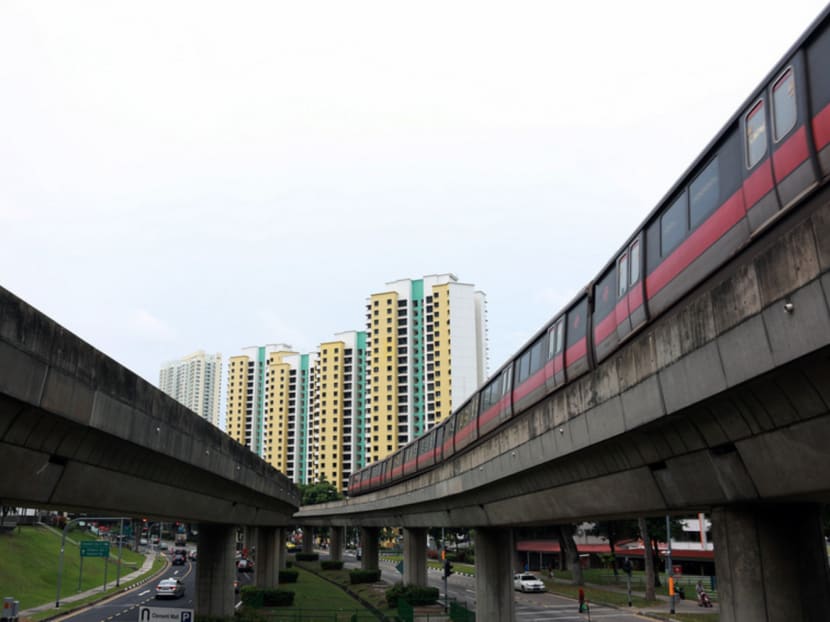
TODAY file photo

SINGAPORE — From next year, commuters can expect trains to arrive more frequently on certain MRT lines, as stricter rail operating standards that aim to cut commuter waiting times by 25 per cent during morning peak hours kick in.
The Land Transport Authority (LTA) is also introducing new service standards this year: One on the frequency of severe service delays where trains are running but at significantly reduced speeds for over an hour, and one on the time it takes for trains to travel from one end of the line to the other.
The North-South Line (NSL), North-East Line (NEL) and Circle Line (CCL) will be the first to come under the new operating standards on frequency next year. During morning peak hours on the NSL, trains will be expected to arrive every 100 seconds, instead of the current 120 to 180 seconds. On the NEL, trains must arrive every 120 seconds, down from 160 seconds, while on the CCL, they must arrive every 160 seconds, from the current 210 seconds.
New standards for the East West Line — expected to arrive every 110 seconds from every 120 to 180 seconds — will kick in 2018, as the upgrade to its signalling system will only be ready then. To ensure public transport operators can meet these standards, the LTA will also require the operators to maximise the number of trains available in their expanded fleets — at least 90 per cent — for service during morning peak periods
Announcing the timeline at a media briefing yesterday, LTA chief executive Chew Men Leong said the move is in anticipation of increased train capacity. More new trains are set to be injected — 18 for the NEL and 24 for the CCL from this year, and 28 for the NSEWL from 2016.
Asked why the CCL will have lower frequencies than the rest, Mr Chew said the timings are sufficient to meet projected demand. But this will be reviewed when the full length of the CCL is completed, he added.
The focus for now is on morning peak hours, but the LTA also plans to introduce new standards for the evening rush hours. New standards will also be imposed to ensure lifts and escalators are not down for prolonged periods and that security-related equipment is operational.
The enhancements come in the wake of a new high in the number of major train service delays for the entire MRT network last year, with the 12 incidents in the first nine months of the year already outstripping the previous high of 11 recorded in 2011. However, the overall train withdrawal rate has continued to fall.
Currently, the LTA already has standards in place to restrict train delays longer than five minutes. Operators are also currently not allowed to have more than one train disruption lasting more than 30 minutes in any four-week period.
On plans to track delays where trains are running but at slower speeds for more than an hour, the LTA was unable to share how many such incidents had occurred, but said this results in severe crowding at platforms and that a breach might attract financial penalties.
Commenting on the new frequency standards, transport analysts said while train frequencies of 100 seconds may lag behind those seen in other cities, there are various factors at play when determining how often trains should arrive, such as the number of trains available for deployment, level of demand, and how long the train doors need to stay open at stations.
Dr Alexander Erath, transport researcher from the Singapore-ETH Centre for Global Environmental Sustainability, noted that Hong Kong’s MTR system has a headway — or waiting time — of about 85 seconds. However, Hong Kong has a much higher population density than Singapore, and the high demand warrants greater train frequency. Commuters, knowing they need not wait long for the next train, also tend not to attempt to squeeze onto trains, allowing trains to move on quickly.
Associate Professor Gopinath Menon, who teaches transportation engineering at Nanyang Technological University, said there is a limit to technology and how close trains can be to each other. “Safety must come first, so (the authorities) will not do anything that will endanger safety,” he said.
In response to the new standards, Ms Tammy Tan, SBS Transit’s senior vice-president of corporate communications, said the operator is working closely with the LTA on the proposed changes. “We always have and will continue to work hard at improving our level of service to commuters,” she said.
Mr Lee Ling Wee, managing director of SMRT Trains, said SMRT would continue to do its best to meet the new standards. He added that it has made good progress in the past year to upgrade infrastructure, particularly in its re-sleepering efforts on the NSL and efforts will continue over the next few years.
Stay in the know. Anytime. Anywhere.

Subscribe to our newsletter for the top features, insights and must reads delivered straight to your inbox.
By clicking subscribe, I agree for my personal data to be used to send me TODAY newsletters, promotional offers and for research and analysis.






