
Bigger live firing facility opens for urban warfare training
SINGAPORE – A new urban live firing facility at Lim Chu Kang, with a capacity to train around 100 soldiers per day – the size of one company – was opened by Defence Minister Ng Eng Hen this morning (Aug 14).
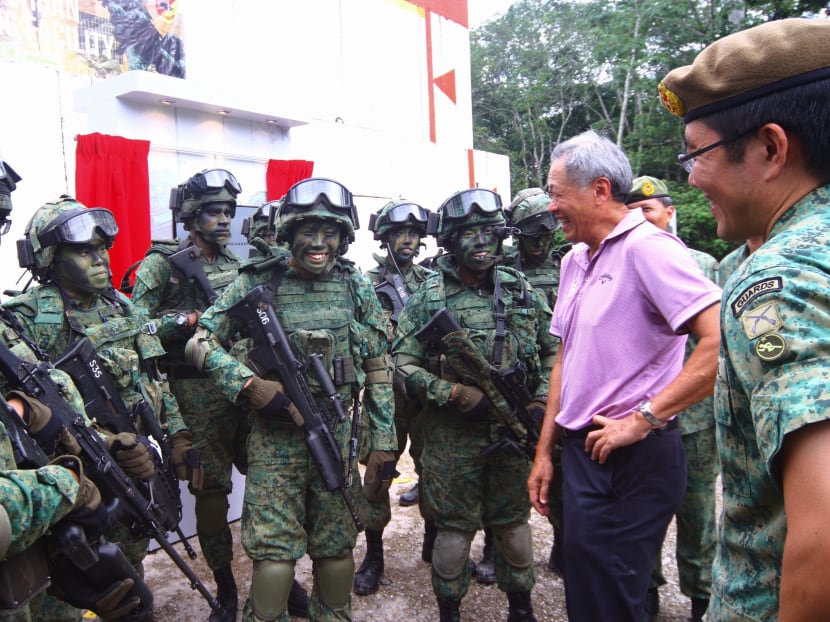
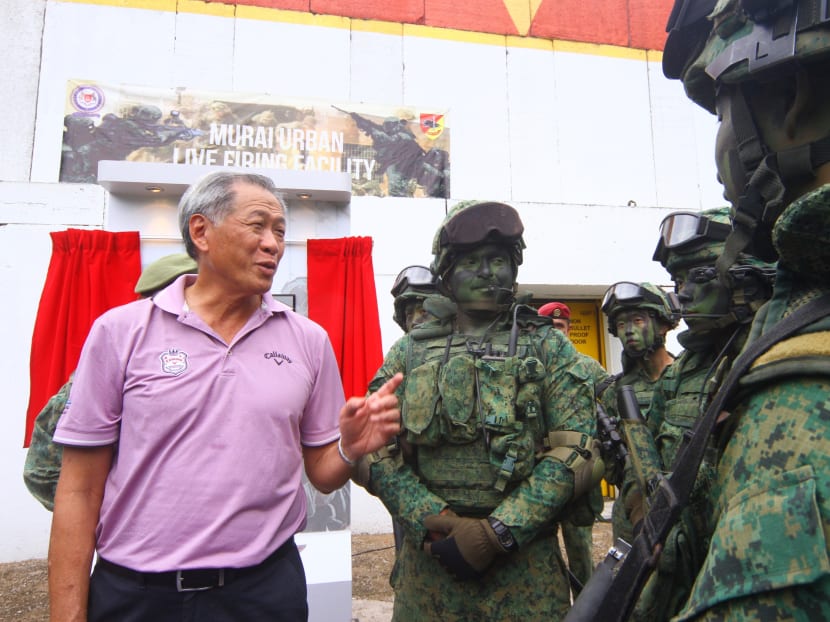


SINGAPORE – A new urban live firing facility at Lim Chu Kang, with a capacity to train around 100 soldiers per day – the size of one company – was opened by Defence Minister Ng Eng Hen this morning (Aug 14).
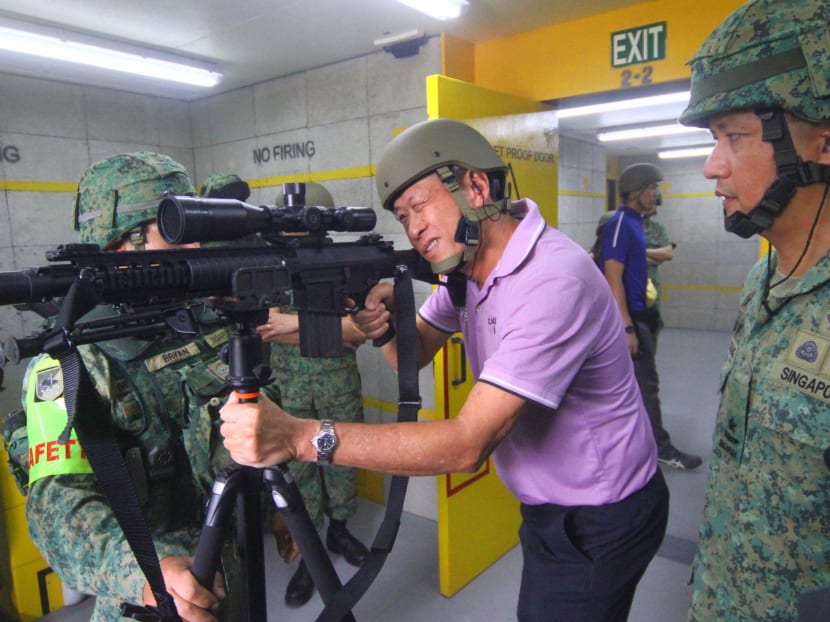
Called the Murai Urban Live Firing Facility (MULFAC), the facility comprises five buildings and a house for throwing live hand grenades. Cameras placed inside the rooms of the five buildings will allow soldiers to watch videos showing their training performance at the After Action Review facility, which forms part of MULFAC as well.
The new Murai facility expands the Singapore Armed Forces’ (SAF) capacity to train soldiers in urban warfare. Prior to its opening, urban live firing can only be conducted in a building at section level, which comprises only seven soldiers.
Speaking to reporters at the facility’s launch, Dr Ng said: “In this generation, where cities are built up, whether it’s for humanitarian missions, or even what we call guerrilla warfare, fighting in built-up areas will be the more likely scenario.”
The MULFAC will give SAF soldiers – both full-time and operationally-ready national servicemen – the confidence to operate in an urban environment, he said.
With the MULFAC’s opening and the Multi-Mission Range Complex launched last year, the SAF will be able to conduct 50 to 60 per cent more live firing for its soldiers, Chief Infantry Officer BG Chiang Hock Woon told reporters at the launch.
“At the end of the day, we can do a lot of training, but live firing is the most important part because that is as realistic as you can get before you submit and subject the soldier to an operation,” he said.
To enhance the safety of soldiers, the facility is built using ballistic absorbing concrete which can absorb fired ammunition into its walls, protecting soldiers from rebounding projectiles.
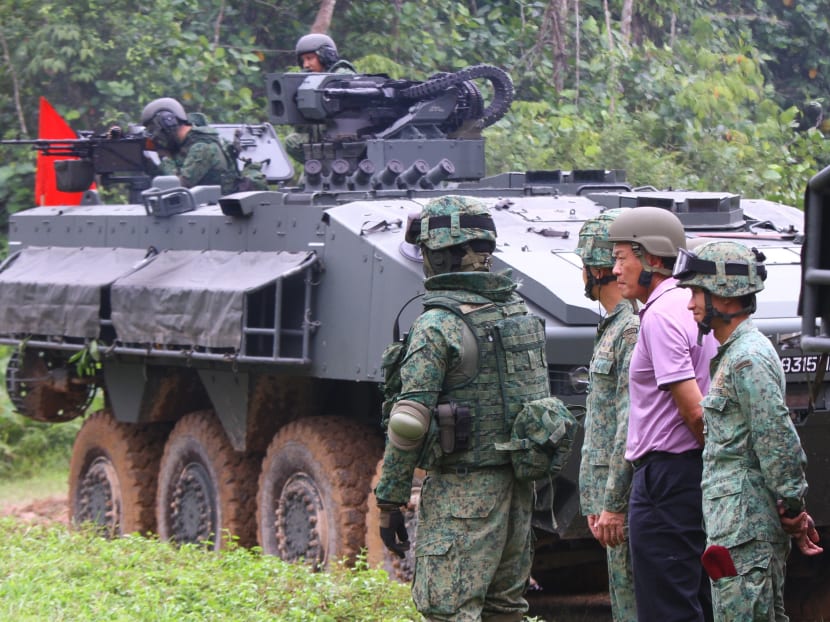
When asked if training in jungle warfare is still relevant, Dr Ng said the military is not discarding skills in these areas. “A good maxim from any military strategist is ‘never say never’, and we don’t want to discard our skills in other areas as in say, jungle missions and jungle terrain.
“But at the same time, I think we have to train what we feel are realistic scenarios and built-up areas is certainly the focus of training in many, many militaries, not only for the SAF,” he added.
Stay in the know. Anytime. Anywhere.

Subscribe to our newsletter for the top features, insights and must reads delivered straight to your inbox.
By clicking subscribe, I agree for my personal data to be used to send me TODAY newsletters, promotional offers and for research and analysis.






