
Not possible to fund entire cost of Changi East development through borrowing: MOT and CAG
SINGAPORE — The significant scale and complexity of the Changi East project renders it impossible for borrowing to fund the cost of the entire development, the Ministry of Transport (MOT) and the Changi Airport Group (CAG) said in response to queries on a new levy to be imposed on passengers to fund the airport’s expansion.
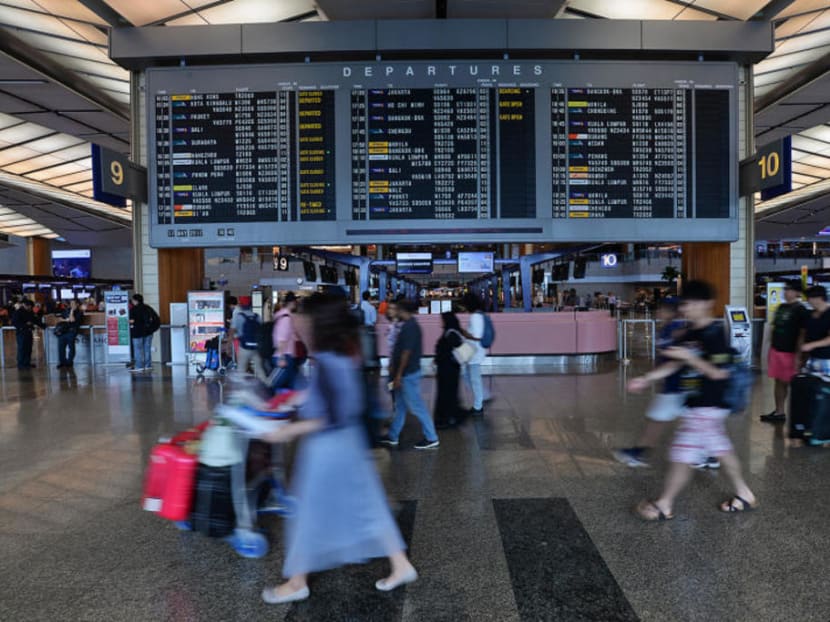
TODAY file photo

SINGAPORE — The significant scale and complexity of the Changi East project renders it impossible for borrowing to fund the cost of the entire development, the Ministry of Transport (MOT) and the Changi Airport Group (CAG) said in response to queries on a new levy to be imposed on passengers to fund the airport’s expansion.
“More borrowing would incur additional interest charges, and airport users would have to bear an even larger share of the repayment of the principal and interest amount in the later years,” the MOT added on Wednesday (Feb 28). The “total costs and funding breakdown” have not been finalised, as detailed engineering and design studies as well as discussions on the contributions are ongoing, the ministry said.
As part of the project, which is set to cost “tens of billions of dollars”, a new Terminal 5, which is expected to start operations in 2030, as well as a third runway will be constructed. A network of tunnels and systems will also be constructed to allow the transfer of passengers and baggage between the new terminal and the rest of the airport.
In his Budget statement on Feb 19, Finance Minister Heng Swee Keat noted that in 2015, the Changi Airport Development Fund was set up to start saving for Changi T5. The fund currently has S$4 billion.
Announcing that statutory boards and Government-owned companies will be encouraged to borrow from capital markets to build critical national infrastructure — with the Government possibly providing guarantees for these loans — Mr Heng also said the CAG will look at borrowing to fund Changi T5, as one of several examples.
The MOT and the CAG reiterated that a borrowing arrangement will help “spread the cost of Changi East (project) over more years”. Details are still being worked out.
They added: “The Government is studying the possibility of providing a Government guarantee for the borrowing. (This) will enhance the confidence of creditors, and lower the overall financing cost of the project.”
From July 1, passengers flying out from Changi Airport will have to pay S$47.30 – or S$13.30 more – in departure charges, which include a new Airport Development Levy.
Separately, the passenger service and security fee (PSSF) will also be raised by S$2.50 from July 1 annually till April 1, 2024. Over the same period, airlines will also see an annual increase of 1 per cent in their landing, parking and aerobridge fees.
Currently, a passenger service charge (PSC) and a passenger security service charge (PSSC) are imposed. From July 1, these will be combined as the PSSF.
Previous expansions at the airport were funded through aeronautical charges paid to the CAG as well as non-aeronautical revenue. The group reiterated that it was not possible for it to pay for the entire development, and it had to raise aeronautical charges “to generate sufficient revenue to pay for part of Changi East development and the operating expenditure of the existing terminals”.
The last time the PSC was revised was in April 1, 2013, when it was raised from S$13.90 to S$19.90 to fund the development of Terminal 4, the expansion of Terminal 1 and other related infrastructure, said the CAG. Together with the PSSC — which has stood at S$8 — and an aviation levy of S$6.10, passengers have been paying S$34 each.
For the airlines, landing charges were last increased in 2016, while parking and aerobridge charges have not been changed since 2009 when Changi Airport was corporatised, the CAG said. Rebates on these charges have also been given “from time to time” to help airlines through difficult operating conditions, with the most recent rebates given till March this year.
In response to the International Air Transport Association’s criticism of the levy, the Singapore authorities said the “joint contribution model” — with money from the Government, the CAG and airport users – allows progressive payments for the development costs, and avoids large spikes in the charges which airport users have to pay. They noted that this practice is similar to what airports at Hong Kong, Dubai and Qatar for example have done.
For example, Hong Kong, which is also building a three-runway system and new terminal, has imposed a charge of HKD$90 to HKD$180 per passenger (S$12 to S$31), or an average fee of S$19.00. Dubai and Doha have implemented a uniform charge of about S$13 per departing passenger.
The MOT stressed that the Government will pay the majority of the costs for the Changi East project, while the CAG will commit a “substantial portion of its reserves and future surpluses, and take on significant debt”.
“Airport users will contribute a small share,” the ministry added. The new levy is imposed to “purposefully set aside funds for infrastructural developments”, it reiterated.
The MOT, the CAG and the Civil Aviation Authority of Singapore said the project is “Singapore’s bold strategy to sustain the aviation sector’s competitive edge for the long term”. They cited factors such as the significant domestic demand and strong traffic growth prospects for the Asia-Pacific region as reasons behind their confidence.
Stay in the know. Anytime. Anywhere.

Subscribe to our newsletter for the top features, insights and must reads delivered straight to your inbox.
By clicking subscribe, I agree for my personal data to be used to send me TODAY newsletters, promotional offers and for research and analysis.






