
NP and KTPH collaborate to help dementia,fall-prone patients
SINGAPORE — Electrical engineering students from Ngee Ann Polytechnic (NP) and healthcare professionals from Khoo Teck Puat Hospital (KTPH) have collaborated to come up with a series of solutions to help fall-prone and dementia patients.
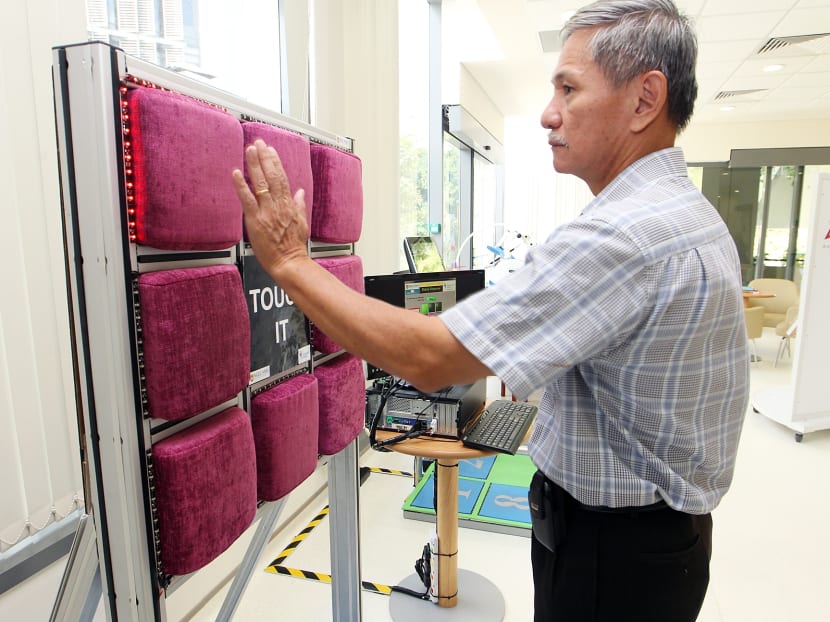
One of the prototypes, which measures a patient’s reaction time to predict the probability of falling. Photo: Ooi Boon Keong

SINGAPORE — Electrical engineering students from Ngee Ann Polytechnic (NP) and healthcare professionals from Khoo Teck Puat Hospital (KTPH) have collaborated to come up with a series of solutions to help fall-prone and dementia patients.
One system switches on a light when it detects a fall-prone patient getting out of bed to help him see better. Another alerts nurses at their station when it detects that a patient has fallen down in the bathroom.
These were among the four sets of solutions that have been on trial at KTPH since the start of the year. The hospital hopes to implement them in its geriatric ward when they are ready.
Yesterday, NP and Alexandra Health, which manages KTPH, also signed a three-year Memorandum of Understanding (MOU), which will see NP students working alongside healthcare professionals to develop healthcare solutions.
Principal of Ngee Ann Polytechnic Chia Mia Chiang said the collaboration has opened doors for its electrical engineering students working on their Final Year Project and enabled them to apply the knowledge and skills they learnt in school. Over the course of two years, 24 final-year students participated in the collaborative project.
According to KTPH, more than 30 per cent of those aged 65 and above will suffer a fall and some will sustain serious injuries, such as hip fractures, which increase the risk of death. The hospital sees at least 300 hip fracture patients every year.
Speaking to the media yesterday, Alexandra Health Group CEO Liak Teng Lit said finding new healthcare solutions was important because of the ageing population here.
The prototypes developed during the collaboration cost less than S$4,000 and were funded by NP’s School Project Fund and Research Fund. The polytechnic said it will consult healthcare professionals as it seeks to improve the prototypes.
When completed, the prototypes are expected to be rolled out in KTPH next year.
Stay in the know. Anytime. Anywhere.

Subscribe to our newsletter for the top features, insights and must reads delivered straight to your inbox.
By clicking subscribe, I agree for my personal data to be used to send me TODAY newsletters, promotional offers and for research and analysis.






