
NUH goes high-tech in superbug battle
SINGAPORE — A public hospital here has begun deploying new infection control technology in its efforts to keep hospital-associated superbug infections at bay.

SINGAPORE — A public hospital here has begun deploying new infection control technology in its efforts to keep hospital-associated superbug infections at bay.
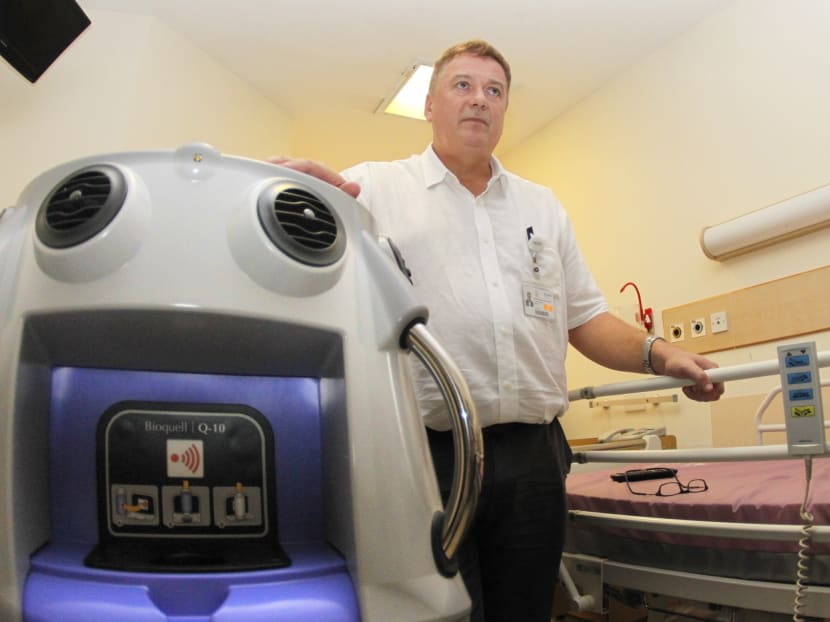
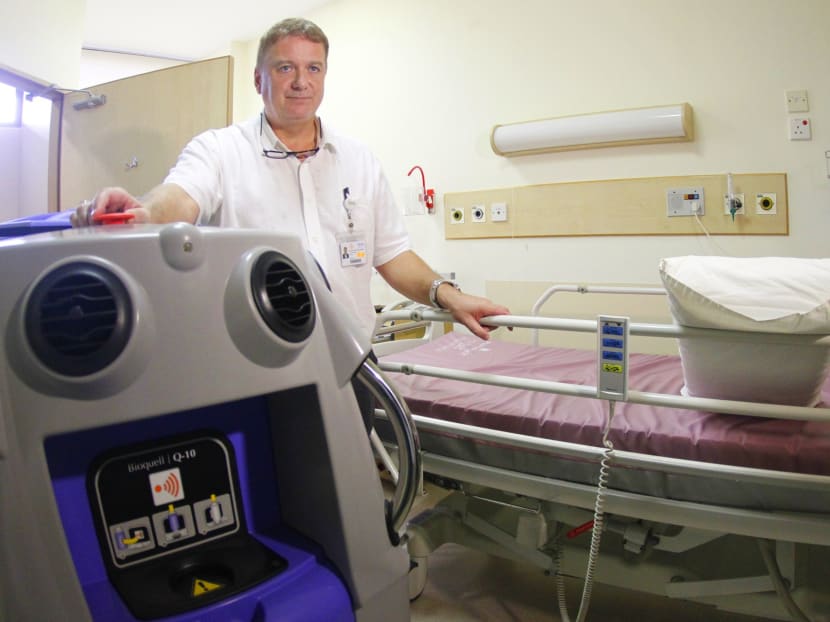
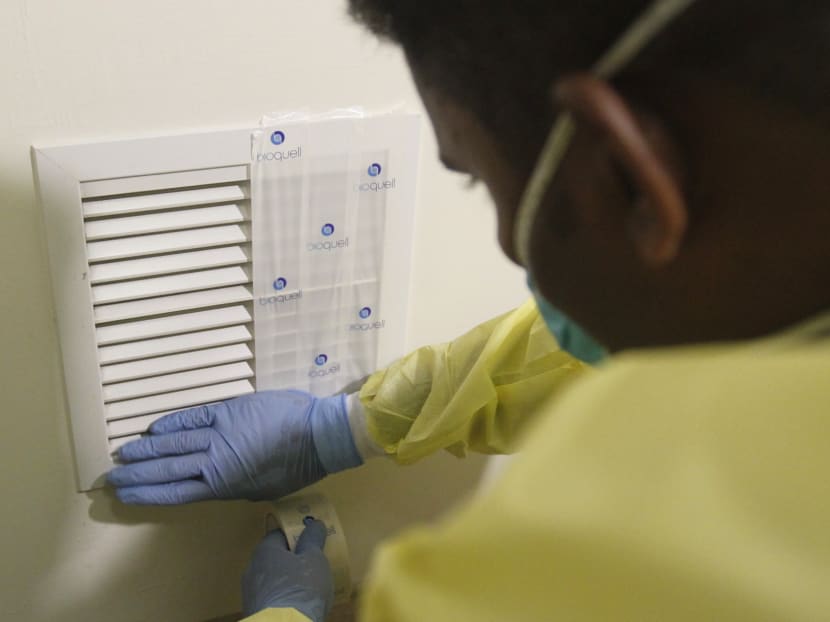
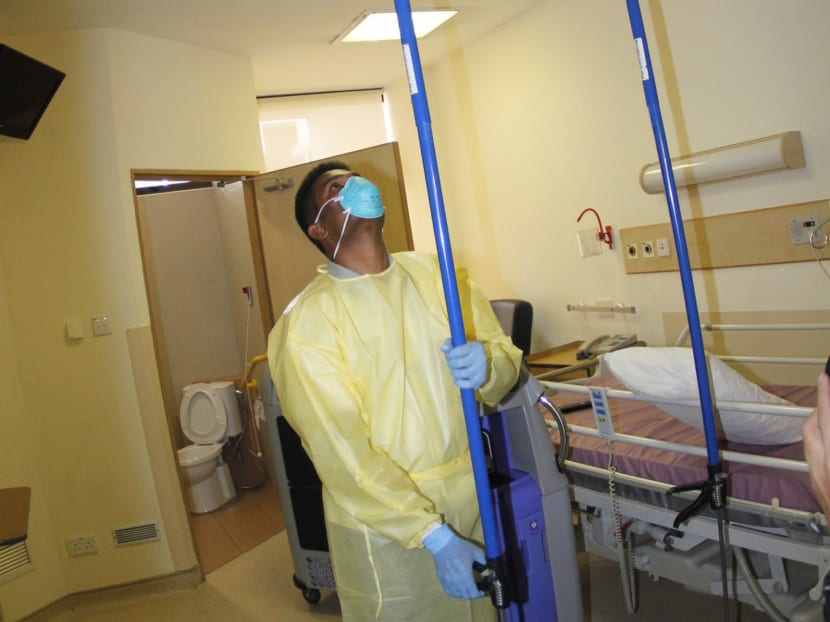
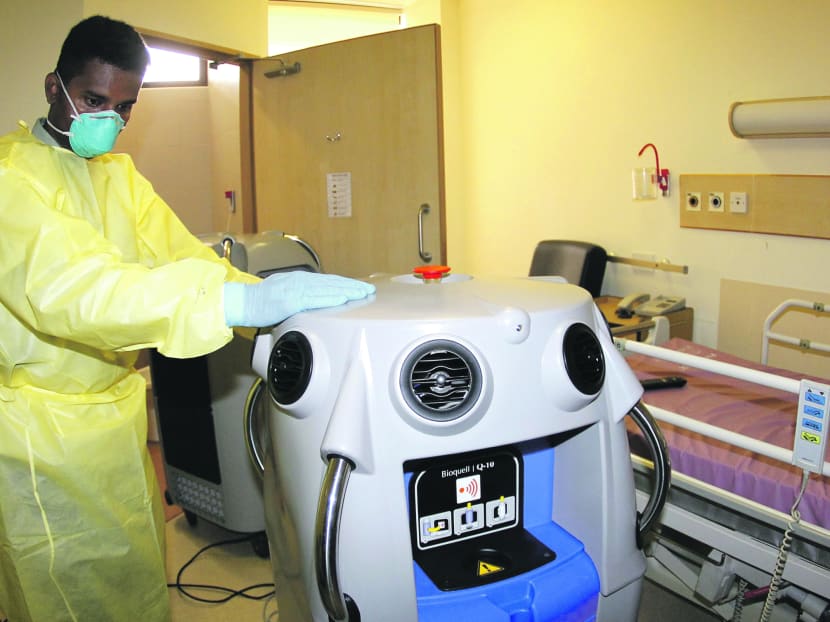
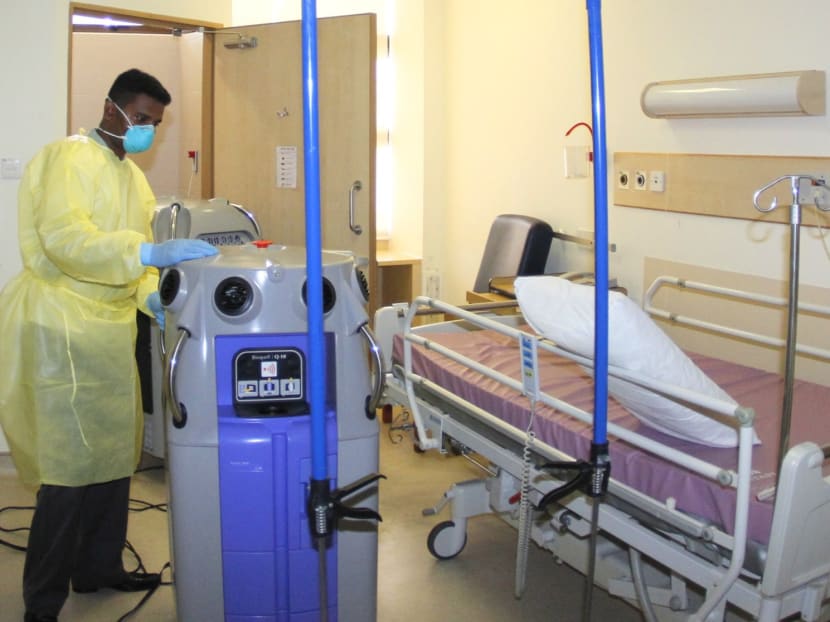
Since March, the National University Hospital’s (NUH) housekeeping staff have used machines emitting hydrogen peroxide vapour, a bleaching agent, to disinfect isolation rooms before new patients are admitted.
The machines work in pairs — one emits the vapour to decontaminate the room, while the other breaks it down into water and oxygen. The entire process takes 90 minutes.
NUH is the only public hospital here that has bought the machines and made them part of its workflow. Said its infectious diseases division head Dale Fisher: “We’ve got five of these machines now and we’re focusing on the intensive care units and isolation units because that’s where most multi-drug resistant organisms are.”
The machines cost S$60,000 each — which the hospital assures is not passed on to patients — and rooms are sealed off before the vapour is released. The technology supplements manual cleaning for NUH’s 129 isolation beds.
Due to pressure to quickly turnover beds for new admissions, the hospital found through surveys that parts of the rooms were not being cleaned well enough.
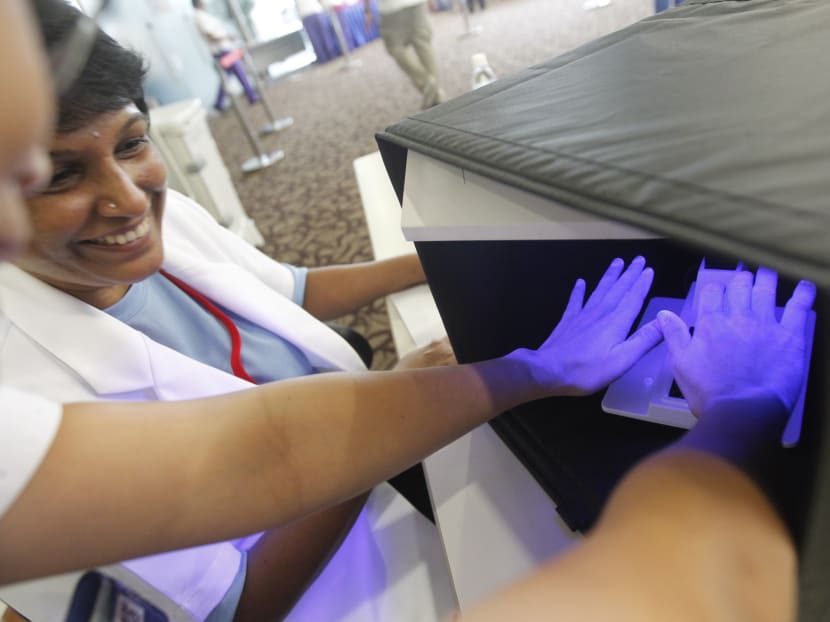
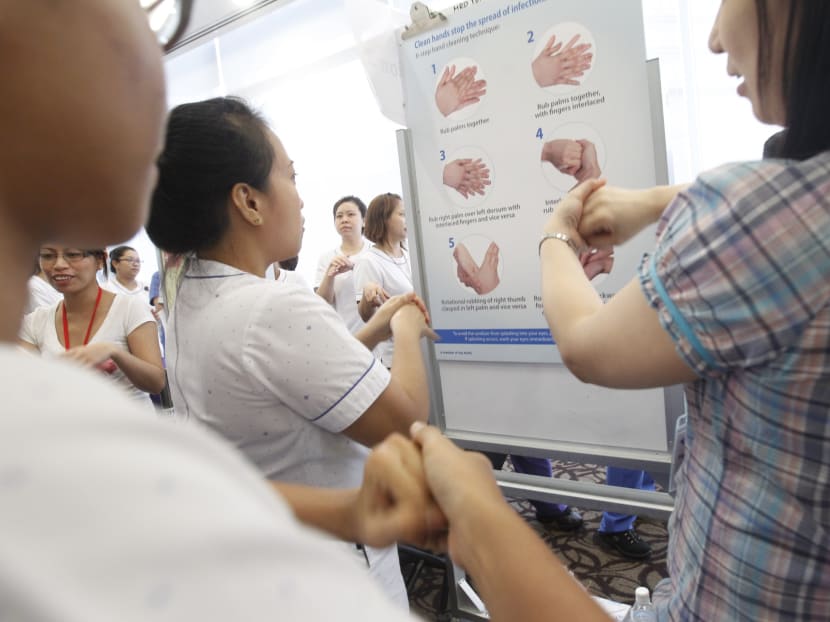
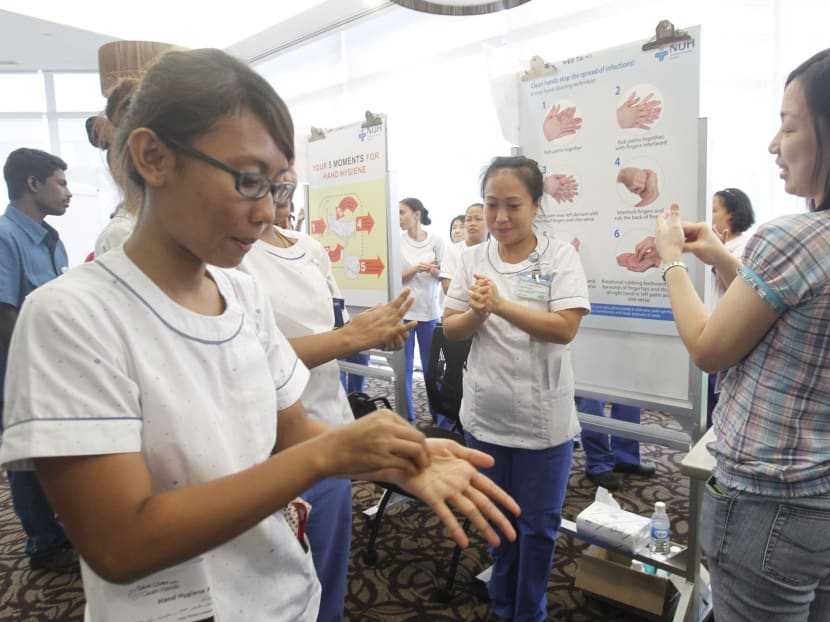
Through hand hygiene and cleaning measures as well as cohorting of patients with the same infections, NUH has managed to reduce hospital-associated infection rates of the superbug called methicillin-resistant staphylococcus aureus (MRSA) from about 10 per cent in 2007 to 2.5 per cent now.
“Our rate of improvement got to a certain point where we needed to do more, and we realised that environmental cleaning was a big thing … I’d like to see, maybe, a step down (in infection rates) again to reach a new, lower plateau,” said Associate Professor Fisher.
Superbugs are bacteria that are resistant to some antibiotics. Infections are hence harder to treat and can lead to death in people who are weak or ill.
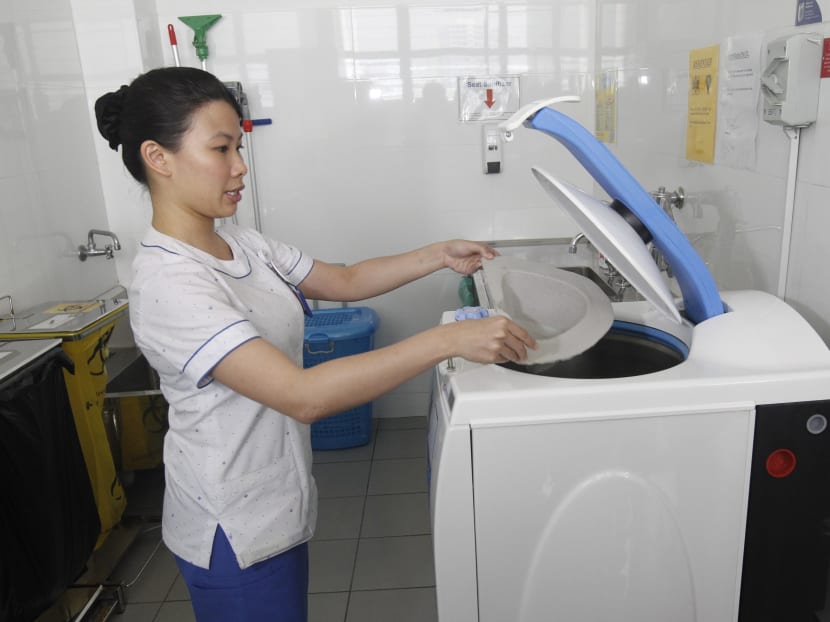
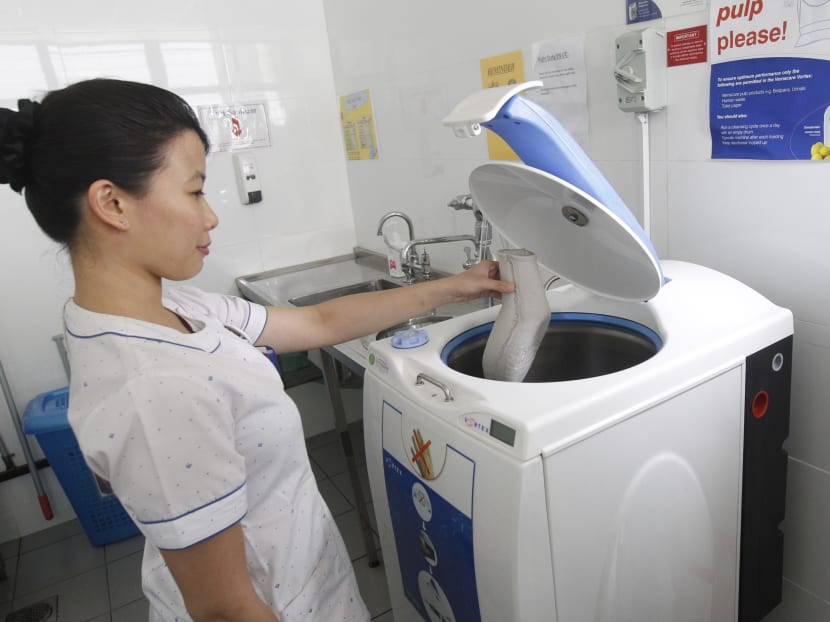
Other superbugs hospitals worldwide are grappling with include vancomycin-resistant enterococci and clostridium difficile, Assoc Prof Fisher said. To tackle the latter, NUH will replace plastic bedpans and vomit bowls — which nurses need to disinfect with hot water — with disposable ones made of pulp by the end of this year, after piloting them since last October.
This frees up more time for nurses to spend with patients, who have given the thumbs-up to the “hygienic” disposable bedpans and vomit bowls, said Senior Staff Nurse Sapphire Teo.
At least one other public hospital is sussing out technology to decontaminate wards. The Singapore General Hospital has evaluated hydrogen peroxide vapour technology but currently has no plans to deploy it.
“We are still evaluating other technology to compare efficacy and effectiveness, as well as a technology that requires a shorter lock-down period”, said its Director of Infection Control, Dr Ling Moi Lin.
Besides hand hygiene and active surveillance for MRSA among high-risk patients, SGH ensures good housekeeping through regular audits, said Dr Ling.
Stay in the know. Anytime. Anywhere.

Subscribe to our newsletter for the top features, insights and must reads delivered straight to your inbox.
By clicking subscribe, I agree for my personal data to be used to send me TODAY newsletters, promotional offers and for research and analysis.






