
Number of CGH caregivers to triple in Sept
SINGAPORE — Patients who are discharged from the Changi General Hospital (CGH) will have more help to turn to as they wait for long-term care arrangements to be worked out.
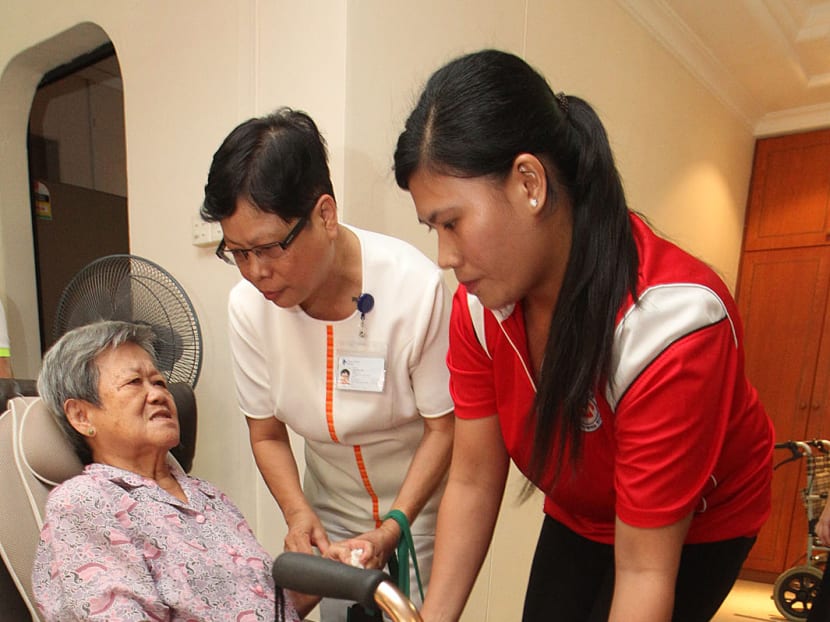
Photo: Ooi Boon Keong

SINGAPORE — Patients who are discharged from the Changi General Hospital (CGH) will have more help to turn to as they wait for long-term care arrangements to be worked out.
This comes after the number of caregivers offered under an interim caregiving service is set to triple to 42 next month.
The hospital started a pilot in March this year after it noticed a gap in caregiving services. It then reached out to Thye Hua Kwan Moral Charities, which has a ready pool of competent trained caregivers available to fill this gap.
Seventy-nine patients have benefited from the care of 12 caregivers since March. Thirty more caregivers are coming on board, as the project will be officially launched next month.
According to CGH, 400 patients a year are expected to benefit from this programme. Response has been overwhelming, with six to seven patients on the waiting list at any given point of time, said CGH Chief Operating Officer Peter Tay.
Under the service, patients are assigned to caregivers on an individual basis, for up to two weeks on subsidised rates which correspond to those they receive when they are warded. Patients in Class B2 wards, for example, can receive subsidies of up to 65 per cent. Beyond two weeks, the subsidies are removed and families can opt to extend the arrangement at the full rate of S$450 per week.
The programme is purely needs based and discharge coordinators from CGH assess the suitability of patients on a case-by-case basis before offering the interim caregiving service as an option, said CGH discharge coordinator Janet Toh.
To ensure “seamless transition” the caregiver assigned from Thye Hua Kwan is introduced the patient and his or her family three days before discharge to help build rapport and trust, Mr Tay said.
Those behind the scheme stressed that the service is meant to help patients and families as they move into long-term care.
“What is most sustainable and cost-effective is care by the family or a foreign domestic worker,” said Mr Satyaprakash Tiwari, Divisional Director of Elderly and Disability at Thye Hua Kwan Moral Charities.
Emily Liu
Stay in the know. Anytime. Anywhere.

Subscribe to our newsletter for the top features, insights and must reads delivered straight to your inbox.
By clicking subscribe, I agree for my personal data to be used to send me TODAY newsletters, promotional offers and for research and analysis.






