
Number of new bus routes to double by 2016
SINGAPORE — The number of new bus routes will be doubled to 80 under the expanded Bus Service Enhancement Programme (BSEP), which will also add 450 more buses to the network starting from next year — bringing the total number of government-funded buses to 1,000 by 2017.
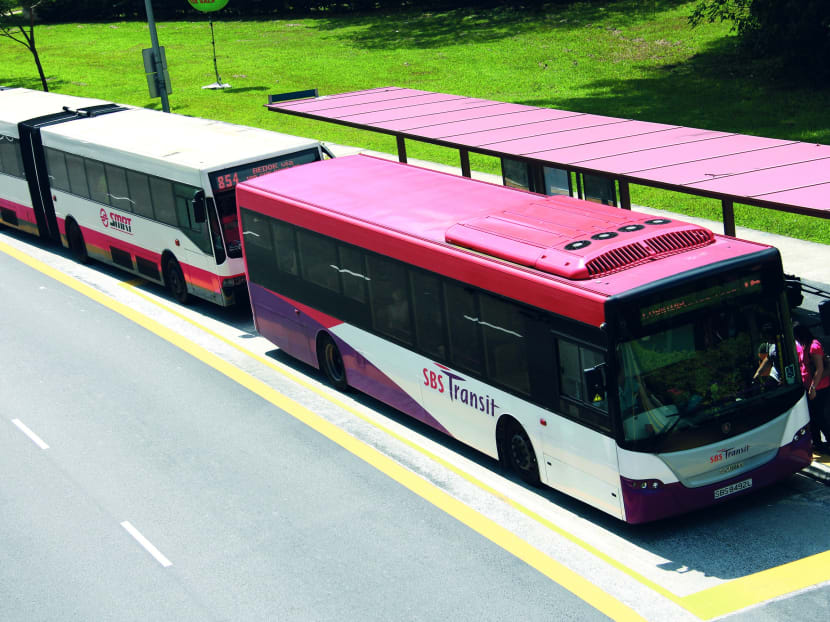

SINGAPORE — The number of new bus routes will be doubled to 80 under the expanded Bus Service Enhancement Programme (BSEP), which will also add 450 more buses to the network starting from next year — bringing the total number of government-funded buses to 1,000 by 2017.
To be largely rolled out by 2016, many of these new routes will be feeder routes or short trunk services to complement new Housing and Development Board (HDB) towns and connect the residents to key transport nodes and community or commercial facilities in the neighbourhood.
Areas with new Build-To-Order flats such as Sengkang, Punggol, Yishun and Choa Chu Kang will typically see more new routes.
Announcing the plans in Parliament during his ministry’s Committee of Supply debate yesterday, Transport Minister Lui Tuck Yew said the additional buses will be funded by the S$1.1 billion Bus Service Enhancement Fund set up in 2012. The original fund was budgeted to pay for and run 550 buses for 10 years.
“Clearly, the fund will now no longer be sufficient to last for the originally envisaged duration of 10 years ... But I know it would be sufficient to last the next few years and we will carry out a review of this fund at the appropriate time,” he said.
Explaining the costs of running the additional buses in response to a question by Non-Constituency Member of Parliament Gerald Giam, Mr Lui said they would be roughly proportionate to the cost for the 550 buses in the original BSEP, with upfront costs making up the majority.
“On average, it’s about half a million per bus. On a typical day, in terms of operating cost, it’s about S$600 to S$700,” he said.
The debate on transport lasted for about four hours, covering a range of issues such as rail reliability, taxi fares, car sharing and road safety for cyclists and pedestrians.
During his speech, Mr Lui revealed that commuter satisfaction with bus services rose to 88.3 per cent last year from 86.4 per cent in 2012 in an annual Public Transport Customer Satisfaction Survey conducted by UniSIM. This could reflect that improvements made with BSEP are “being felt by commuters on the ground”.
However, commuters’ overall satisfaction with public transport last year was 88.5 per cent, the lowest since 2007 when the satisfaction level was 86 per cent.
With more buses in the network, Mr Lui said peak hour loading had improved, with increased bus frequencies “significantly reducing” the number of persistently crowded services.
Complementing the expanded bus fleet will be tighter frequency standards for buses, such that all feeder bus services will have to operate at intervals of not more than eight minutes during peak hours by 2017, when the enhanced BSEP is completed.
Asked by Mr Giam when the Government will draw a line in subsidising costs for the profit-making operators, Mr Lui reiterated that given that the public transport operators are making losses running public buses, the BSEP was “a subsidy to commuters rather than to operators”.
“The operators make no profit running the 550 buses and the operators will make no profit running the additional 450 buses,” he said. “The 550 buses, we have already said, if it had to be paid for by commuters, it would have cost probably in the order of 15 cents more per journey.”
Responding to MPs Seng Han Thong’s (Ang Mo Kio GRC) and Lily Neo’s (Tanjong Pagar GRC) questions on whether sufficient bus drivers are being recruited, Mr Lui said the number of bus captains had increased by 5 per cent for SBS Transit and 6.5 per cent for SMRT in the past year. More support for recruitment will be explored if needed.
When asked if more buses will lead to greater congestion on the roads, Mr Lui said the authorities would look into increasing the speed of buses where possible, introduce more full-day bus lanes and identify more locations to expand bus bays, while enhancing the Mandatory Give Way to Buses scheme.
This article initially stated that Transport Minister Lui Tuck Yew said if commuters were to pay for the 550 buses under the Bus Service Enhancement Programme, it would cost 15 cents more per trip. The Transport Ministry has clarified that it would cost 15 cents more per journey.
Stay in the know. Anytime. Anywhere.

Subscribe to our newsletter for the top features, insights and must reads delivered straight to your inbox.
By clicking subscribe, I agree for my personal data to be used to send me TODAY newsletters, promotional offers and for research and analysis.






