
Explainer: Why must panda cub Le Le return to China instead of staying with its parents at River Wonders?
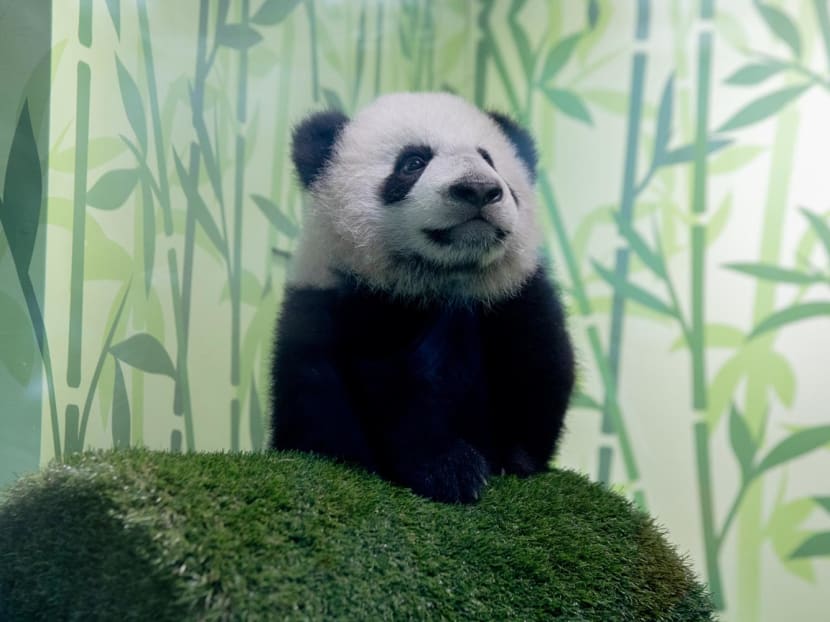
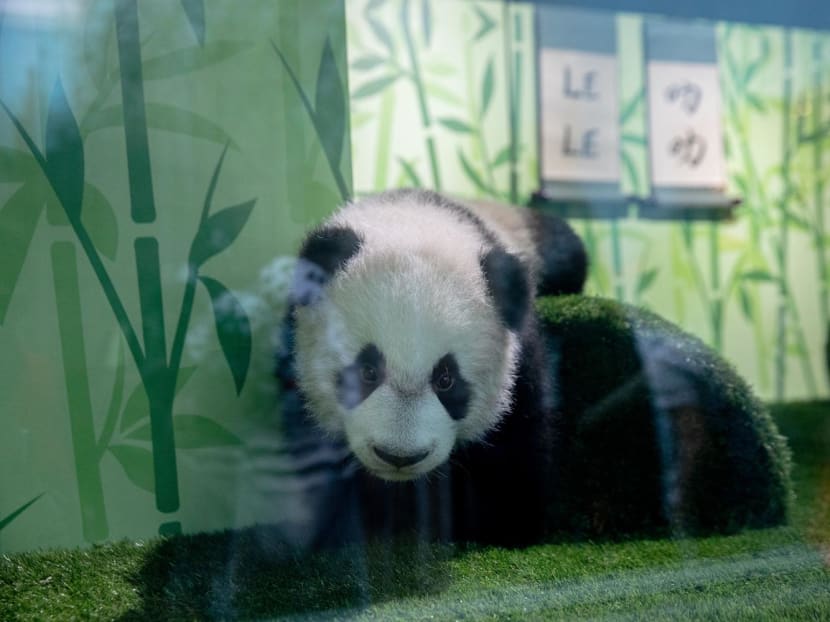
SINGAPORE — Come January, Singapore will bid goodbye to its youngest resident in the zoo’s panda family, Le Le.

- The arrangement to have pandas in Singapore was agreed upon by China Wildlife Conservation Association and Mandai Wildlife Group
- Part of China's panda diplomacy, host countries under the agreement receive pandas on a 10-year renewable basis
- This is subject to the host countries keeping to strict care standards and paying an annual fee of up to US$1 million
- The clause for panda cubs to be returned to China is rooted in conservation concerns
- Despite potential emotional concerns, experts have suggested that two-year-old male panda Le Le will be fine after separation


SINGAPORE — Come January, Singapore will bid goodbye to its youngest resident in the zoo’s panda family, Le Le.
The two-year-old male panda cub will be separated from its parents, Kai Kai and Jia Jia, and placed under quarantine after making a final appearance on Dec 13.
Following the necessary health checks, Le Le will depart for China in a customised crate on Jan 16, 2024, where it will then be part of the nation’s conservation programme to safeguard its species.
Le Le and its parents will not be separated forever, though, because Kai Kai and Jia Jia are set to leave Singapore in 2027.
The cub is at River Wonders (formerly the River Safari), a river-themed wildlife park in Mandai under the Mandai Wildlife Group.
The giant pandas first arrived in Singapore in 2012 under a 10-year agreement, but this was extended in September 2022 by another five years.
Singapore is one of several countries to have such an agreement with China.
In November, the United States returned its three pandas to China, marking the conclusion of a loan agreement between the US and China.
Earlier this month, the sole giant pandas in the United Kingdom, Tian Tian (“Sweetie”) and Yang Guang (“Sunshine”), returned to China after spending 12 years in Edinburgh. They were unable to breed successfully.
China sends its pandas as diplomatic gifts to other countries as a goodwill gesture and a means of fostering positive relations. Hence, the term "panda diplomacy" was coined.
Despite the joy that pandas bring to their host countries, the agreement typically includes a clause stipulating that any cubs born during their stay must be returned to China.
How do these panda contracts work, and why do the pandas loaned to host countries have to return to China eventually instead of staying on forever?
TODAY takes a deeper look into the history and intricacies of panda diplomacy.
WHAT IS PANDA DIPLOMACY?
China's panda diplomacy has historical roots dating back to the Tang Dynasty when Empress Wu Zetian gifted a pair of pandas to the Japanese emperor.
However, in 1982, facing the decline of its own panda population, the Chinese government transitioned from giving pandas as gifts to loaning them to nations on a 10-year renewable basis.
Host countries must adhere to strict standards for the care and housing of the panda pairs. This is coupled with an annual payment of up to US$1 million (S$1.3 million) for the privilege.
Additionally, a considerable fee is charged for any panda cubs born during the loan period, and these cubs must be returned within the first four years to contribute to China's national breeding programme.
Despite the seemingly hefty terms and conditions, countries around the world continue to accept pandas from China, allowing these cherished animals to continue serving as charismatic ambassadors overseas.
The gesture of loaning pandas to foreign zoos has become a significant aspect of China's approach to promoting cultural understanding and strengthening diplomatic ties.
Al Jazeera news channel reported that Oxford University experts studying panda diplomacy found that China typically lends pandas to countries with which it has trade deals, such as Singapore.
Other countries that could loan pandas include France, Germany, Japan, Malaysia and the UK.
WHY MUST THE PANDAS RETURN TO CHINA?
Given the pandas’ significant role, why are they not allowed to stay in their host countries forever?
The clause to return pandas to China is rooted in conservation concerns, because some zoologists said that it is in the best interest of the pandas and the conservation programme that the animals should eventually return to their natural habitat.
Another reason is that the giant pandas have long been synonymous with China.
Dr Benjamin Ho, assistant professor with the China Programme of the S Rajaratnam School of International Studies, said: “When you talk about pandas, you think about China.
“So until there is another country that can prove they have a lot of pandas and is suitable for breeding pandas, I think for the foreseeable future, pandas are going to be part of the Chinese blueprint when it comes to diplomacy.”
Before China made it a rule in 1984 that giant pandas living overseas and newborn giant pandas must return to China at a certain age, pandas gifted to several nations were allowed to keep them.
Currently, there is only one panda in the world not owned by China: Xin Xin, a 33-year-old panda residing at the Chapultepec Zoo in Mexico.
Its grandparents were gifted to Mexico in 1975. Sadly, Xin Xin's lineage will end with it since it never had any babies.
WILL LE LE BE OKAY AFTER SEPARATING FROM PARENTS?
While the idea of separating a two-year-old cub from its parents might sound like an emotionally traumatising experience, especially to the cub, panda experts have said that they will be fine.
One senior curator at the National Zoo in Washington DC, US, said that in panda years, a cub of two to three years old is equivalent to “a college kid”, and that the separation is akin to a college kid moving out to live life on his own.
Singapore's Mandai Wildlife Group said that Le Le, which turned two in August, has been displaying growing signs of independence, engaging in activities such as eating, resting and playing on its own.
Its mother, Jia Jia, has also been subtly avoiding it for a while. This is a natural progression in the life stage of giant pandas, which are inherently solitary creatures.
In the wild, such behavioural changes in mother pandas typically precede the eventual separation from their cubs.
“Jia Jia had already started exhibiting avoidance behaviours, such as moving away when Le Le approaches, and in the last month, it has been observed to display initial signs of rejection, like chasing Le Le away," Mandai Wildlife Group said in a media release.
As Le Le's departure approaches, Mandai Wildlife Group and experts from China will collaborate behind the scenes on various preparations to ensure that it is in optimal condition for its journey.
These preparations will encompass vaccinations, health assessments and conditioning.
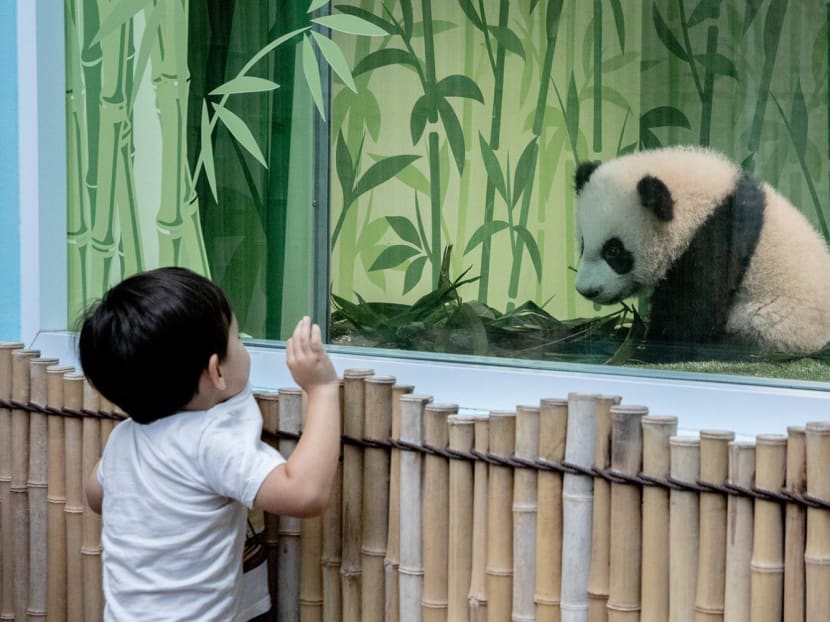
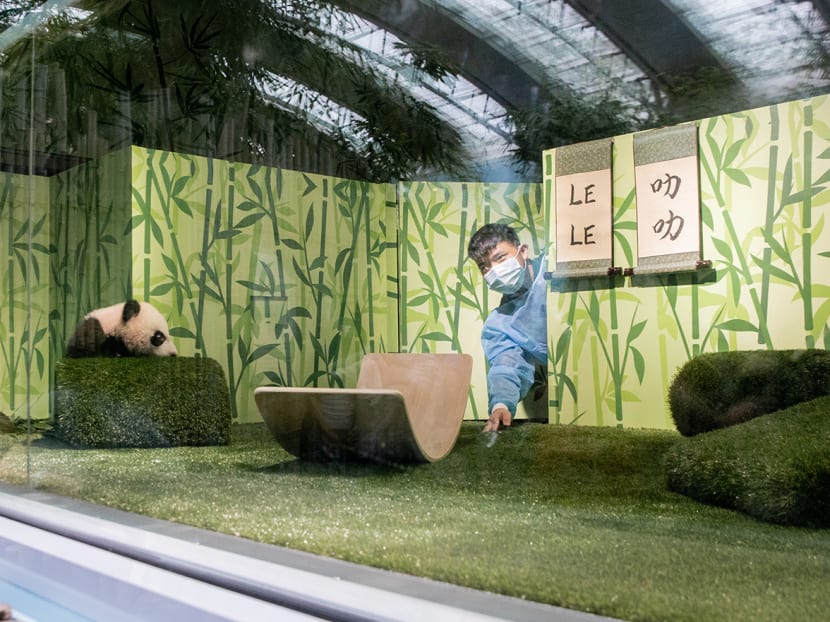
Until then, visitors may see Le Le in the Pavilion Capital Giant Panda Forest exhibit at River Wonders from 10am to 2pm.
During this transition, Jia Jia and Kai Kai will timeshare the exhibit. Jia Jia will be there on Mondays, Wednesdays and Fridays from 2pm to 6pm, and Kai Kai will be there at all other times.
Related topics
Le Le panda Kai Kai Jia Jia ChinaStay in the know. Anytime. Anywhere.

Subscribe to our newsletter for the top features, insights and must reads delivered straight to your inbox.
By clicking subscribe, I agree for my personal data to be used to send me TODAY newsletters, promotional offers and for research and analysis.






