
Police force needs to cut red tape, improve communication
SINGAPORE — The Singapore Police Force should cut the red tape in their activation protocol and improve overall communication strategies to be better prepared for public-order disruptions, said the Committee of Inquiry (COI) looking into the Little India riot on Dec 8 in its report released yesterday.
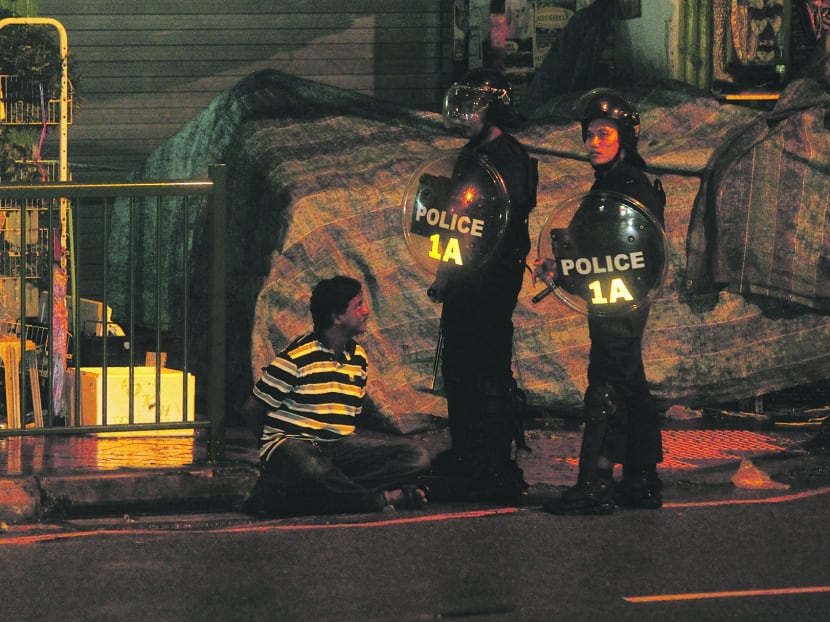
More training is needed for front-line officers so they can defuse public-order incidents. Today file photo

SINGAPORE — The Singapore Police Force should cut the red tape in their activation protocol and improve overall communication strategies to be better prepared for public-order disruptions, said the Committee of Inquiry (COI) looking into the Little India riot on Dec 8 in its report released yesterday.
More training was also needed for front-line officers so they are able to defuse and contain large-scale public-order incidents, as they cannot always afford to wait for Special Operations Command (SOC) troops to arrive.
The COI noted that multiple layers of approval to activate the SOC was one factor that slowed their arrival while the riot escalated. Though the police have made changes to the activation of the SOC, it should also look into activation protocols for other essential resources or tactics that may need to be deployed in response to public-order incidents, the committee suggested.
To deploy the SOC faster, the Traffic Police should also be activated to direct traffic and facilitate the rapid arrival of such resources.
“The (police) should use the lesson of the riot to proactively seek out other areas where unnecessary red tape can be cut, to be able to meet Singapore’s security needs more swiftly in times of need,” the COI said.
It also suggested more training and protective gear for front-line officers, such as how to use their batons for riot prevention — an essential component of riot control for police forces around the world.
The COI noted that public-order incidents can escalate easily in Singapore, given that the Republic’s buildings are in close proximity — which makes them easy targets for raging mobs — and mobile communications can help spread news of riots and result in the spreading of violence.
“Front-line officers would be, by virtue of their posting, well placed to nip (public-order situations) in the bud, as they would be the most familiar with the ground sentiment and terrain,” the COI said.
In reference to the fact that several police officers were in plain clothes during the riot, the committee also recommended that officers don uniforms wherever possible. “In a riot, the psychological effect on rioters of seeing officers in full or official gear should not be underestimated,” it said.
Poor communication that night was also deemed a learning point. To better see what was happening on the ground and improve overall command and control, the police should be able to capitalise on close-circuit cameras on the streets, police in-vehicle cameras or body-worn cameras. Social media monitoring should also be part of their capabilities, the COI said.
The police also need to improve their communication systems, such as prioritising the Incident Manager’s radio frequency so orders can be heard by all, and providing better radio sets so officers can hear one another in noisy situations.
The COI supported the police’s request for more manpower to better manage mass congregation areas such as Little India, but stressed that quality, rather than quantity, should be the major condition.
Commending the police and Singapore Civil Defence Force officers who first responded to the scene of the riot for working together “seamlessly”, the COI said both agencies could together develop joint standard procedures in managing public-order incidents. Ng Jing Yng
Related topics
riotStay in the know. Anytime. Anywhere.

Subscribe to our newsletter for the top features, insights and must reads delivered straight to your inbox.
By clicking subscribe, I agree for my personal data to be used to send me TODAY newsletters, promotional offers and for research and analysis.






