
Revised IPPT to have just three stations
SINGAPORE — Those who have been tripped up by standing broad jumps, pull-ups and shuttle runs during their Individual Physical Proficiency Tests (IPPTs) could soon have a better shot at passing the test.


SINGAPORE — Those who have been tripped up by standing broad jumps, pull-ups and shuttle runs during their Individual Physical Proficiency Tests (IPPTs) could soon have a better shot at passing the test.
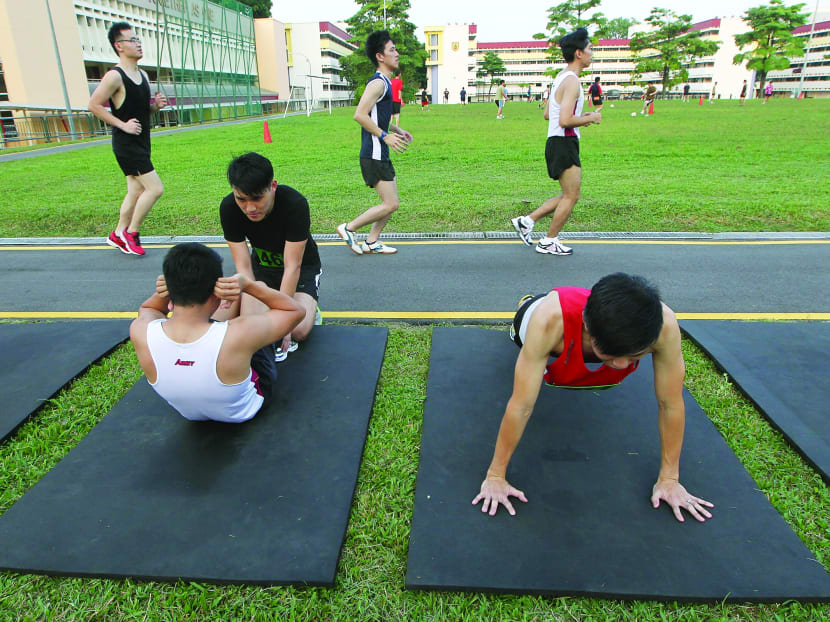
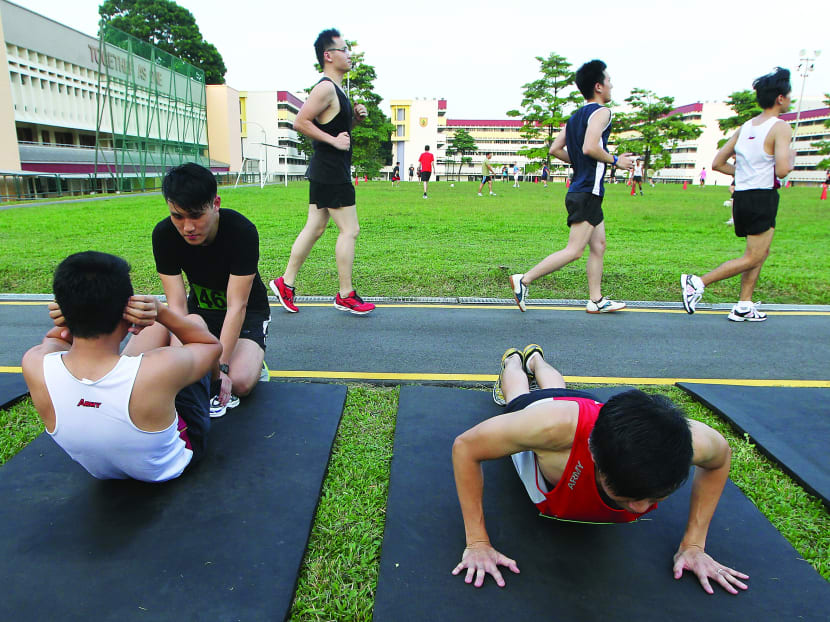
These components — the former two often cited as bugbears by National Servicemen (NSmen) — will be scrapped. Instead of five stations, NSmen will have to clear only three — a 2.4km run, sit-ups and push-ups — a change that has raised concerns among training experts TODAY spoke to that operational fitness could be compromised.
Announcing this in a Facebook post yesterday, Defence Minister Ng Eng Hen, who first flagged this possibility in an SAF Day interview earlier this month, said the new format will make it simpler for NSmen to train for IPPT, and for more to pass. It comes after calls by NSmen over the years to tweak the IPPT system and related training programmes in view of difficulties faced by NSmen to stay fit amid busy work schedules.
The standards expected and when the new test takes effect were not revealed. More details from an interview with Chief of Army Perry Lim will be made public today.
Calling the new format “simpler and better”, Dr Ng pointed out that “many other militaries use three-station tests to keep their forces fit”. These include the United States Army’s physical fitness test, which consists of three stations — push-ups, sit-ups and a 3.2km run. In Israel, soldiers are assessed based on sit-ups, push-ups and a 2km run, while the Australian army tests pre-enlistees on push-ups, sit-ups and the shuttle run.
The new test will have more age bands and a new scoring system where, in place of pass marks for each stations, points will be awarded and combined. “This way, soldiers can make up through more sit-ups, if they are weak in push-ups and running, or vice versa. There’s a limit to how much you can make up, but I like this counting system because it encourages NSmen to max out on each station and it plays to the individual’s strengths,” Dr Ng said.
He added that it will still take effort and regular exercise to pass.
“And that’s the idea — keeping healthy and fit should be a lifestyle and it’s good for you,” he said.
Standards to pass for full-time national servicemen, regulars and awards will be “about the same as before”, he said, without elaborating. “For NSmen, some adjustments are based on past data.”
The IPPT, introduced in 1979, has been unchanged since 1982. Every year, about 116,000 SAF personnel take the test.
To help NSmen pass the test, a voluntary preparatory training programme was introduced in 2006. Dr Ng, then the Second Minister for Defence, said: “We are a conscript army and we depend on Singaporeans to make sure that we are a strong SAF. You can only be as strong as you are fit.”
Dr Ng did not mention when the new IPPT will take effect, but the Home Team — which includes those from the Singapore Civil Defence Force and the Singapore Police Force — said on its Facebook page yesterday that it will also start using the new format next year. Earlier this month, Dr Ng also said that NSmen would be allowed to chose between the old and new IPPTs during the transition period.
In response to TODAY’s queries, the Education Ministry said it will review the new format’s implications on the Physical Education programme and National Physical Fitness Award.
Fitness trainers TODAY spoke to expressed worry over the removal of stations such as the pull-up and shuttle run. Mr Edmund Tan, director of commercial gym Physical Abuse, said the overall fitness standard of IPPT would be lower with the new format given the removal of pull-ups, which trains different muscles from push-ups. Pull-ups assess soldiers’ back muscles, which are used along with leg muscles when they evacuate casualties, he said.
Mr Mohammad Ismail Mahmood, a coach at commercial gym Ritual, was concerned about the removal of pull-ups, as soldiers could need to clear low walls or other obstacles. In addition, he felt that speed and agility would be compromised with the removal of the shuttle run.
While he felt removing the standing broad jump is reasonable, as he has seen most NSmen struggle with technique, the station should be replaced with a one-minute squat to test lower body strength, he suggested.
NSmen TODAY spoke to agreed that the new IPPT would be easier but had mixed views on its impact. Mr Terence Lee, 28, believes the new format will not affect operational duties as it follows best practices from other militaries.
However, Mr Standley Daniel, 27, said: “The removal of pull-up might not test the physical strength of NSmen (effectively).”
Stay in the know. Anytime. Anywhere.

Subscribe to our newsletter for the top features, insights and must reads delivered straight to your inbox.
By clicking subscribe, I agree for my personal data to be used to send me TODAY newsletters, promotional offers and for research and analysis.






