
Rise in mental health patient load at two public hospitals
SINGAPORE — At least two public hospitals have seen an increase in their mental health patient load in the past year, with one employing more doctors to cope with the situation.
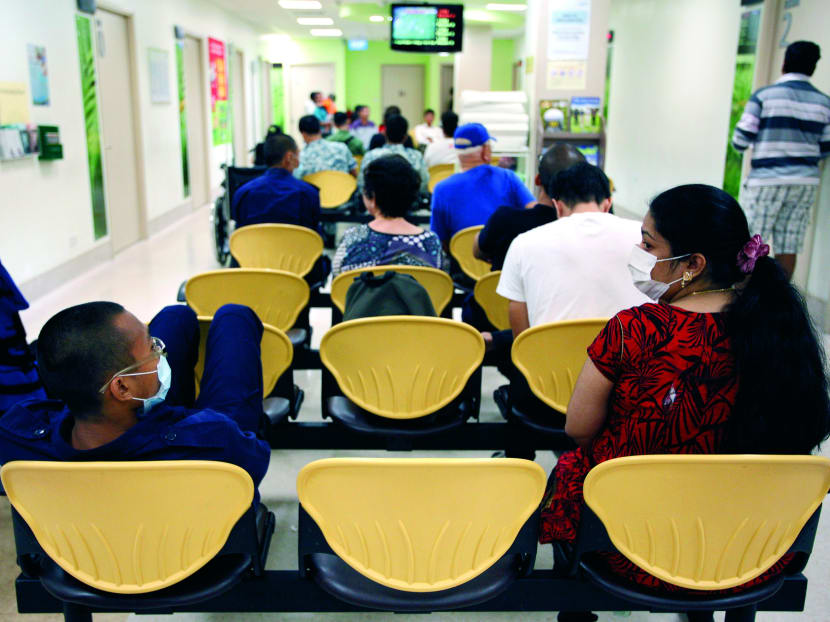
Doctors on-call at 24-hour A&E Departments in public hospitals are trained to attend to patients requiring urgent mental health treatment. Photo: Reuters

SINGAPORE — At least two public hospitals have seen an increase in their mental health patient load in the past year, with one employing more doctors to cope with the situation.
Compared to last year, the Khoo Teck Puat Hospital (KTPH) saw an increase of 13 per cent in patient load at its specialist outpatient clinic, while the National University Hospital (NUH) saw a 12 per cent spike.
The KTPH has employed three more doctors in its Department of Psychological Medicine this year to handle the increase, while the NUH has been “working closely” with primary care partners, such as general practitioners (GPs), to ensure patients receive “optimum care”. “Patients whose conditions are stable are referred back to the community for follow-up,” said Associate Professor John Wong, Head and Senior Consultant, Department of Psychological Medicine at NUH.
The number of patients, which include new and repeat ones, seen at three other public hospitals contacted by TODAY has been constant over the past year. One of them, the Institute of Mental Health, said patient numbers have been “consistent” over the past three years.
Between 2007 and last year, the number of patients seeking mental health treatment has been increasing by 1.4 per cent yearly — a figure “in line with population increases”, said a Ministry of Health (MOH) spokesperson.
Last year, there were about 233,000 attendances at specialist outpatient clinics (SOCs) for mental-health-related issues.
Despite the increase in patient load, the median waiting time in these clinics for new psychiatric medicine patients was 19 days in the first half of this year, below the overall SOCs’ median waiting time.
In 2011, the overall median waiting time for the first appointment was 24 days.
First-time patients, with or without referrals from GPs and polyclinics, generally see a doctor at an SOC in about two weeks to a month, and severe cases could be reviewed after two to three days at KTPH.
For follow-up visits, patients typically wait about two weeks to a month, but the period is still determined by the doctor’s assessment. If the patient’s condition is stable, the doctor may see him once every three months.
“For GPs under the Mental Health-GP partnership programme, they are able to directly discuss patient management with the psychiatrists or arrange for direct access to specialist outpatient clinics for their patients,” said the MOH spokesperson.
While waiting for an appointment to see a psychiatrist at the hospital, patients can also go to their family physicians, who are trained to manage mental health conditions, the spokesperson added.
Doctors on-call at 24-hour Accident and Emergency (A&E) Departments in public hospitals are also trained to attend to patients requiring urgent mental health treatment.
There are also community-based mental services, such as the Assessment and Shared Care Teams, where teams comprising mental health professionals and case managers manage people with mental health problems.
The Community Mental Health Intervention Teams, which are led by voluntary welfare organisations, also link up with GPs and support them in managing patients with mild to moderate mental conditions.
“Clients may come to us when they require counselling, which could be more immediate like if they are having problems at work or are going through a break-up with their partners. But if they have active suicidal thoughts or thoughts of hurting themselves, our counsellors will send them to the hospital’s A&E Department, as the immediate need then would be the client’s safety,” said Ms Frances Lee, Centre Manager of Care Corner Family Service Centre (Toa Payoh).
Stay in the know. Anytime. Anywhere.

Subscribe to our newsletter for the top features, insights and must reads delivered straight to your inbox.
By clicking subscribe, I agree for my personal data to be used to send me TODAY newsletters, promotional offers and for research and analysis.






