
Send money via Facebook? Like!
SINGAPORE — Facebook friends can now send each other modest sums of money without knowing the recipient’s bank account details via a service launched yesterday by OCBC, as the lender seeks to set itself apart by targeting tech-savvy consumers in a rapidly growing mobile banking market.
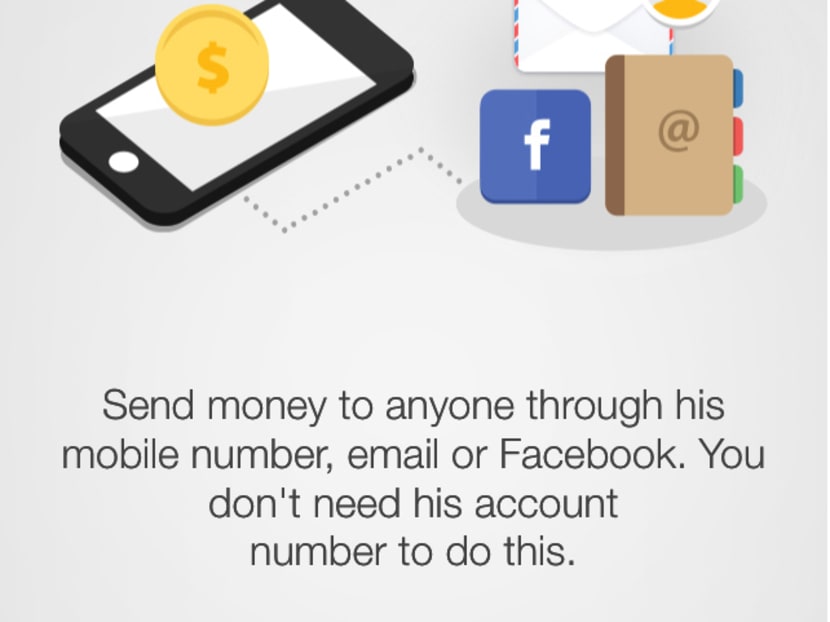
The OCBC Pay Anyone mobile banking app is the first of its kind in Singapore.

SINGAPORE — Facebook friends can now send each other modest sums of money without knowing the recipient’s bank account details via a service launched yesterday by OCBC, as the lender seeks to set itself apart by targeting tech-savvy consumers in a rapidly growing mobile banking market.
Dubbed OCBC Pay Anyone, the service on its mobile banking app allows payments of up to S$100 a day without any extra charges to any bank account in Singapore as long as the sender has the recipient’s email address or mobile number, or if the recipient is a Facebook friend.
OCBC, which claims to be the first bank here to tap on social networking giant Facebook in facilitating funds transfers, said its customers can send money to accounts at all 14 banks on the new electronic interbank service Fast and Secure Transfers (FAST). FAST allows transfers to be made almost instantly between different banks, unlike through Giro or cheques, which may take a few days.
It is not a world first, however. Banks in Russia, India and Australia already offer such a funds transfer service on Facebook. In the United Kingdom, a service allowing people to transfer money via mobile phones as long as they link their numbers to a current account was launched last month.
In Singapore, OCBC’s rivals UOB and Maybank have similar mobile number banking services although not through Facebook.
Singapore’s largest bank, DBS, told TODAY it will be launching a new mobile payment service by the end of the month. It has more than 800,000 mobile banking users, and mobile fund transfers have grown eightfold from 2010 to 2013. More than 20 per cent of its one million daily transactions are done via mobile banking, DBS said.
OCBC’s fund transfers via mobile phones grew five-fold from 2011 to 2013, with a 76 per cent average year-on-year increase in the number of mobile banking customers during this period, the lender said. Including online transfers, overall volume has increased 64 per cent from 2010 to 2013, it said.
The bank, which declined to reveal its number of mobile banking customers, aims to have 15 per cent of its mobile banking fund transfers done via the Pay Anyone app by the end of this year.
Mr Pranav Seth, OCBC’s head of E-Business and Business Transformation, said: “If you look at the Singaporean customer, he is highly mobile-savvy and socially savvy. (Customers) want things to be done much more simply, and we believe banking should be much simpler than it is right now.”
The service works this way: The sender has to log in to his OCBC mobile app, which will allow him to choose the recipient via any of the three methods of payments. He then generates his own passcode for the recipient, and will also have to input a one-time password received from a text or his banking token.
The recipient can activate the payment process by accessing a unique link sent through Facebook, email or mobile number, keying in the passcode from the sender and bank account details on a secure OCBC site.
Users raised concerns with security, however, with some preferring the simplicity of cash or going through traditional forms of transfers.
But Mr Seth sought to quell concerns about security, saying: “Although we say we are using Facebook, we are not using Facebook functionalities other than notifications. The fundamental transactions still happen on our secure banking platforms, using a secure user ID, passwords and one-time passwords.”
Analysts say that while the service may be secure enough, some users may be uncomfortable with sensitive financial information being stored in their Facebook accounts.
Mr Shiv Putcha, associate director for mobility at research firm IDC, said: “The one-time passwords make it fairly foolproof, and needing to be connected to the person on Facebook is another layer.
“The issue with Facebook, however, is the question of privacy, as they keep changing their consumer data policies all the time. It is whether the user is comfortable with how Facebook uses customer data, and for them to be all right with (having) their banking details in their Facebook accounts,” he said.
Stay in the know. Anytime. Anywhere.

Subscribe to our newsletter for the top features, insights and must reads delivered straight to your inbox.
By clicking subscribe, I agree for my personal data to be used to send me TODAY newsletters, promotional offers and for research and analysis.






