
SIA aims to soar ahead; goal to become 'leading digital airline in the world'
SINGAPORE — It ranks as one of the top airlines in the world, and now Singapore Airlines (SIA) is eyeing another accolade: that of “leading digital airline in the world”.
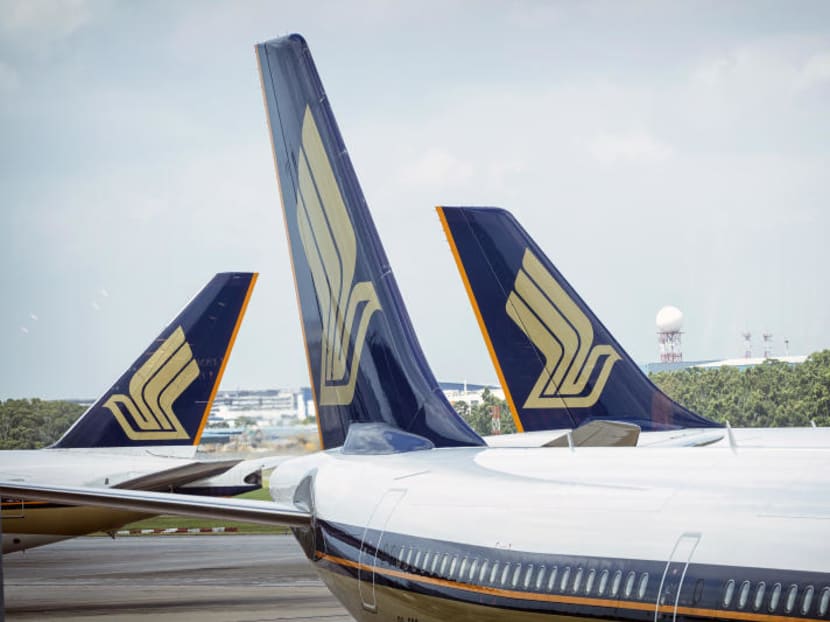
Bloomberg file photo

SINGAPORE — It ranks as one of the top airlines in the world, and now Singapore Airlines (SIA) is eyeing another accolade: that of “leading digital airline in the world”.
To achieve its goal, the airline launched its Digital Innovation Blueprint on Monday (Jan 29), which will see SIA collaborating with several government agencies and the National University of Singapore (NUS) in digital research and development. Some of the new capabilities SIA is looking into include technology to better predict when critical aircraft components need fixing or replacing, and tailoring direct mailers based on customers’ travel patterns.
It is partnering with the Agency for Science, Technology and Research (A*Star) to develop predictive maintenance solutions for critical aircraft parts, tapping on the agency’s data analytics expertise to glean insights on aircraft maintenance records. This will allow for improvements in on-time performances, and ensuring its operations go on uninterrupted.
The technology is currently being used on the airline’s A380 aircraft components, and will be progressively rolled out for other aircraft types in SIA’s fleet.
SIA chief executive officer Goh Choon Phong said that while digital technologies have helped SIA provide “more proactive and personalised experiences for our customers”, the airline is continuously looking to understand their travel patterns better, and better adapt its marketing strategies.
“Instead of sending out a mass email… we can be a bit more targeted in offering what our customers want, based on their travel patterns in the past, and our understanding,” said Mr Goh.
Speaking at the launch at the Singapore Airlines Training Centre on Monday, Minister for Trade and Industry (Industry) S Iswaran pointed out that the aviation and aerospace industries are “no exception” to the digitalisation trend.
“Digitalisation is transforming if not disrupting industries, and catalysing new growth areas,” said Mr Iswaran.
“We are likely to see a significant impact across the value chain – from customer service and airline operations, to aircraft manufacturing and maintenance, repair and overhaul.” SIA is also partnering the Civil Aviation Authority of Singapore and the Economic Development Board to work on its Digital Innovation Blueprint.
The national carrier is also setting up a digital innovation lab to allow staff to work with innovative companies, including start-ups, established incubators and accelerators, to stimulate new ideas and facilitate collaboration in a creative environment.
When queried on the costs of its digital efforts, Mr Goh did not provide specifics, but would only say that the digital investments amount to “hundreds of millions of dollars over a multi-year period”. He also declined to comment on the returns of the investments.
SIA’s latest announcement comes amid a three-year transformation plan aimed at fending off intense competition from in and around the region that has impacted earnings.
In November last year, the airline unveiled an overhaul of all its Airbus A380 jets across cabin classes to the tune of some S$1.15 billion.
A month later, it announced new fare pricing structures for economy, premium economy and business classes, encompassing tweaks in seat selection and mileage accrual.
There have been some speed bumps, however, with its decision earlier this month to impose credit card handling fees sparking a furore among customers. The charge, which amounted to 1.3 per cent of the total fare amount, capped at S$50, was for customers who bought its cheapest Economy Lite tickets, said the airline. The backlash saw SIA making a U-turn a day after the announcement, as it decided not to proceed with the implementation of the fee.
A new online booking feature that automatically charges customers for travel insurance, unless they opt out, has also come under fire.
On the reversal of its decision to charge credit card fees, Mr Goh addressed the matter briefly on Monday. “We have to accept that some things may not work … and we have to show that if it doesn’t work, that we learn quickly, and move on,” he said.
As for the auto-inclusion of travel insurance, Mr Goh added the move “has been reviewed”, and that the airline will announce it when it has come to a decision.
Stay in the know. Anytime. Anywhere.

Subscribe to our newsletter for the top features, insights and must reads delivered straight to your inbox.
By clicking subscribe, I agree for my personal data to be used to send me TODAY newsletters, promotional offers and for research and analysis.






