
‘Steady progress’ in controlling Covid-19, but testing all migrant workers in dorms will take time: Lawrence Wong
SINGAPORE — Singapore is "steadily making progress" in controlling the Covid-19 outbreak, both in the community as well as in the migrant workers’ dormitories, said National Development Minister Lawrence Wong on Tuesday (May 12).
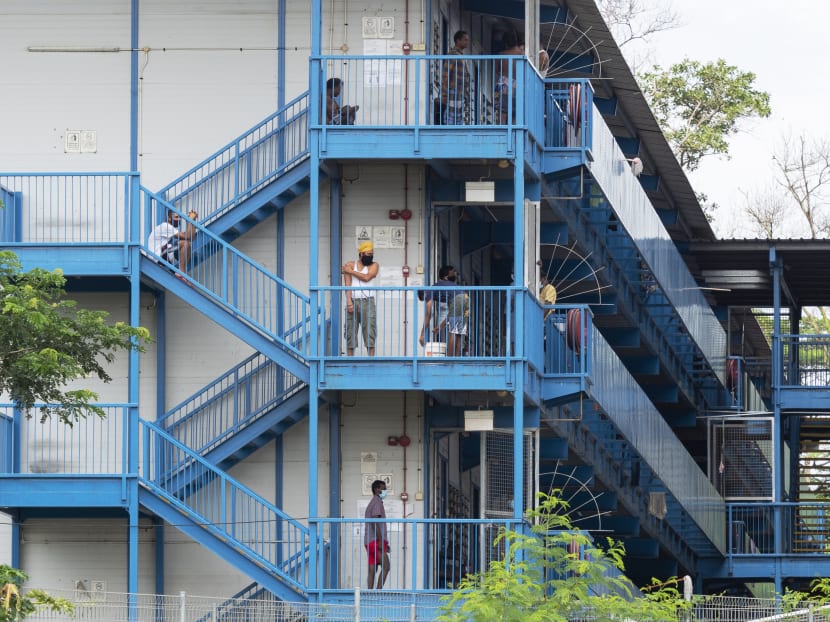
National Development Minister Lawrence Wong said that authorities have tested more than 32,000 migrant workers in the dormitories to date, which is roughly 10 per cent of the migrant worker population residing in them.



SINGAPORE — Singapore is "steadily making progress" in controlling the Covid-19 outbreak, both in the community as well as in the migrant workers’ dormitories, said National Development Minister Lawrence Wong on Tuesday (May 12).
He added that to date, the authorities have tested more than 32,000 migrant workers in the dormitories, which is roughly 10 per cent of the migrant worker population residing in them.
However, it may take weeks or even a few months to finish testing the remaining 90 per cent, said Mr Wong during a media briefing by the multi-ministry task force leading Singapore's response to the outbreak.
“It's not just testing. We are also putting in place testing and isolation,” he explained. “So there is a whole range of processes that have been put in place to make sure that the worker is free from infection before we release them to the workforce.”
Still, he said that the daily reports show that progress has been made, with the number of infections reported “steadily coming down”.
Health Minister Gan Kim Yong also said that the circuit breaker measures have “shown promise” in reducing Covid-19 infections locally in the community.
Compared to the average of over 30 new cases daily in mid-April, there are only around eight cases on average each day in the past week, he noted.
“The situation in the migrant worker dormitories is also stabilising,” he added.
In late April, there was a daily average of 1,000 new cases from the dormitory population, but in the last week this number has come down to about 700 cases, he said.
The Ministry of Health (MOH) said on Tuesday that between April 20 and 26, there were 686 workers from the purpose-built dormitories reporting sick every day with acute respiratory symptoms. The figure fell to 463 workers last week.
Nonetheless, MOH said it is still picking up an average of 700 Covid-19 cases per day in the past week among foreign workers in dormitories because of its extensive testing regime, which covers workers who are well and asymptomatic. Each day, more than 3,000 of these workers are tested, and the rate will be increased as the authorities build up their testing capacity.
“We are doing this to verify and test the status of all workers, so that we can provide them with the necessary medical care and eventually allow them to resume work,” said the ministry.
Mr Gan explained that this is an important strategy that will help Singapore gradually lift the circuit breaker measures.
“But it will mean that the number of cases at the migrant worker dormitories will remain high for some time while we carry out aggressive testing,” he said.
‘SYSTEMATIC’ TESTING
The task force has embarked on a “systematic plan” which employs a mix of Covid-19 polymerase chain reaction (PCR) tests and serological tests.
It has so far relied on the PCR test – the accepted testing standard used globally - to diagnose if someone is currently infected in Singapore.
“Increasingly, the use of serological tests has also helped different nations understand the progression of the disease in their populations and manage the outbreak,” MOH said.
Serological tests detect antibodies to Covid-19 from a blood sample, as a marker of past infection.
Typically, individuals infected by Covid-19 more than 10 to 14 days ago will have a positive serology test. Singapore has used serology testing in research and among selected populations, and will start to use this among migrant workers, MOH said.
The strategy in the coming weeks will involve a combination of mass serological and mass PCR tests.
For the dormitories with higher levels of infection, the authorities will apply serological testing to the workers.
“Those with a positive serological test would have been infected in the past (at least 10 to 14 days ago), and would no longer be infectious after a period of isolation,” MOH said.
“For those with a negative serological test, and for the workers in the other dormitories, we will apply the PCR tests either individually or in batches.”
The protocol requires those who are negative to be isolated for a further 14 days before they are given the swab test to confirm they are negative.
“This is because a PCR test before Day 14 will not be able to exclude that disease may develop later on during the incubation period,” MOH noted.
The ministry said the testing regime has begun and it will be carried out “systematically across all the dormitories to ensure the health and wellbeing of every worker”.
Join our Telegram channel to get TODAY's headline news: t.me/todayonlinesg

Related topics
Covid-19 circuit beaker Migrant WorkersStay in the know. Anytime. Anywhere.

Subscribe to our newsletter for the top features, insights and must reads delivered straight to your inbox.
By clicking subscribe, I agree for my personal data to be used to send me TODAY newsletters, promotional offers and for research and analysis.






