
Soft drink companies urged by Singapore Govt to cut sugar content
SINGAPORE — The Government has asked soft drink producers to agree to reduce the amount of sugar in all their drinks sold in Singapore, as part of the latest efforts to tackle the threat of diabetes.
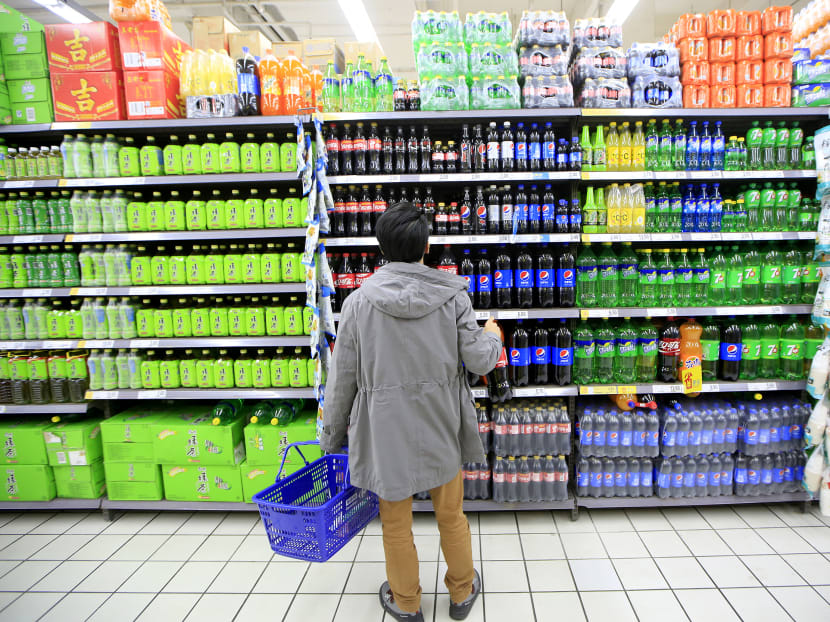
Reuters file photo

SINGAPORE — The Government has asked soft drink producers to agree to reduce the amount of sugar in all their drinks sold in Singapore, as part of the latest efforts to tackle the threat of diabetes.
Announcing this during the National Day Rally speech on Sunday night (Aug 20), Prime Minister Lee Hsien Loong highlighted the invisible dangers of consuming too many soft drinks, given the amount of refined sugar they contain. “Just one can of soft drink can contain eight cubes of sugar … That’s more than you need for one whole day,” he said.
Drinking soft drinks every day can cause an “overloading” of sugar in the body, and significantly raise one’s risk of diabetes, he added. One in nine Singaporeans have diabetes, and PM Lee said it is one of the major diseases causing ill health among seniors here.
Young children are the most vulnerable, however, because “soft drinks are part of their lifestyle”, Mr Lee said. And with diabetes cases increasingly on the rise among young people, including children, this could spell “big trouble for their health”.
Even though school canteens can only sell drinks containing 6 per cent sugar or less, this does little to solve the problem, he said, because children can still buy fully sweetened drinks at convenience stores outside school.
The Government is still “scouting around for solutions”, he revealed.
Nestle R&D Centre Singapore had previously declared its commitment to reduce sugar and salt content in its products by 2020. The food and beverage company is looking at reducing the sugar content by 5 per cent, and salt by 10 per cent within the next three years, the firm had told Bernama earlier this month. The centre looks after the development of several of the company’s brands including Milo, Nescafe and Maggi.
In the United Kingdom and Chile, there are warning labels on drinks with high sugar content. Other countries want to limit the size of soft drinks, and Mexico and Brunei have even implemented a sugar tax.
However, it is still not clear if these measures are effective in battling the health problem, he added.
A World Health Organisation report found that taxing sugary drinks can cut down the consumption of “free sugars” and reduce obesity, diabetes and tooth decay. Free sugars refer to glucose or fructose, sucrose or table sugar added to foods and drinks by the manufacturer, cook, or consumer, as well as sugars naturally present in honey, syrups, fruit juices, and fruit juice concentrates.
Mr Lee acknowledged that no one has found the “ideal solution yet”, though he said that the Government is willing to study and implement ideas that can work. He admitted that even if soft drink producers cut down the sugar levels in their products, ultimately, what one chooses to drink is a “personal choice”.
Urging more Singaporeans to switch to drinking plain water instead, Mr Lee said: “(This) requires commitment, and adjustments to our habits, our lifestyles, and diet … But the payoff is large, and it can be done.”
Related topics
NDR 2017Stay in the know. Anytime. Anywhere.

Subscribe to our newsletter for the top features, insights and must reads delivered straight to your inbox.
By clicking subscribe, I agree for my personal data to be used to send me TODAY newsletters, promotional offers and for research and analysis.






