
Suspending schools, closing some workplaces may be needed if Covid-19 cases in S'pore keep rising: Lawrence Wong
SINGAPORE — Drastic measures such as suspending schools and closing non-essential workplaces may be needed if measures taken so far do not slow Covid-19’s spread in Singapore in this “critical phase”, National Development Minister Lawrence Wong said on Wednesday (March 25).
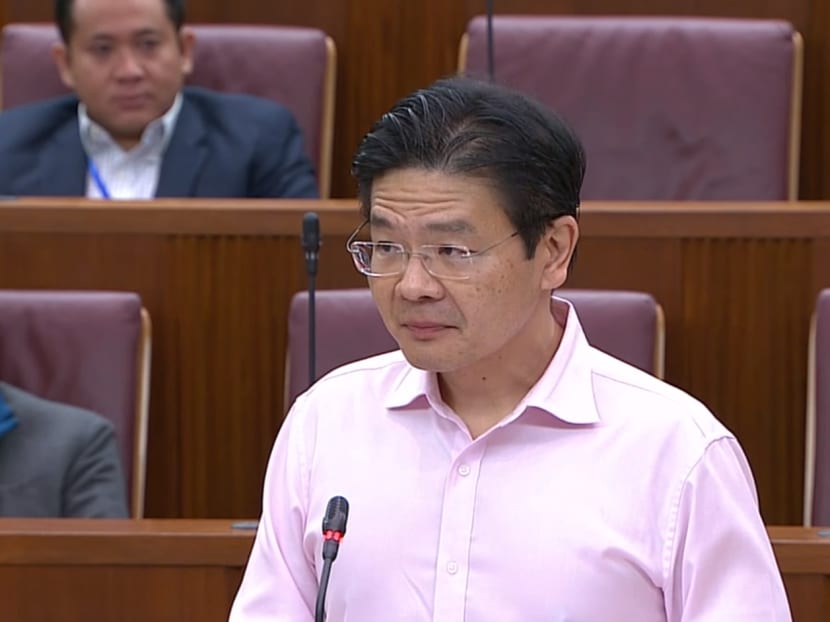
National Development Minister Lawrence Wong speaking in Parliament on March 25, 2020. He became emotional at one point as he described the work of frontline Covid-19 workers.



SINGAPORE — Drastic measures such as suspending schools and closing non-essential workplaces may be needed if measures taken so far do not slow Covid-19’s spread in Singapore in this “critical phase”, National Development Minister Lawrence Wong said on Wednesday (March 25).
Mr Wong was giving an update in Parliament on the multi-ministry taskforce handling the Covid-19 outbreak — becoming emotional at one point as he paid tribute to the “unsung heroes” on the frontlines of the fight against the virus.
“The latest measures may help to slow down the spread of the virus and stabilise the number of new cases. But It is also possible that despite these measures, the number of infected cases will continue to rise,” Mr Wong, who is a co-chair of the taskforce, told the House.
Currently, there are 38,000 people who are serving 14-day stay-home notices, and 2,500 in quarantine, he said.
While thanking frontline workers who have been working hard since Covid-19 appeared in Singapore in January, Mr Wong grew emotional and started tearing. He had to pause for about two minutes before he could gather himself to continue.
Mr Wong also listed other professions who have been hard at work behind the scenes and called them “unsung heroes”, including those in the public service, cleaning, security, transport, airport management, media, hotels, food and beverage sectors.
After dabbing his tears dry using a tissue, Mr Wong eventually composed himself and said: “Words are not sufficient to express our appreciation for so many Singaporeans going all out to fight the virus. And I just want to say a big thank you to everyone who is doing their part.”
He added: “It has been more than two months since our work on Covid-19 started. It almost seems like a lifetime ago, but in fact, we are only at the beginning of a very long fight. This will continue for many more months till the end of the year and perhaps even beyond.”
MORE IMPORTED CASES AND MORE UNLINKED LOCAL CASES
In view of the large numbers of Singaporeans returning from overseas, Mr Wong said the taskforce had to focus its resources on these people.
Mr Wong revealed in Parliament that every day about 1,200 Singapore residents are returning from the United Kingdom and United States alone.
With more than 200,000 Singaporeans overseas, he said that there is no way of knowing how long this current wave of returnees will last.
“With more lockdowns imposed in countries elsewhere, more may want to return here to Singapore, and we should welcome them. So we have to be prepared for more returnees and have arrangements to ensure that they are self-isolated for the full period before they can be brought back within our community,” said Mr Wong.
A majority of confirmed Covid-19 cases in Singapore are from imported cases and he said that the numbers are expected to go up as more return.
And to prevent them from transmitting the virus to the local populace, Mr Wong said it is critical to continue with ongoing contact tracing and quarantine efforts.
“The moment you give up on contact tracing, you are no longer able to manage the virus outbreak,” he said.
While Singapore’s contact tracing regime has been praised internationally and held up as the “gold standard”, Mr Wong said Singapore’s detection rate is “not 100 per cent”.
Of greater concern to the Government are the confirmed cases that do not have links to the previous ones, he said, and that there have been more such cases in recent days.
WHAT SINGAPORE HAS DONE OVER THE PAST TWO MONTHS
-
Tightening border controls beginning with China, where the virus is believed to have started, before expanding these restrictions to other countries, such as Iran, South Korea, Italy, Spain, Germany, France, the United Kingdom, member countries of the Association of Southeast Asian nations, and eventually the whole world.
-
Implementing temperature scanning and later swab tests at airports
-
Advising Singaporeans to defer all non-essential travel, then later advising against all travel
-
Banning tourists from entering into Singapore
-
Limiting returning work pass holders to only those providing essential services
-
Isolating all Singapore residents returning from overseas to a 14-day period at home
-
Isolating those returning from the United Kingdom and the United States at designated hotels
-
Cancelling all large-scale events and gatherings
-
Suspending all elderly-centric activities
-
Limiting any gathering outside of school and work to no more than 10 people
-
Shutting all bars, clubs and cinemas
-
Suspending tuition centres and religious services
Join our Telegram channel to get TODAY's top news stories: https://t.me/todayonlinesg

Related topics
school closure Lawrence Wong Covid-19 coronavirus Budget 2020Stay in the know. Anytime. Anywhere.

Subscribe to our newsletter for the top features, insights and must reads delivered straight to your inbox.
By clicking subscribe, I agree for my personal data to be used to send me TODAY newsletters, promotional offers and for research and analysis.






