
Studies on about 260 children who had Covid-19 in Singapore show half had no symptoms, none had serious ailments
SINGAPORE — Studies conducted by the National University Hospital (NUH) and KK Women’s and Children’s Hospital (KKH) on 259 children and adolescents who have contracted Covid-19 have found that nearly half had no symptoms and the rest had “generally very mild” symptoms.
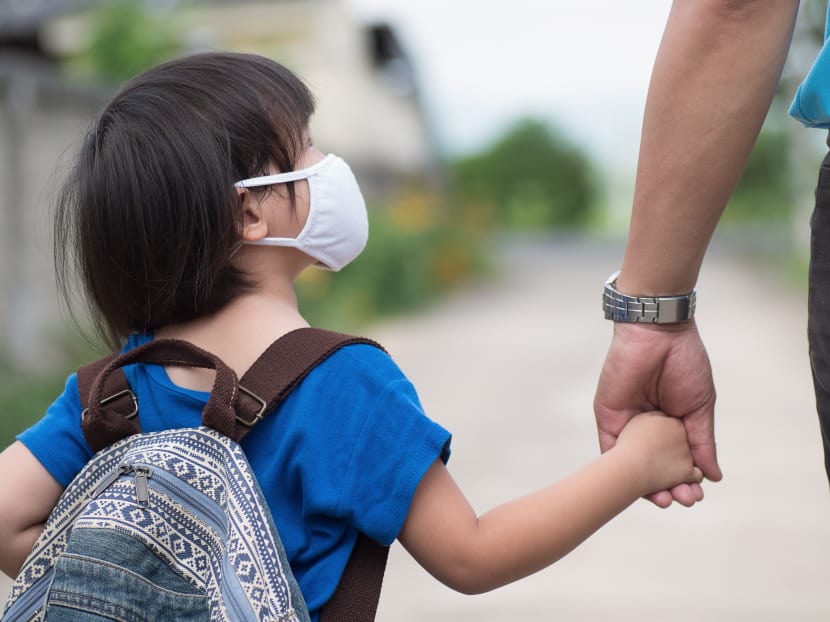
In studies done by two hospitals in Singapore, none of the children were found to have persistent Covid-19-related symptoms after recovery.



- Two hospitals in Singapore found that almost half of the children infected by the coronavirus had no symptoms
- In other countries, though, there were children who needed intensive care or have died
- There are eight Covid-19 patients under intensive care as of Aug 6 and two of them are fully vaccinated
- There were 16 patients and workers infected in hospitals and community hospitals from July 28 to Aug 3
SINGAPORE — Studies conducted by the National University Hospital (NUH) and KK Women’s and Children’s Hospital (KKH) on 259 children and adolescents who have contracted Covid-19 have found that nearly half had no symptoms and the rest had “generally very mild” symptoms.
Associate Professor Kenneth Mak, director of medical services at the Ministry of Health (MOH), said: “None of the children had breathlessness, nor did they require oxygen supplementation, and none of the children required care in intensive care units (ICUs).”
He added that at present, there are 89 children below the age of 12 who have contracted the coronavirus and are being cared for in the hospitals. Another 35 children are being cared for in community care facilities.
Assoc Prof Mak was speaking on Friday (Aug 6) during a press conference held by the Government’s Covid-19 task force.
As of Friday, eight Covid-19 patients are critically ill and under intensive care.
NO LONG-LASTING SYMPTOMS IN CHILDREN
The studies on children who had Covid-19 were done starting in March last year.
NUH studied its first 117 Covid-19 cases, while KKH studied 142 cases over a similar period, with the children ranging from two months old to 18 years old.
In NUH, one in five of them had “associated medical conditions” and “many of them had exposure to infected cases in the same household”, Assoc Prof Mak said.
In follow-up checks, none of the children were found to have persistent Covid-19-related symptoms after recovery — or the “equivalent of a long Covid syndrome that has been reported internationally”, he added.
International studies have suggested that fewer children have long-lasting Covid-19 symptoms as compared to adults.
However, Assoc Prof Mak urged caution because in other countries, there have been children who “have not done well” or have required ICU care.
“We are fortunate that we have not seen this, we have had very good outcomes, but just in the countries around us in Malaysia, Indonesia… there have been children who have passed away from Covid-19.”
PATIENTS IN ICU
Giving more details on the eight patients now in ICU, Assoc Prof Mak said that they ranged from 38 years old to 90 years old.
Two of them are fully vaccinated, while the remaining six had not been vaccinated or had not derived adequate immune protection as a result of receiving just one dose of a vaccine.
“Each case had multiple medical conditions that made them further vulnerable to developing a severe infection,” he added.
These included conditions such as diabetes, hypertension, kidney disease, heart disease and sepsis that was secondary to a bacterial infection.
Responding to a question on whether it is a concern that fully vaccinated people still need intensive care when infected, Health Minister Ong Ye Kung said that it is “a matter of proportion”.
“If, let’s say, 100 per cent of the Singapore population has been fully vaccinated, then whoever is in ICU, whoever is severely ill will be a fully vaccinated person... that does not mean that vaccination did not work?”
Mr Ong added that as more people are vaccinated, there will be some fully vaccinated people who will still fall severely ill.
“But at this stage, when we can compare vaccinated and unvaccinated (people), the evidence continues to show that if you are vaccinated, your chances of falling severely ill is up to 10 times less than (someone) who is not vaccinated.”
Assoc Prof Mak said that Singapore has more than 800 isolation and general ward beds, which have been made available for the care of sick Covid-19 patients, and there are more than 100 ICU beds made available to look after critically ill patients.
“At this time, there is adequate hospital capacity to look after both adults and (children who get Covid-19),” he added. “But we are ready to mobilise and make available more isolation ICU beds, if needed.
“We will work closely with our private and public hospital partners to ensure that all healthcare facilities in Singapore are ready to take up the challenge of managing any potential increases in our Covid-19 case load.”
INFECTIONS IN HEALTHCARE SETTINGS
Assoc Prof Mak also gave an update on the Covid-19 cases or clusters that were detected in healthcare facilities.
In the last two weeks, there have been healthcare workers as well as patients in healthcare facilities found to be infected.
Between July 28 and Aug 3, there have been 16 patients and staff members who were infected in hospitals and community hospitals.
Infections among the workers were either detected through routine and regular testing in all healthcare institutions, or when medical workers developed symptoms and presented themselves early to a clinic.
He said that the infected workers had worn personal protective equipment that was appropriate for the setting in which they were working.
“At this time, there is no evidence that spread has occurred from healthcare workers to their patients.”
As for patients in hospitals, 11 were found to have Covid-19 in the wards, despite having an initial negative Covid-19 test result when they were first admitted.
“Some of these patients may have been incubating (the virus) when they first presented (themselves), but we cannot exclude the possibility that some of these patients have been exposed to infections either from other patients or from visitors,” he said.
When a staff member or patient is detected, the authorities will work with hospitals to perform contact tracing to determine who may have been exposed and at risk of getting infected, and the ward will be put into lockdown for two weeks to reduce the risk of more infections.
“This does have a significant impact on our bed capacity and the resources that we have dedicated to fighting Covid-19 cases,” Assoc Prof Mak said.
This is the reason MOH recently banned all hospitals from letting in visitors for two weeks, so as to mitigate and manage the risk of disease spread.
“We hope that this period of time… allows us also to strengthen our testing structure and framework, and when we reinstate visitors, to allow us to be able to better manage (the disease) in a risk-based fashion,” he added.
Related topics
Covid-19 coronavirus children teenager KKH NUH MOHStay in the know. Anytime. Anywhere.

Subscribe to our newsletter for the top features, insights and must reads delivered straight to your inbox.
By clicking subscribe, I agree for my personal data to be used to send me TODAY newsletters, promotional offers and for research and analysis.






