
Tey should be treated as a public servant: Prosecution
SINGAPORE — The issue of whether the National University of Singapore (NUS) is a public body and if its staff should be treated as public servants was raised in a district court yesterday, as lawyers made their closing arguments in the sex-for-grades corruption trial.
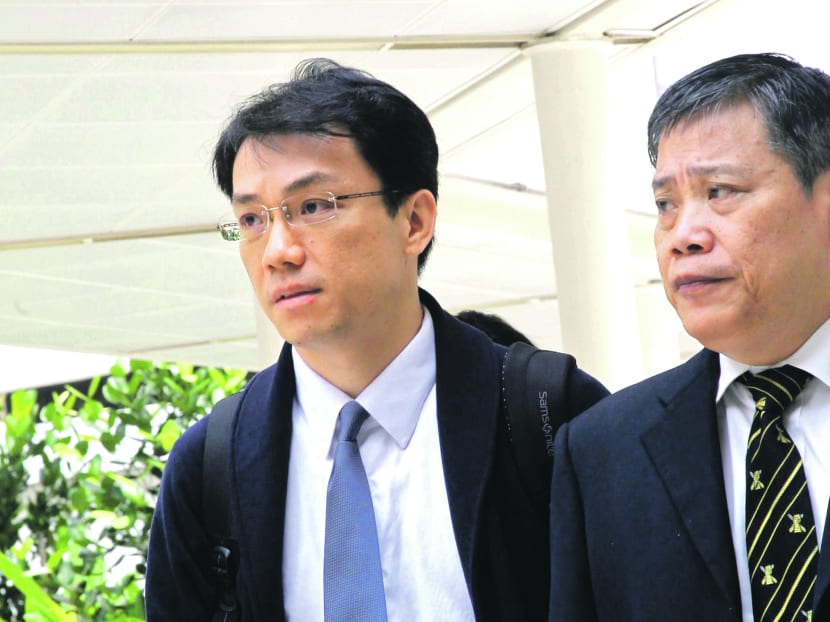
Photo: Ernest Chua

SINGAPORE — The issue of whether the National University of Singapore (NUS) is a public body and if its staff should be treated as public servants was raised in a district court yesterday, as lawyers made their closing arguments in the sex-for-grades corruption trial.
Deputy Public Prosecutors Andre Jumabhoy and Kok Shu-En argued that NUS law professor Tey Tsun Hang, who faces six counts of corruptly obtaining gifts and sex from his former student Darinne Ko between May and July 2010 in exchange for better grades, should be treated as a public servant.
The prosecution argued that under Section 8 of the Prevention of Corruption Act, anyone employed by the Government or any department of a public body and had taken gratification, has the burden to prove otherwise.
Prosecutors pointed out that NUS is an education institution serving a “publicly useful purpose”.
“Finally, NUS is financed by public funds, and it manages these funds in its administration of the university, thereby satisfying the requirement of administering money levied or raised by rates or charges,” they added.
Tey’s lawyer, Mr Peter Low, argued that the prosecution had produced no evidence other than a “bare assertion” that his client must be treated as a public servant. He said NUS academic staff are “made to understand that they are unlike public servants who are subject to stringent Government Instruction Manuals restrictions”, such as those on expressing opinions and political involvement.
Public servants also have to be “screened and vetted by security agencies” such as the Internal Security Department, Mr Low added.
The defence lawyer urged Chief District Judge Tan Siong Thye to acquit his client as Tey was in an “intimate relationship” with Ms Ko during the time of the alleged offences.
Mr Low said she had testified during the trial that the gifts given to Tey were “gestures of love and affection”. Mr Low also urged the court to disregard Ms Ko’s statements given in court as they differed from the ones given to the Corrupt Practices Investigation Bureau (CPIB).
Mr Jumabhoy, however, argued that Tey “chose to inappropriately focus his attention” on Ms Ko and “singled her out by selecting her to lead his research group for a book which he was intending to publish”.
He said Tey had disclosed “confidential information” about her class ranking and given her advance notice of her examination results before they were officially released. These acts, the prosecution charged, were an abuse of “power and authority” and “intended to lay the foundation for a sexual relationship between them”.
The Chief District Judge is expected to deliver his verdict on May 28. If convicted, Tey could be jailed up to five years and fined S$100,000 on each charge.
Related topics
tey trialStay in the know. Anytime. Anywhere.

Subscribe to our newsletter for the top features, insights and must reads delivered straight to your inbox.
By clicking subscribe, I agree for my personal data to be used to send me TODAY newsletters, promotional offers and for research and analysis.






