
‘Totally misguided’ to think civil service can counteract bad government: PM Lee
SINGAPORE — Some people here argue that since Singapore has a capable civil service to keep things working, the country can survive a “bad election or bad government”, but this is “totally misguided”, Prime Minister Lee Hsien Loong said.
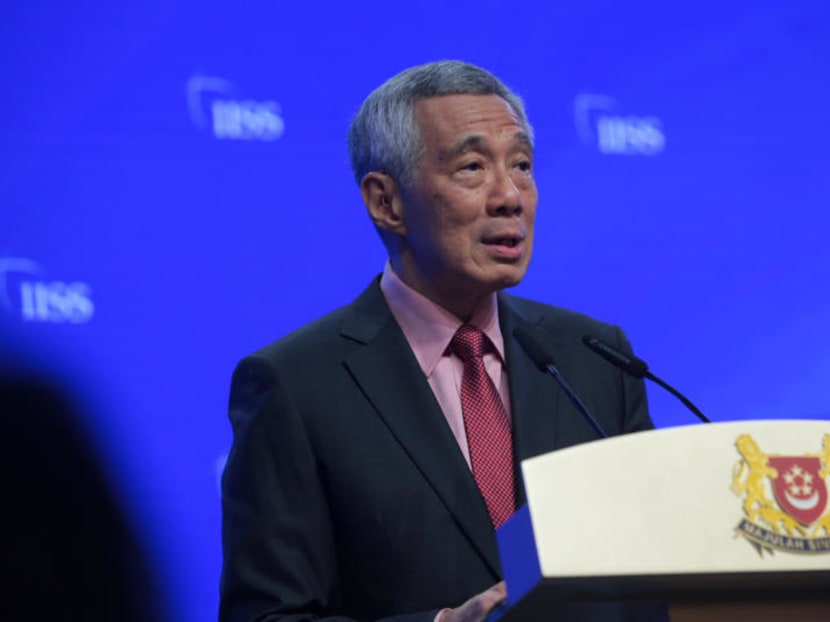
Prime Minister Lee Hsien Loong cautioned that if political leaders are well-meaning but mediocre, a competent civil service may be able to keep the country going on autopilot for some time, but there would be long-term repercussions.

SINGAPORE — Some people here argue that since Singapore has a capable civil service to keep things working, the country can survive a “bad election or bad government”, but this is “totally misguided”, Prime Minister Lee Hsien Loong said.
Speaking on Friday (Jan 17) at the annual public service leadership dinner, Mr Lee said political leaders do matter and play a “specific, vital role” in Singapore’s system of government.
“Ministers are responsible for getting the politics right, just as the civil service is primarily responsible for policy,” he said.
Ministers have to win the people’s mandate, sense the public mood, set the strategic direction of the country and persuade the public on this direction and on the policies to get there, including unpopular ones, he said.
“Policies always exist within a political context. They do not happen in a vacuum,” he said.
Mr Lee added: “If the country’s politics is divided and fractious, or if political leaders are well-meaning but mediocre, a competent civil service may be able to keep the country going on autopilot for some time.”
But the civil service cannot launch major policy initiatives, set new directions, or mobilise the population to mount a national response to major challenges, he pointed out, citing examples from around the world.
In the United States, for instance, urgent actions that everyone agrees are necessary — such as upgrading the country’s ageing infrastructure — cannot be taken because of deep political divisions.
Mr Lee noted that there are some who believe that because Singapore’s civil service is so capable, citizens need not be so stringent in their expectations of political leaders’ capability, mastery of their portfolios, or the experience they bring to the job.
“And (they believe) we can even survive a bad election, or a bad government, because the civil service is there,” Mr Lee said.
“But this is totally misguided. Leadership does matter, and political leaders play a specific, vital role — in any country, but especially in our system of government.”
ROLE OF MINISTERS
Just as public service leaders must understand the political context, Cabinet ministers on their part must master their ministries and the policies they are accountable for, he added.
“Ministers must have their hearts in the right place, with a passion to serve and a concern for the welfare of the people,” he said.
“But a minister is not a non-executive chairman who just provides strategic guidance to his ministry or permanent secretary. In Singapore, ministers are expected to be… intimately involved in developing policies, exploring alternatives, proposing solutions and making the final decision.”
Ultimately, even if ministers are diligent and well-intentioned, if they are not quite up to the mark or unable to play their roles properly, the public service will not function well, Mr Lee added.
“Decisions will be delayed or fudged, wrong decisions will be taken, officers will be unable to get things done. They will try to find roundabout ways to get around the command structure. Enterprising and idealistic officers will become frustrated and disillusioned. Some will leave, making things worse.”
Maintaining an outstanding public service will itself be in jeopardy, the quality of Government will go down, and it will take years to recover, if at all, Mr Lee cautioned.
‘UNIQUE SYSTEM’
Mr Lee stressed that in Singapore, the public service has been effective because the country has the political climate and political leaders who support and enable the public service to operate in a rational, efficient and systematic way.
“We have the luxury of looking beyond the short term, identifying future opportunities and solving longer-term problems like climate change, with the full confidence that we can fund and carry out the plans.”
Singapore has the wherewithal to build up and restructure its organisations to deal with these problems and opportunities, and has committed the political capital to bring in the talent it needs and to pay them properly, he added.
Singapore can also sustain organisations such as investment firms Temasek Holdings and GIC, which were deliberately created as companies rather than government departments, to afford them a greater degree of autonomy.
“They are insulated from political pressures and bureaucratic interference, to give them the space to make sound investment decisions,” he said.
“It works not only because we have the right organisational structure, but because we have the political will to do things the right way and see things through, and have built up the right culture and values in the public service.”
This is an arrangement unique to Singapore, he reiterated.
“And it is possible only because of the stable, well-functioning political system we have created, inherited and maintained.”
This system has worked quite well so far, Mr Lee added.
“But we must continue to get capable, committed people to enter politics, to hold political appointments, to maintain the quality of the country’s political leadership, to be up to their responsibilities to lead and work with the public service,” he said.
Related topics
Lee Hsien Loong Public Service Division Singapore politicsStay in the know. Anytime. Anywhere.

Subscribe to our newsletter for the top features, insights and must reads delivered straight to your inbox.
By clicking subscribe, I agree for my personal data to be used to send me TODAY newsletters, promotional offers and for research and analysis.






