
Tougher bail regime, greater police search powers among changes tabled in Parliament
SINGAPORE – Male police officers could soon have the authority to search women terror suspects, while the bail regime would be strengthened to make the jumping of bail an offence, under wide-ranging amendments to the Criminal Procedure Code and Evidence Act tabled in Parliament on Wednesday (Feb 28).
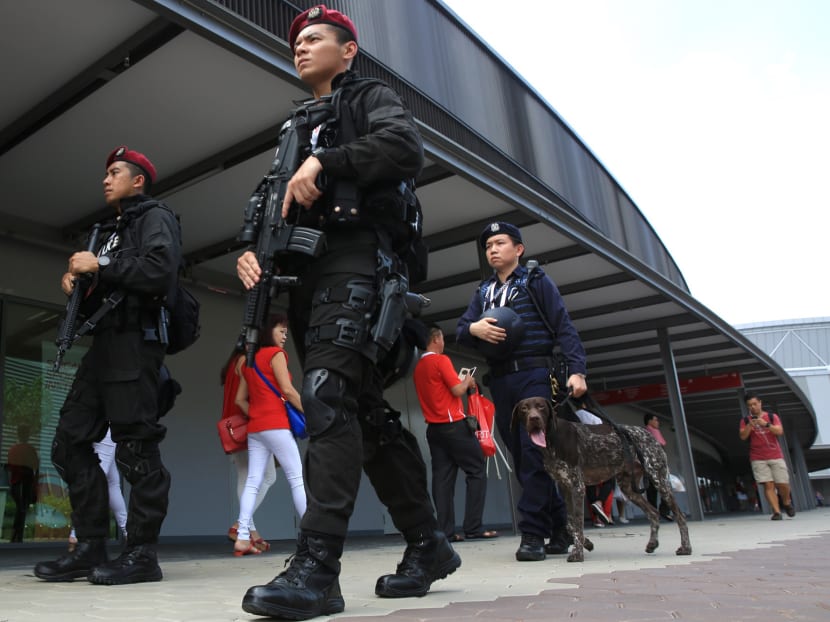
TODAY file photo

SINGAPORE – Male police officers could soon have the authority to search women terror suspects, while the bail regime would be strengthened to make the jumping of bail an offence, under wide-ranging amendments to the Criminal Procedure Code and Evidence Act tabled in Parliament on Wednesday (Feb 28).
Other proposed changes include the introduction of video recording of interviews with suspects and victims of certain offences, and an expansion of the community sentencing regime to allow offenders to be rehabilitated while remaining in the community.
These amendments, among a list of 52 proposed legislate changes, were tabled under the Criminal Justice Reform Bill and Evidence (Amendment) Bill, and read for the first time in Parliament on Wednesday (Feb 28).
The Ministry of Law (MinLaw) described the proposed changes as a major step towards building a more progressive, balanced and modern criminal justice system.
Most of the proposed changes were first announced last July and put up for a month-long public consultation that concluded in August last year.
More than 30 contributors, including members of the public, civil society organisations, banks, technology companies and lawyers, gave feedback.
If passed, the changes would allow male officers from the police or Immigration and Checkpoints Authority to search a female terror suspect "where they believe in good faith that the terrorist act is imminent and that the search cannot be made within a reasonable time by a female officer", according to MinLaw.
"This will enable more effective detection and prevention of terrorist threats," the ministry added.
To strengthen the bail regime, the proposed amendments would make it an offence for an individual to abscond while on bail or personal bond, or if he or she leaves the country without permission after their travel documents have been impounded.
The bail regime came under the spotlight last week after ex-City Harvest Church fund manager Chew Eng Han was charged on Thursday (Feb 22) for trying to escape to Malaysia, a day before starting his jail term. He was on bail of S$1 million.
Another key change tabled on Wednesday involves the video recording of suspects, victims and witnesses of certain offences. This is aimed at giving the courts a better way of determining the weight of such statements and whether they were given voluntarily.
The video recording of vulnerable victims, such as alleged victims of sexual offences, can be used in place of their oral testimony in court. This would minimise the trauma they face from repeatedly recounting their ordeal.
If passed in Parliament, such video recording of interviews would be rolled out in phases.
For a start, this would involve suspects in non-consensual rape offences investigated by the Criminal Investigation Division, and suspects with mental disabilities investigated by the Bedok and Central Divisions of the police force.
The video recording of vulnerable victims will only be implemented later.
MinLaw said respondents who took part in the public consultation had generally welcomed the introduction of video recorded interviews, though some raised questions about its framework.
For instance, some said individuals should not be allowed to opt out of video-recorded interviews as it might lead to accusations that they were threatened, or were induced to not record the interviews.
But MinLaw said there would be instances where individuals are only willing to give a statement to the police on the condition that it is off-camera. The police should then be given the discretion on how to take their statements so as to not undermine investigations.
On feedback that the recording should not be edited, MinLaw said editing is needed if the recordings contain sensitive information involving national security or intelligence sources. If needed, the courts can request to view the unedited portions.
Defence lawyers and the accused may view the recordings at a secure location any number of times and given transcripts of the recordings. But they will not be provided with copies of the recording due to the risk of such recordings being misused, such as being posted on the Internet or sold on the black market.
Other key amendments include measures to better shield alleged victims of sexual or child abuse offences from trauma during investigations and court proceedings.
For instance, physical screens will be put up in the courtroom so they do not have to face the accused, and all alleged victims for these offences will give their testimony in closed-door hearings, unless they decide otherwise.
Public feedback was split on whether additional restrictions were needed to restrain lawyers from questioning the victims' sexual behaviour and history. Some were supportive of additional restrictions, while others felt that existing measures were sufficient.
MinLaw said there is public interest in ensuring that victims of sexual crimes are not deterred from reporting such cases. As such, there will be subsidiary legislation to restrict certain lines of questioning and lawyers will have to seek the courts' permission to ask these questions.
Stay in the know. Anytime. Anywhere.

Subscribe to our newsletter for the top features, insights and must reads delivered straight to your inbox.
By clicking subscribe, I agree for my personal data to be used to send me TODAY newsletters, promotional offers and for research and analysis.