
A wedding anniversary can wait, as RSAF pilot and other personnel keep Trump-Kim summit safe
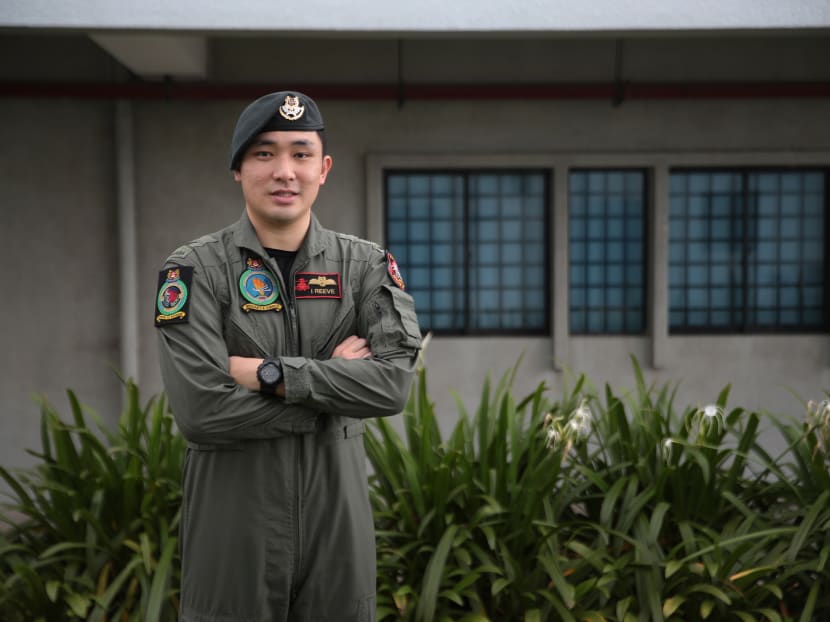
Republic of Singapore Air Force (RSAF) pilot Ingkiriwang Reeve, 31, was tasked to respond to any threats from the skies and seas over and around Sentosa.

SINGAPORE – For months, Republic of Singapore Air Force (RSAF) pilot Ingkiriwang Reeve, 31, had been planning a backpacking trip around China with his wife and secondary school sweetheart to celebrate their fourth wedding anniversary.
But when news broke that United States President Donald Trump and North Korean Leader Kim Jong-Un would be meeting in Singapore on June 12, Captain Reeve immediately put his holiday plans on hold. His wife, whom he had dated since Secondary 2, gave him her blessings.
The Apache helicopter pilot knew it would be an "all hands on deck" situation, and a once-in-a-lifetime opportunity to be at the frontlines of such a historic event.
"There was no way I was going to leave the country at this crucial point to go on holiday, while all my friends and squadron were serving in such a high-key national event, with all the world's eyes on it," he said on Wednesday (June 14).
Cpt Reeve, who was tasked to respond to any threats from the skies and seas over and around Sentosa, also said he was so "psyched up" in the days leading up to the summit that he had to let off steam by jogging or watching television.
The pilot was among the close to 2,000 Singapore Armed Forces personnel who worked behind the scenes during the three-day visit by the two leaders to provide protection over the air, land, and sea, as well as to ensure that things ran smoothly at the summit.
TRUMP'S SHORT NOTICE
Unlike other high key events, this operation stood out as information was only provided at short notice. Mr Trump had abruptly cancelled the June 12 meeting late last month, before announcing a week later that it was back on, leaving them a short runway for detailed military planning.
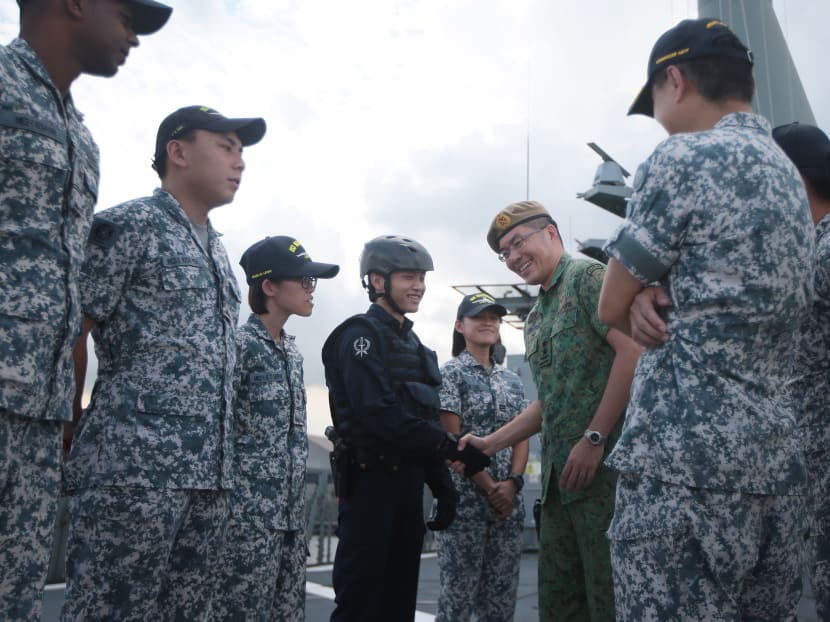
Chief of Defence Force Melvyn Ong said: "Many of the details pertaining to operations were only confirmed one week before, such as where the summit would be held, where both President Trump and Mr Kim would stay – which would affect the routes they would take, where they would want to visit other than the two hotels."
Aside from the massive scale of coordination, having to take into account the interests of the US and North Korea's security agencies also added to the complexity of the planning.
Intense scrutiny over key spots such as Capella Singapore – venue of the summit – St Regis Singapore and Shangri-La Hotels where the two leaders were staying meant the various teams had to work quickly to ramp up their security presence.
This included deploying the RSAF's Gulfstream G550 to give "early warning" of any threats in the skies while the F-15s and F-16s conducted air patrols. Ground-based air defence systems such as the SPYDER and RBS-70 missile systems were also deployed.
Flying her drone through Sentosa's dense foliage, unmanned aerial vehicle pilot, Cpt Winifred Chong, 29, helped to watch for any potential threats or suspicious activities around Sentosa and other parts of Singapore. She would alert her superiors of any suspicious human activity on the rooftops of surrounding buildings.
At sea, navy ships formed a "defence layer" around the waters of Capella, while patrol vessels escorted ships passing through and helicopters provided support by circling over the seas.
Others such as Cpt Jaime Liew, 26, an assistant operations officer onboard the RSS Independence, were responsible for forming the "outer layer" of sea defence. Likening it to a "mental marathon" due to the longer duty hours, Cpt Liew said her 23-member crew worked six-hour shifts – up from the usual four hours – to conduct threat assessments on vessels and ensure maritime security.
Full-time national serviceman (NSF) Li Weng Kin, a member of the Accompanying Sea Security Teams (ASSeT), 23, also recalled the intense pace of operations at sea, with four times more boardings conducted during the summit period.
For instance, they had to check commercial ships for any dangerous weapons or illegal items that could endanger safety, and check for stowaways.
Naval divers also did underwater sweeps at the Sentosa Link Bridge, and the Special Operations Task Force were on standby throughout the summit.
On the ground, forces trained in managing chemical, biological, radiological and explosives attacks conducted numerous sweeps for threats such as improvised explosive devices.
LANGUAGE BARRIER
Over at Capella, sniffer dogs were deployed, and detectors, lights and special mirrors were used to check "hard to reach" places, said NSman Terrence Lee, the team commander in charge of the preventive sweep at the hotel. They also combed the hotel and its surrounding forested areas during checks from Sunday to Tuesday morning.
Having to conduct the sweep with their foreign counterparts also required tact and diplomacy, said third warrant officer (NS) Lee, as they had to manage the others' security concerns.
The language barrier also proved to be a hurdle, as there were not enough translators to help communicate with the North Korean team. As a result, they often resorted to "hand signals" to get their messages across, he added.
Even with all the meticulous planning, there were unpredictable elements they could not foresee.
Mr Kim's "last-minute" request for a sightseeing tour around Gardens By the Bay and Marina Bay Sands on Monday meant that the team was alerted only a few hours before his evening visit, said Major General Ong.
Cpt Reeve said it was an "honour and privilege" to be called upon to serve Singapore, and to be able to put his training to good use.
He joked that he will now have to "make it up" to his wife, and their China holiday has now been rescheduled to after the National Day Parade in August.
Others such as combat medic specialist and NSF Asyraf Razali, 22, are already raring for more after this experience. He has chosen to extend his National Service by another two weeks in order to be part of the ASEAN Summit later this year.
The NSF, who was tasked to respond to medical injuries and other emergency incidents on Sentosa, worked through long, intense hours during the fasting month, but he said he was "used to the workload".
While he was not able to catch a glimpse of the leaders' motorcades or see them in person, he said: "It's being part of something special… This is definitely a highlight that I will remember for the rest of my life".
Stay in the know. Anytime. Anywhere.

Subscribe to our newsletter for the top features, insights and must reads delivered straight to your inbox.
By clicking subscribe, I agree for my personal data to be used to send me TODAY newsletters, promotional offers and for research and analysis.






