
Work performance ‘crucial to career progression’
SINGAPORE — When he decided to join the Singapore Police Force (SPF) in 1990 with O-Level certification because he did not feel like furthering his studies, Mr Roy Lim set his sights on retiring with the rank of Station Inspector — the top junior-officer rank.
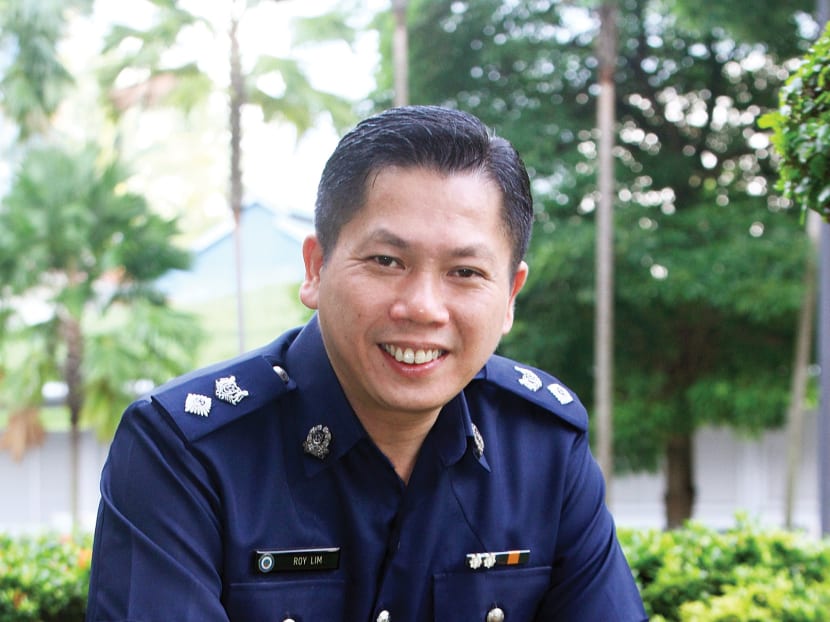
DSP Roy Lim made good use of the opportunities given to him by his supervisors. Photo: ERNEST CHUA

SINGAPORE — When he decided to join the Singapore Police Force (SPF) in 1990 with O-Level certification because he did not feel like furthering his studies, Mr Roy Lim set his sights on retiring with the rank of Station Inspector — the top junior-officer rank.
Today, the 42-year-old who started out as a constable has far surpassed his aspirations: He was promoted to Deputy Superintendent of Police (DSP) earlier this year.
His career progression, despite a lack of impressive academic credentials, is testament to the SPF’s recognition of hard work and good performance, said DSP Lim.
“Looking back now, all these doors were opened up by my supervisors. They always gave me opportunities and asked me to try,” he said.
Recounting how he felt overwhelmed soon after joining the SPF — in spite of his passion for justice and truth — DSP Lim said: “I always felt like I had more things to do compared to others ... I kept asking myself, ‘Is it because the bosses didn’t like me?’”
It was only when his seniors pointed out the “challenging content” of the cases assigned to him that he realised his superiors were giving him “opportunities to do things that not every officer had a chance to”.
After four years in the force, he was offered the chance to become an investigator. It would be a post he seized on and excelled in for the following two decades, rising up the ranks to become the current deputy head of the Criminal Investigation Department’s Special Investigation Section.
Some of the high-profile cases he has handled over the years include the Kallang body parts murder in 2005 and the kidnap of the Sheng Siong supermarket chief’s mother in January.
While he acknowledged that paper qualifications will increase one’s rate and extent of progress, and that non-graduates should be “realistic“ in setting their goals, DSP Lim said good work performance is hard to ignore.
Asked about the Public Service Division’s announcement to give graduate and non-graduate officers equal opportunities for promotion, DSP Lim said the focus should be on an officer’s performance.
He said: “We don’t promote for the sake of promoting ... if you can’t work and serve the organisation, (promotions) will serve no purpose.” KELLY NG
Stay in the know. Anytime. Anywhere.

Subscribe to our newsletter for the top features, insights and must reads delivered straight to your inbox.
By clicking subscribe, I agree for my personal data to be used to send me TODAY newsletters, promotional offers and for research and analysis.






