
Isolated in dorms, migrant workers seek to keep themselves occupied as they ponder their future
SINGAPORE — Mr Jayasankar Vinothkumar is an electrician by trade but these days, he has been spending his time watching YouTube and learning how to fix serial light sets — a common fixture at Indian weddings.
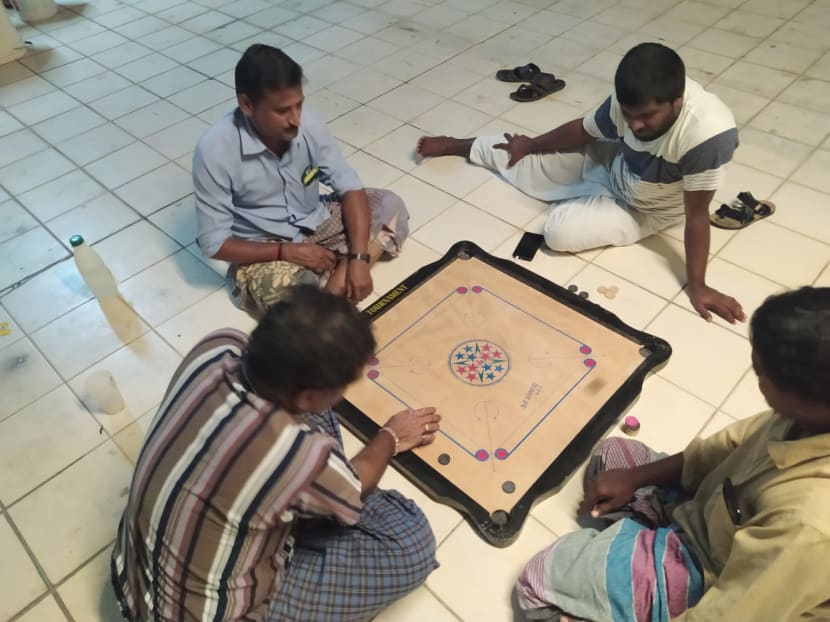
Site supervisor Mr Billal Khan (not in picture) and his roommates have been passing time in their dormitory by playing games such as carrom.





SINGAPORE — Mr Jayasankar Vinothkumar is an electrician by trade but these days, he has been spending his time watching YouTube and learning how to fix serial light sets — a regular fixture at Indian weddings.
It is part of his plan to set up his own lighting rental company in his hometown of Nagapattinam in the South Indian state of Tamil Nadu.
Speaking to TODAY last week, Mr Vinothkumar, 35, who stays in Hong Aik dormitory along Kian Teck Avenue, said that he is worried that he would be jobless once the circuit breaker lifts.
“We are a small company, and I’ve heard rumours from my colleagues that the foreign worker levy is getting too high for my employer to pay and some of us may be sent back home,” said Mr Vinothkumar, who has worked in Singapore since 2012.
Still, he hopes that he would be able to work for at least half a year more in Singapore to recoup the S$3,000 that he has paid to secure a job here.
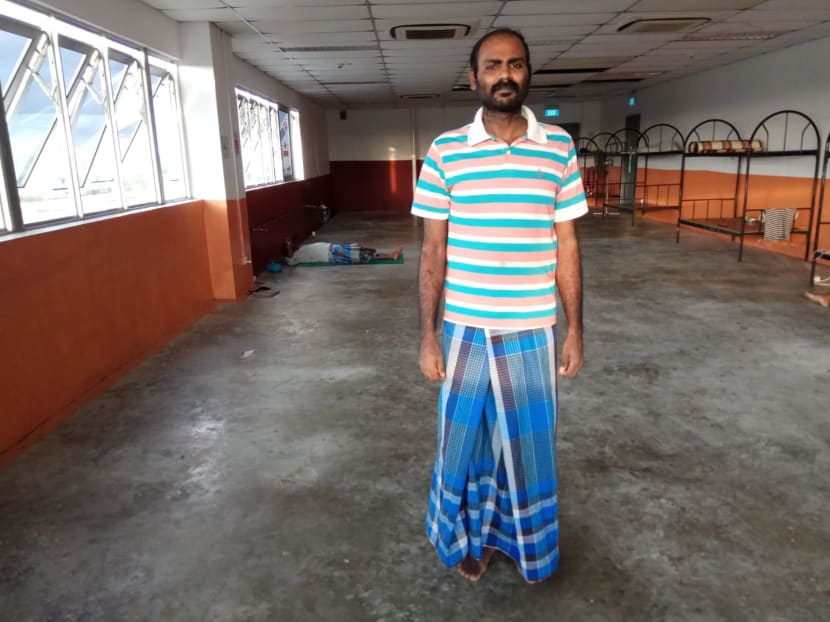
Also planning to return home is Mr Raj, a 35-year-old construction site supervisor who declined to give his full name.
The Indian national, who has not left his Tuas View Dormitory for a month, said that he does not feel safe given the rising number of infections in dormitories here and is hoping to get on the earliest flight home.
In the meantime, Mr Raj has been using the time in his dormitory to work towards his “dream” of working in Canada, which he says has “great scenery and an amazing lifestyle”.
He has been spending up to two hours each day brushing up on his English through YouTube.
The circuit breaker has forced 323,000 migrant workers staying in dormitories to remain indoors but it has also presented them with an opportunity to learn new skills.
Some are doing so with a view of leaving Singapore and pursuing a different path elsewhere.
EFFECTS OF PROLONGED ISOLATION
That migrant workers here are worried about their jobs and financial security is not surprising. These are their typical concerns, said non-governmental organisation HealthServe, which launched a free virtual counselling clinic for these workers on April 20.
In this month alone, HealthServe has held counselling sessions with more than 120 workers, and has had more than 250 requests and referrals for its counselling services to date.
Compared to other residents in Singapore who can still venture out of their homes to buy groceries or exercise during the circuit breaker, migrant workers living in dormitories here have been subject to stiffer rules.
These include having to remain in their rooms as far as possible, and refraining from mingling with workers on other floors or different blocks.
Mr Justin Paul, who manages the mental health programme at HealthServe, said that workers might suffer from headaches, tiredness, body aches or chest pains as a result of mental health issues due to prolonged isolation.
They might also become fixated on negative thoughts and distance themselves from family and friends, feeling like they are the only one facing problems.
Mr Paul said that the majority of HealthServe’s cases have been milder, with workers just seeking someone who can listen to their problems.
HealthServe has been conducting virtual group sessions to help manage the anxieties of workers who have tested positive for Covid-19.
It has also been conducting sessions where workers in isolated dormitories can share their thoughts and worries in small groups led by a volunteer.
With the Government announcing on Friday (May 15) that some construction work will resume from June 2 onwards, migrant workers, who are mostly involved in the construction sector, have at least three weeks to go before they can leave their rooms.
EXERCISE AND GAMES FOR OTHERS
Other workers have tried to keep active through games, exercise and volunteer work.
Mr Billal Khan, a 27-year-old site supervisor who stays in a dormitory in Tagore Lane, said that he and his nine other roommates have been passing the time with games such as carrom and chess. These had been contributed by Geylang Adventures, a social enterprise that also conducts online yoga classes for the dorm twice a week.
Despite these activities, Mr Billal said that he would very much rather be at work than be stuck in his room.
“I want to start work; working is better. At least every day, I get to go out and be happy.”
Mr Mundla Anil Kumar, 31, who stays in Tampines Dormitory, tries to keep in shape by exercising twice a day, doing push-ups, lifting dumbbells and skipping.
But like Mr Billal, all he wants is to return to work as a driver.
“But to do that, we have to keep ourselves safe, stay in our rooms and just ‘tahan’ (Malay for tolerate),” he said.
Related topics
Covid-19 coronavirus foreign workers dormitories games learningStay in the know. Anytime. Anywhere.

Subscribe to our newsletter for the top features, insights and must reads delivered straight to your inbox.
By clicking subscribe, I agree for my personal data to be used to send me TODAY newsletters, promotional offers and for research and analysis.