
Your Fitbit device could help you pass IPPT in the future
SINGAPORE — Wearable fitness devices could become part and parcel of National Servicemen's daily lives, with an ongoing study involving 150 full-time National Servicemen (NSFs) making use of such devices to monitor their physiological conditions, and collect data for further analysis to help the Army make enhancements to training programmes.
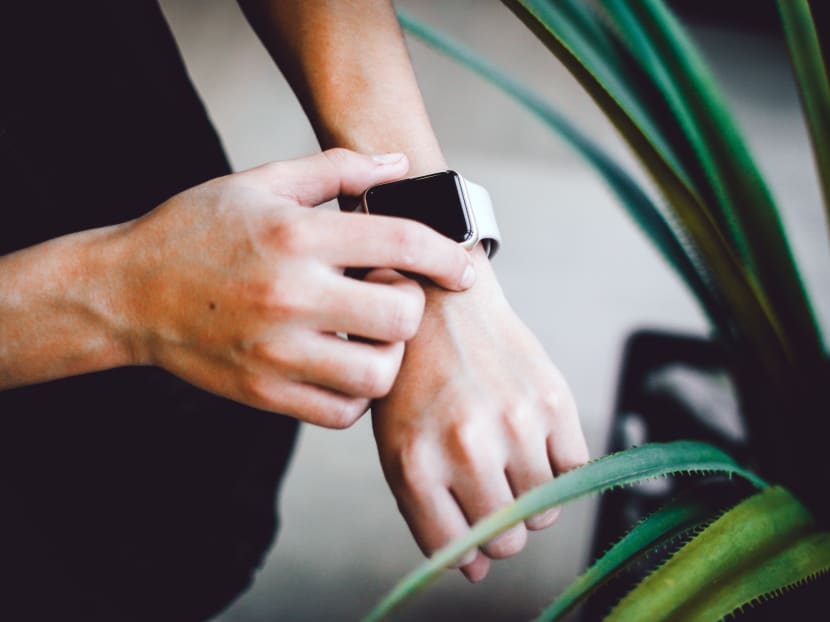
Wearable fitness devices could become part and parcel of National Servicemen’s daily lives. Photo: Nick Jio/Unsplash

SINGAPORE — Wearable fitness devices could become part and parcel of National Servicemen's daily lives, with an ongoing study involving 150 full-time National Servicemen (NSFs) making use of such devices to monitor their physiological conditions, and collect data for further analysis to help the Army make enhancements to training programmes.
Operationally-ready National Servicemen (NSMen) undergoing their Individual Physical Proficiency Test (IPPT) Preparatory Training (IPT) have also been able to use their wearable personal fitness devices to clock IPT sessions since Monday (Feb 26).
These are some of the measures that the Singapore Armed Forces (SAF) is undertaking to "do more with less", said Second Defence Minister Ong Ye Kung at his ministry's Committee of Supply debate in Parliament on Friday.
"The future capability and effectiveness of the SAF will not be based on the quantity of people we have, but their quality and ability," said Mr Ong.
The Centre of Excellence for Soldier Performance (CESP) is currently tapping on technology to optimise physical training and combat performance.
The 150 soldiers involved in the study are part of a multi-phase project to introduce wearable devices, as well as data-driven approaches into training.
The first phase involves an observational study to look at the correlations between training, performance and injury risk among the 150 soldiers, said the Ministry of Defence (Mindef).
Physiological data collected will help them plan better and prescribe more "effective and progressive training, while minimising the risk of acute injury," added Mr Ong.
The CESP, which was started last year, will look into extending use of fitness wearables to more units and training schools.
As for the use of fitness wearables to allow NSMen to clock their IPT sessions, Mr Ong said it was a "significant shift" away from usual practice.
"Rather than adhering strictly to the SAF-controlled IPT regime, NSMen will now be able to choose the type of exercise they prefer or need...and click in their fitness progress via wearable devices," he said.
The trial is ongoing at all four Fitness Conditioning Centres, as well as the Safra Toa Payoh gym.
In its next stage, the plan is to have digital identification technologies that will tag the wearable to the individual serviceman, so that they can be automatically registered for their IPT sessions via their fitness applications.
On Friday, Mr Ong also spoke about the "two fold" key challenge that the SAF faces today. The first was demographic in nature due to falling cohort sizes and a shrinking enlistment pool.
The second was that of unconventional security threats, such as cyberattacks and "disinformation campaigns".
He said: "The imperative is to do more with less, to work with fewer but more capable servicemen.
"We will achieve this by enhancing individual ability, strengthening system efficiency, and leveraging technology."
Stay in the know. Anytime. Anywhere.

Subscribe to our newsletter for the top features, insights and must reads delivered straight to your inbox.
By clicking subscribe, I agree for my personal data to be used to send me TODAY newsletters, promotional offers and for research and analysis.






