
Don’t expect to be spoon-fed by sports scholarship, says Teo Ser Luck
SINGAPORE — The Sports Excellence Scholarship (spexScholarship) must not become a crutch that prevents elite athletes from realising their full potential, the Chairman of the High Performance Sports Selection and Performance Sub-Committee has cautioned.
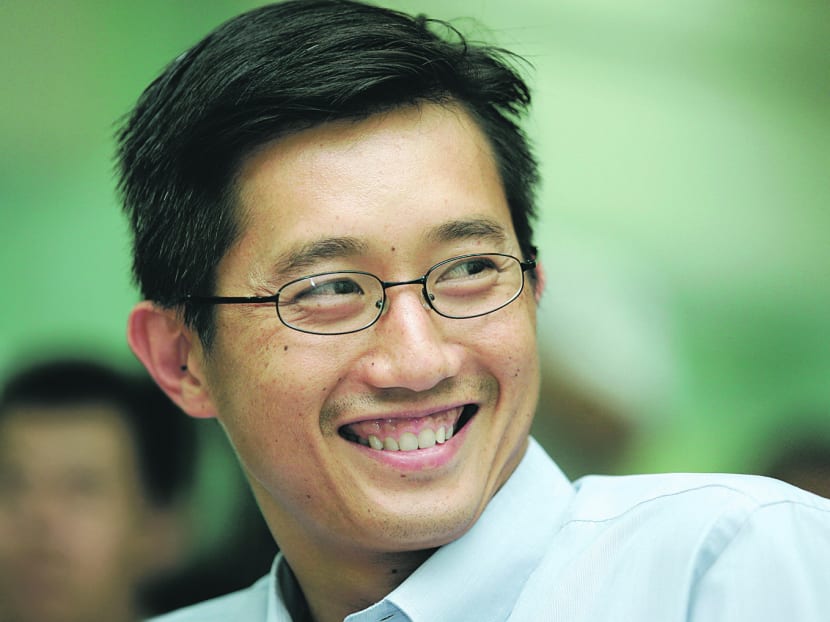
Teo Ser Luck. TODAY file photo
SINGAPORE — The Sports Excellence Scholarship (spexScholarship) must not become a crutch that prevents elite athletes from realising their full potential, the Chairman of the High Performance Sports Selection and Performance Sub-Committee has cautioned.
Teo Ser Luck, who is also Minister of State (Trade and Industry), said yesterday the spexScholarship is not designed to fully finance an athlete’s sports career but to launch it.
Total dependence, he emphasised, will hurt their ability to build new careers after sports.
Launched by the Ministry of Culture, Community and Youth in March, the spexScholarship has a war chest of S$40 million over five years.
The first batch of 60 athletes will be picked from 218 nominated by 28 national sports associations by September, with payments of S$24,000, S$60,000 and S$90,000 a year each to those competing at the regional, continental and international levels, respectively.
Speaking at his office at The Treasury, Teo told TODAY that to compete successfully with the best in the international arena, spexScholarship recipients must do their part to increase their funding to finance their training.
“I think it is possible for our athletes to do that,” said Teo, an avid footballer and triathlon runner.
“The Government helps facilitate the process by giving athletes a leg up, a kick-start. The spexScholarship is designed to provide them with a certain amount of money to help them realise their dreams, but not spoon-feed them.
“This is the way we will do it. But their dreams can even be bigger if they are able to develop their own skills set, outside of sports as well.”
This means developing a market-savvy talent that impresses sponsors, which Teo said was a prerequisite of every world champion he met during his time with the former Ministry of Community Development, Youth and Sports from 2006 to 2011.
Even rising talents he talked to were always ready to impress and in Singapore he counts 2007 SEA Games triathlon men’s champion Mok Ying Ren as having taken on that role as well. According to his website, Mok is sponsored by Nike, Oakley and New Moon.
Meanwhile, four individuals, including Douglas Foo, Executive Chairman and CEO of Sakae Holdings, and Lawrence Kim, Managing Director of marine inspection and service company Ebenezer NDT Services, had indicated interest in supporting Mok’s dream of qualifying for the 2016 Rio Olympics.
“Almost every top international athlete I met was extremely persuasive in their dreams and venture. They don’t get a lot of government support, but they have a lot of sponsors,” said Teo.
“If we spoon-feed our athletes all the way, it will not do them any good. Government grants and the spexScholarship are meant to kick-start their careers and help develop skills useful for life after sports.”
The spexScholarship replaces the S$6.5 million Olympic Pathway Programme that expired with last year’s London Games.
Even though Singapore’s under-23 football team is a long way from reaching the Olympics, a handful of footballers have also been nominated for the scholarship.
This exception, Teo explains, is because the Government sees football’s important role in unifying the country.
It was underscored by Prime Minister Lee Hsien Loong’s presence at the LionsXII’s title-clinching Malaysian Super League 4-0 victory against Felda at the Jalan Besar Stadium on July 2, even though it was played at the club level.
“Football is very important as far as the Government is concerned,” said Teo. “Which sport can fill a 55,000-seat stadium and evoke cheers from fans watching TV in the heartlands when the Singapore team scores?
“It gets the largest funding, and the Government supports football and is watchful over the results of our teams. We all know football is important and work with the sport’s leadership so the national team can do well.”
Teo’s sub-committee is now reviewing which athletes will get what from the spexScholarship, and whether footballers will count among them.
He said: “We are still considering how to allocate the funds and to benefit as many as possible in terms of kick-starting their sports careers, because later on after sports, it really matters that they are independent and self-reliant.”
Stay in the know. Anytime. Anywhere.

Subscribe to our newsletter for the top features, insights and must reads delivered straight to your inbox.
By clicking subscribe, I agree for my personal data to be used to send me TODAY newsletters, promotional offers and for research and analysis.






