
FAS chief Zainudin address questions surrounding state of S’pore football
In the latest FIFA world rankings published on Oct 23, Singapore dropped 12 places to 161st — or 31st out of 46 nations in Asia.
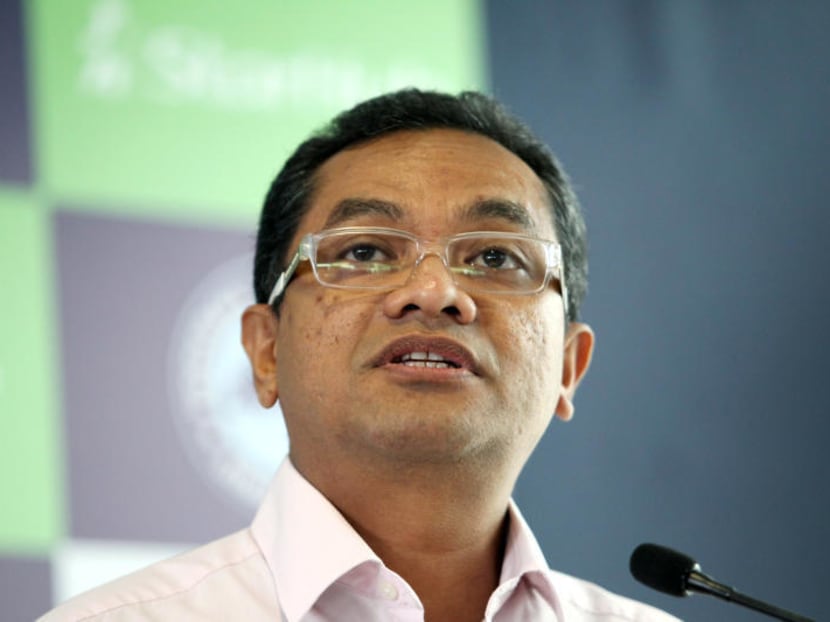
Football Association of Singapore president Zainudin Nordin. TODAY file photo
In the latest FIFA world rankings published on Oct 23, Singapore dropped 12 places to 161st — or 31st out of 46 nations in Asia.
That was followed earlier this week by the shock announcement that the S-League will be downsized from 12 to 10 teams for next season, with Tanjong Pagar sitting out, while Woodlands Wellington and Hougang United will merge.
Both put the spotlight back on the current state of football in Singapore, and why it continues to struggle, which Football Association of Singapore (FAS) president Zainudin Nordin sought to address in a wide-ranging reply to questions from TODAY.
TODAY: Why has Singapore’s position in the FIFA world rankings dropped 12 places to 161st?
ZAINUDIN: Points for the FIFA rankings are calculated based on several factors, the most basic of which are whether the match was won, drawn or lost. Other factors include whether the match was a friendly or part of an international tournament, and the number of matches played by the country during a period of time.
There is also a formula for calculating the rankings. All of this is explained on Fifa’s website.
In the latest rankings, Singapore are currently 161. Interestingly, Thailand, which is considered one of the strongest countries in our region, is ranked 165th while Myanmar are 137 and Laos 154. One plausible reason for this could be that Laos and Myanmar competed in the five-team qualifying tournament for the AFF Suzuki Cup and emerged the top two countries. Another reason is that Thailand have only played one international since May, and that was the 3-0 loss to China in October.
Don’t get me wrong — I am not saying that the rankings are not important to us. Our aim is to constantly improve on our rankings for the simple reason that it then puts us in a better position to try to arrange internationals with countries that are ranked in the top 100, so that our players can get more competitive exposure and experience.
For example, the Japan-Brazil friendly last month at the National Stadium was the 11th time the two countries have met since 1989. One reason for this could be Japan’s ranking (it is now 52nd in the world) which makes it a more attractive and competitive opponent for a country like Brazil.
We aspire to be able to play more regularly against stronger countries ranked above us, and one way to do so is to improve on our rankings. We will also make fuller use of the FIFA international windows to get more games for the Lions.
TODAY: Where has Singapore gone wrong in trying to build a stronger national side, and what should be done to rectify it? The FAS has been criticised for not doing enough in youth development, and lack the right people to chart the future of Singapore football. What is your response to that?
ZAINUDIN: Over the years, we have been trying to put into place the various pieces of the jigsaw puzzle that will enable us to consistently produce strong and
competitive national teams that can do well in international tournaments like the AFF Suzuki Cup, the SEA Games, the FIFA World Cup and the Asian Cup qualifiers.
We have been investing heavily in youth development which is one of the key pillars in our strategic plan. Currently, we have a youth development structure and programmes which have been endorsed by FIFA, leading member associations and officials.
Thanks to our Technical Director Slobodan Pavkovic, who will be leaving us in January, and his technical team, we now have 10 Junior Centres of Excellence (JCOE), providing training for kids from Under-6 to U-12 levels, and a National Football Academy (NFA) structure with squads at every age group (from U13 to U18). The number of COE Leagues for teenaged players have also increased from three age groups (U14, U16, U18) to six age groups (U13 to U18)
The signs are that our focus on youth development has been bearing some fruit.
Over the years, promising players who have progressed through our youth development system include Adam Swandi, Irfan Fandi Ahmad, Safuwan Baharudin, Iqbal Hussain and Hariss Harun who have been singled out by foreign football coaches and officials.
I am also happy to see our NFA teams doing well in recent editions of the Lion City Cup, beating age-group teams from Newcastle, Ajax Amsterdam,
Vasco da Gama and Eintracht Frankfurt. These are positive signs.
I disagree with the naysayers. I think our players are intelligent and have the ability to succeed at the top Asian levels. However, we must secure the required level of resources to maximise the potential of our players. One key success factor is regular overseas stints where our boys will take on stronger and tougher opponents.
We have already identified players who may be placed on overseas attachments with European clubs in 2015 under the Football Development Fund.
Finally, when the new Technical Director comes on board, one of his key tasks will be to build upon the current youth development structure and produce players who have the quality to play in Europe.
So those are the pieces that we have assembled at the elite developmental level.
Now, as you know, our Vice-President Bernard Tan is working hard to develop football at the grassroots. He is coming up with a plan to get more boys and girls to play football, learn the basics, and go under some form of structured training for 35 weeks of the year.
According to our survey of 100 primary schools, although more than 40 percent of kids surveyed said they want to play football regularly, only 5.9% of boys actually do, because they are in representing their schools in football. Now, each cohort is about 40,000 kids, so this means that only 2,400 boys are playing football regularly.
(FAS vice-president) Bernard (Tan) wants to raise this to 15% in the immediate future, which means about 6,000 boys. Thereason is simple — if you can get more boys playing football regularly at a young age, and teach them the fundamental skills properly, then you will be helping to expand the talent pool for elite development.
Finally, the reason why we want to host the FIFA U-17 World Cup is because it not only fits with our plan for youth development, but also because we believe it will be a game changer for local football.
Hosting the U17 World Cup is not an end in itself, but a means to an end. It will push us to further enhance our comprehensive youth development structure so that we will have a competitive team for the 2019 tournament, a strong talent pipeline that will enable us to continue producing teams that can regularly qualify for future World Cups, youth players with the quality to play in Europe, and strong and winning teams of all ages for all major tournaments ie the SEA, Asian and Olympic Games, AFF and AFC tournaments, the AFC Asian Cup finals, and the various World Cups.
We have been in discussions with our key partners, including FIFA and Sport Singapore, and we are preparing a detailed proposal that will show how we will use the hosting of the U17 World Cup as a means to improve and further enhance our youth development structure and talent delivery systems.
With our plans and ambitions, detailing how hosting the U17 World Cup fits into the overall picture of youth development in Singapore, we then hope to convince the relevant agencies to invest resources in football including training facilities.
TODAY: Should we end our participation in the Malaysian Super League with the LionsXII, and pour all our resources into developing the S-League because it a strong domestic league will ultimately benefit Singapore’s national side and the overall standard of football in the country?
ZAINUDIN: The S-League will be introducing a number of changes next season aimed at making the league more exciting, attractive and competitive, including reducing the number of clubs from 12 to 10.
Research commissioned by us has shown that the present local environment cannot support a 12-club S.League. The consolidation of the S-League into a 10-club league next season would make the league stronger, more competitive and a more exciting product that will help to draw more fans to the stadiums, and attract potential sponsors.
The initiative was also supported at the club chairmen’s meeting in August.
As there is no cut in funding from our stakeholders, it means that there will be more resources available for the 10 clubs to strengthen themselves. The maths is simple – the same pie will now be divided among 10 clubs instead of 12. We hope this will enable clubs to sign better quality players and improve the level of competition in the S.League, which in turn will draw more fans to the stadiums, and attract potential sponsors
On why we participate in the Malaysian Super League (MSL), it has always been according to the guidelines that we have set for ourselves. We have always maintained that the LionsXII is a developmental side, and our aim is to move towards a younger and younger side. Currently, most of the players are about 24 years old and younger. Eventually, it should be an U23 squad filled with a few senior players.
One reason why we decided to take part in the MSL is because we wanted to provide our developing players a tough competitive environment that challenges them in so many ways. After experiencing a ‘calm’ environment like the S-League, our players are now forced to travel away regularly for 10 months, and take on teams and huge hostile crowds that are determined to beat them.
It can be very intimidating but it will help to toughen them up mentally and physically.
From the footballing perspective, the match exposure and experience gained has significantly aided the development of many young players, including Izwan Mahbud, Hafiz Sujad, Faritz Hameed, Shakir Hamzah, Gabriel Quak, Zulfahmi Arifin and Faris Ramli. All of them are aged around 24 and below and have since become integral members of the national team.
In addition, several other young players, such as Aqhari Abdullah, Nazrul Nazari, Madhu Mohana, Raihan Rahman and Khairul Nizam, have improved their technical and tactical capabilities during the past two seasons and are also part of National Coach Bernd Stange’s squad.
Our participation in the Malaysian competitions since 2012 has also benefited our national teams. The LionsXII played a key role in our success at the 2012 AFF Suzuki Cup — 12 out of the 22 players in the national squad were from the LionsXII. It was also a key component of the national under-23 side’s preparations for the 2013 South-east Asian (SEA) Games in Myanmar.
Our SEA Games team, which included 14 players from the MSL title-winning squad, lost narrowly — through a penalty — to eventual champions Thailand in the semi-final and defeated defending champions Malaysia in the bronze-medal match.
Our return to the MSL has also helped to lift interest in local football and generated extensive media coverage of local football both in print and online.
Despite the popularity of foreign leagues like the English Premier League, it is very encouraging that the LionsXII often receives more extensive coverage than any individual foreign club in the local media. Based on our estimates, they generated an annual print media value of about S$7.7 million last year.
Apart from an almost full-capacity crowd at every home match, figures show that the LionsXII also reached out to more than 600,000 fans across various platforms, including television, mobile phones and the Internet, every time the team is in action.
The LionsXII has also given new career opportunities for our players and coaches. As you know, the Johor Football Association signed three of our key players this season in Hariss Harun, Baihakki Khaizan and Shahril Ishak, while (former LionsXII coach) V Sundramoorthy moved to Negeri Sembilan which dangled a very lucrative offer.
Having the LionsXII has also enabled us to find new sponsors, and enable more funding to be raised for Singapore football. Since 2011, before we made our MSL debut in 2012, our new sponsors and partners include StarHub, Shop n Save, SilkPro, Halal Foods International, Simply Buffet, and Stamford Tyres Corporation. All have had no previous association with local football.
So there have been benefits to our participation in the MSL. But most importantly, it has contributed significantly to our players’ development.
Stay in the know. Anytime. Anywhere.

Subscribe to our newsletter for the top features, insights and must reads delivered straight to your inbox.
By clicking subscribe, I agree for my personal data to be used to send me TODAY newsletters, promotional offers and for research and analysis.






