
Premier League’s S$10.6b TV deal may be bad news for fans
SINGAPORE — Football fans in Singapore may face the prospect of paying more to watch the English Premier League (EPL) live on pay television, after British broadcasters Sky and BT paid a record amount to secure live EPL TV rights for the next three seasons from next year, say telco analysts.
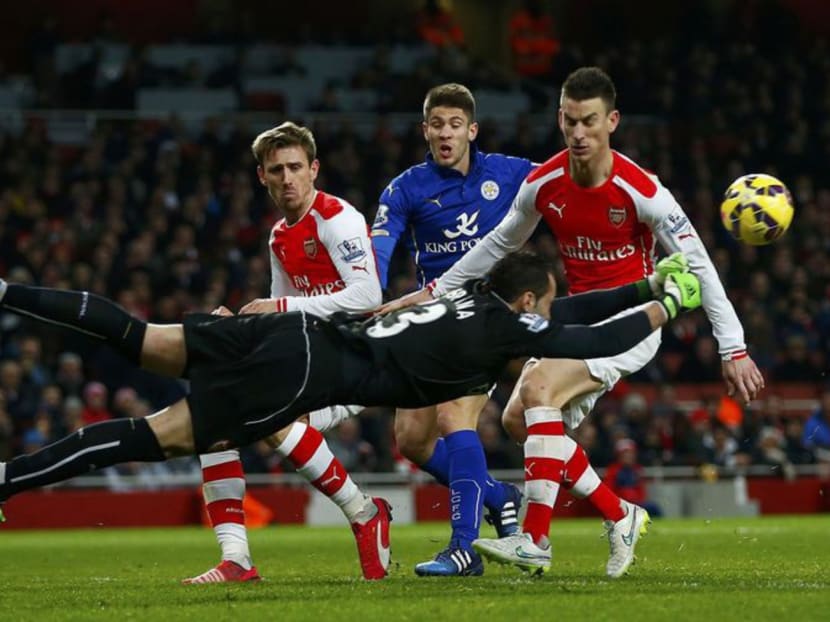
Reuters file photo
SINGAPORE — Football fans in Singapore may face the prospect of paying more to watch the English Premier League (EPL) live on pay television, after British broadcasters Sky and BT paid a record amount to secure live EPL TV rights for the next three seasons from next year, say telco analysts.
But they added that a joint bid by local telcos Singtel and StarHub could help minimise the impact of any price increase.
Yesterday, it emerged that Sky and BT had forked out more than £5.1 billion (S$10.6 billion) to secure the deal, which is a 70 per cent increase on their current £3 billion contract — or about £10.2 million per match for the broadcasters, which will screen 168 matches under the deal.
Local telco Singtel, which has the exclusive rights to the EPL broadcast in Singapore, declined to say if costs will increase for viewers here.
A spokesperson for Singtel said that the EPL is tied up with handling the rights for the UK market at the moment. She added: “Things won’t be happening in this region yet. We have been told that invitations to tender (ITTs) for territories in Asia will only be issued in the fourth quarter of 2015 and bidding will only start after that.”
Under the Media Development Authority’s cross-carriage rule, Singtel is required to offer its EPL content to StarHub subscribers, too. As exclusive rights holders though, Singtel determines the prices for customers who watch the EPL on its Singtel mio TV and on StarHub.
While Singtel did not say if costs will rise for Singaporean viewers, analysts told TODAY that customers in Singapore should be prepared to pay more to watch the EPL from next season.
“Singtel will definitely have to absorb the high sports content costs and then pass it on partially to its customers,” said Mr Ajay Sunder, vice-president of Telcoms at Frost & Sullivan. “There is no way Singtel will not offload some of the high costs to consumers.”
Mr Sunder said Singapore’s relatively smaller market means that consumer subscription fees make up the majority of local telcos’ revenues. “Singapore is unlike other Asian markets such as Indonesia and India, whose broadcasters are used to advertising as their main form of revenue, as there are more interested advertisers there, and who can pay more too,” he said.
In 2010, Singtel reportedly paid close to S$400 million to secure the EPL rights, up from the S$250 million StarHub paid three years earlier. Securing the rights saw Singtel’s subscription rate jump from about 155,000 to 400,000, mostly for its EPL offering.
At the previous price hike in 2013, Singtel upped the cost of its EPL package from S$34.90 to S$59.90 per month, but its bundled packages, which include the EPL, remained at S$64.90.
Mr Clement Teo, senior analyst at Forrester, added: “It is going to be a case of how high the demand for broadcast rights is going to be. If there is a huge appetite, and consumers are willing to pay, then broadcasters will pay well to get it for them. The UK market is obviously football-crazy and the Singapore market is less so, so even if the cost of securing rights has indeed gone up, it will not be as much as what Sky and BT paid for.”
Of the more than £5.1 billion deal, Sky will pay £4.2 billion to screen 126 live games per season, while fierce rival BT’s share of £960 million will see them broadcast 42 matches a season over three years, reported Reuters. Sky had been reportedly under pressure to secure the deal after BT clinched Champions League TV rights for 2016 to 2019.
Analysts TODAY spoke to suggested that a joint bid may help to keep any increase in prices for customers down.
“A joint-bid definitely takes away competition whereby both operators will outdo one another by offering higher prices to secure the rights than the other,” said Mr Sunder.
But Mr Teo added: “There has to be a calibrated approach by the local media regulators and providers to make sure consumers get a fair package.”
However, StarHub’s head of media business unit Lee Soo Hui said it is still early to say if a joint bid would be feasible. “While we are in constant engagement with our content partners, it is premature to speculate on details, such as the nature of negotiations at this juncture,” she said.
Stay in the know. Anytime. Anywhere.

Subscribe to our newsletter for the top features, insights and must reads delivered straight to your inbox.
By clicking subscribe, I agree for my personal data to be used to send me TODAY newsletters, promotional offers and for research and analysis.






