
Adopt safer tree-pruning methods
Incidents of falling trees and tree branches have dropped significantly in Singapore over the years, but recent reports of such cases underline the danger they pose.
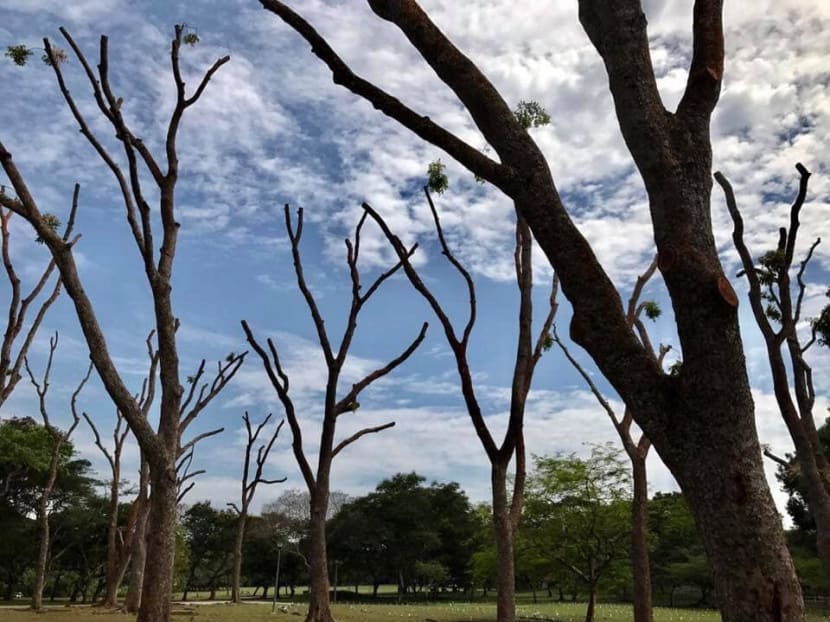
The writer says removing large branches and trunks from the tops of trees — a common pruning method — could result in a higher risk of falling trees.

Incidents of falling trees and tree branches have dropped significantly in Singapore over the years, but recent reports of such cases underline the danger they pose.
It is worth looking at how trees in Singapore are maintained.
I understand that a common tree-pruning method here is tree topping — the removal of large branches and trunks from the tops of trees, leaving only stubs or lateral branches.
While this may appear a simple and effective way of pruning trees, the issues associated with tree topping run deeper.
First, topping results in great stress for a tree when the remaining lateral branches are not large enough to assume a terminal role.
As such, a common survival mechanism in response to a sudden loss of leaves is the rapid growth of multiple shoots below each cut.
These shoots, which can grow up to 6m a year, are anchored weakly and hence more susceptible to falling because of Singapore’s rainy conditions.
Second, topping greatly increases the vulnerability of trees to diseases.
It leaves the naked tree exposed to higher levels of light and heat, which can lead to cankers, bark splitting and the death of some branches.
So, while topping may seem an easy way to prune trees, it can lead to dire consequences and a higher risk of falling trees.
I hope that homeowners with trees, tree-pruning companies and the authorities would consider the consequences of tree topping and adopt safer pruning methods, such as drop crotching, which reduces the size of a tree while preserving its shape.
Have views on this issue or a news topic you care about? Send your letter to voices [at] mediacorp.com.sg with your full name, address and phone number.
Related topics
tree tree pruning tree topping environmentStay in the know. Anytime. Anywhere.

Subscribe to our newsletter for the top features, insights and must reads delivered straight to your inbox.
By clicking subscribe, I agree for my personal data to be used to send me TODAY newsletters, promotional offers and for research and analysis.






