
Disappointing that Singapore abstained from global pact on violence at work
Recently, governments around the world voted overwhelmingly for a new International Labour Organisation (ILO) convention, the first since 2011.
Disappointingly, Singapore was one of six governments — along with Russia, El Salvador, Malaysia, Paraguay and Kyrgyzstan — to abstain.
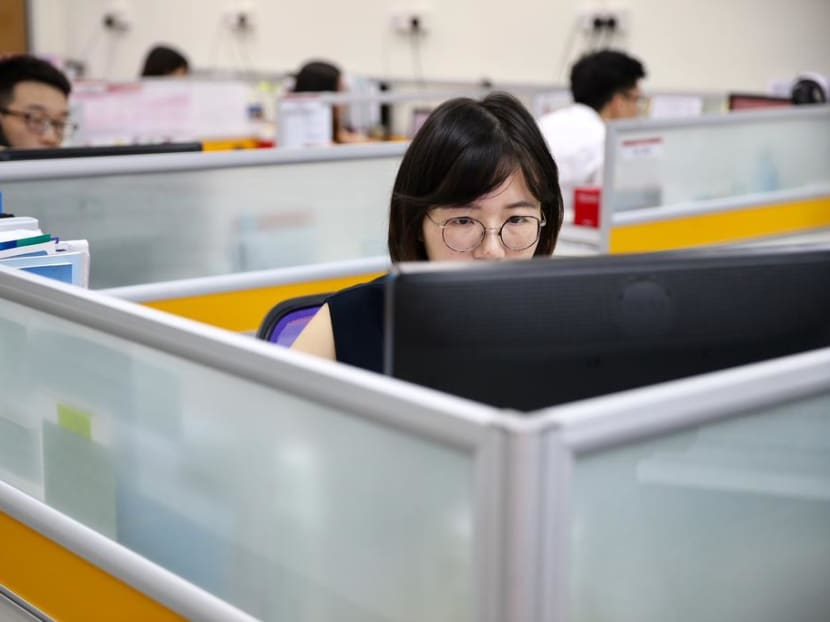
The Association of Women for Action and Research, an advocacy group, has urged the Government to adopt a global treaty against workplace violence and harassment.

Recently, governments around the world voted overwhelmingly for a new International Labour Organisation (ILO) convention, the first since 2011.
This groundbreaking treaty recognises that employers must be responsible for ensuring that everyone, regardless of contractual status, enjoys working conditions that are free from violence and harassment.
Disappointingly, Singapore was one of six governments — along with Russia, El Salvador, Malaysia, Paraguay and Kyrgyzstan — to abstain.
No one should have to endure workplace abuse or harassment from colleagues, clients or other parties. Yet, for many, this unwelcome dilemma is a daily reality.
Last year, the Association of Women for Action and Research (Aware) handled 192 cases of workplace harassment of women. These comprised sexual and non-sexual harassment.
These cases are only the tip of the iceberg.
Cases are likely under-reported to the authorities because employers’ obligations are poorly defined. The Tripartite Alliance for Fair Employment Practices — which promotes fair, responsible and progressive employment practices — has only limited enforcement powers.
Violence or harassment may carry individual criminal liability, but that is beside the point. Not all workers wish to pursue legally punitive action. Many simply want their employers to step in and stop the harassment, and provide safe conditions.
At present, employers are not obliged to do so.
The Tripartite Advisory on Managing Workplace Harassment guides employers and employees on preventing and managing workplace harassment. But the Government has not collected data on employers that have voluntarily followed the advisory.
Aware’s experience in providing support to women suggests that few employers have comprehensive policies and robust training in this area.
Employers benefit when workers interact with others at the workplace. In the same way that employers must ensure workers’ safety, such as in using equipment, it is fair that they should be held responsible for ensuring a safe and violence-free workplace.
This principle is not wholly foreign to Singapore.
The courts, for example, have held an employer liable for workplace injury compensation when a worker set another on fire. The Public Order and Safety (Special Powers) Act holds employers responsible for creating a corporate culture that ensures their workers comply with the law’s provisions.
Why should this approach not be applied to creating corporate cultures that do not tolerate workplace harassment?
We urge Singapore to ratify and adopt the ILO convention, and to oblige employers to create environments that are free from discrimination and harassment. In particular, as the number of freelance workers increases, it is important for the country to support this treaty, which recognises that the working conditions of such workers should be regulated and protected.
Related topics
violence International Labour Organisation workplace harassmentStay in the know. Anytime. Anywhere.

Subscribe to our newsletter for the top features, insights and must reads delivered straight to your inbox.
By clicking subscribe, I agree for my personal data to be used to send me TODAY newsletters, promotional offers and for research and analysis.






