
The great importance of curiosity
I refer to Professor K Ranga Krishnan’s commentary, “The necessity of questions” (May 31).
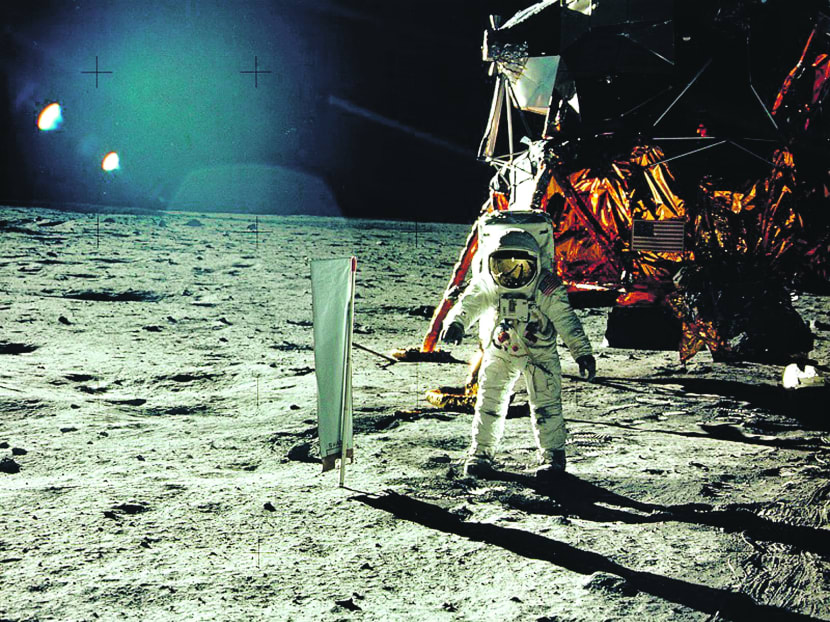
Curiosity leads to exploration while exploration makes explorers wiser and, more importantly, happier. Photo: Reuters

I refer to Professor K Ranga Krishnan’s commentary, “The necessity of questions” (May 31).
Curiosity is the essence of life. It is the characteristic that distinguishes most vertebrates from other living things. Curiosity can lead to more learning, although its more important function is to make life richer, more meaningful and more pleasant.
The curiosity of kittens, puppies and babies amuses us. Even fish and reptiles show curiosity. Curiosity leads to exploration, of which questioning is a form. Exploration makes the explorers wiser and, more importantly, happier.
Why does society spend enormous financial and intellectual resources to explore the miniscule inner space of atoms and the immense outer space beyond earth? For profit, industrial advancement and military strategies? Of course.
Ultimately, though, curiosity is what prompts some scientists to ask, “What can be found there?” They are not satisfied with being fed a diet consisting only of the obvious and immediate; they want to know more. If knowledge brings material benefit, that is a bonus.
All mentally and physically healthy children are curious until they are curtailed by impatient parents and taught by teachers who are syllabus-restricted and examination-conscious.
Many parents and teachers discourage questioning and curiosity to save face and maintain a facade of dignity. Only great parents and teachers are willing to admit, “I don’t know” or “Sorry, I was wrong”. The caring and resourceful would say, “Let’s find the answer.”
Or perhaps most of us are too busy or too old to enrich, not to say catch up with, the new generation. Imagine what a better world this would be if all its curious youngsters are encouraged to ask and experiment.
It is well-known that the first thing an authoritarian regime wants to curb is the curiosity of its citizens. There is nothing dictators are more afraid of than minds that ask too many questions.
Many people are only interested in how much money knowledge is worth. I say that the day a person ceases to be curious and stops asking questions, he is quite ready for his funeral.
Stay in the know. Anytime. Anywhere.

Subscribe to our newsletter for the top features, insights and must reads delivered straight to your inbox.
By clicking subscribe, I agree for my personal data to be used to send me TODAY newsletters, promotional offers and for research and analysis.






