
Rethink new PSLE scoring system to allow joy of learning to take root
I echo Mr Lim Wei Yi’s sentiments in his commentary, “PSLE revamp — don’t neglect the ‘average’ student” (Nov 12).
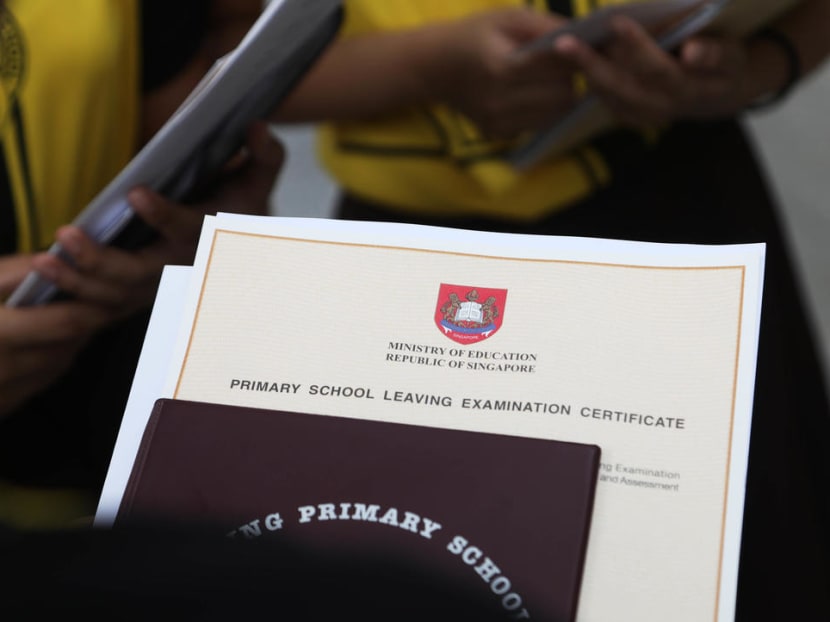
The writer, who has a dyslexic child in Primary 5, says the revamped Primary School Leaving Examination scoring system disadvantages late bloomers and students with special learning needs.

I echo Mr Lim Wei Yi’s sentiments in his commentary, “PSLE revamp — don’t neglect the ‘average’ student” (Nov 12).
We are still fixated on testing a student's ability to score.
The new Achievement Level (AL) scoring system will replace T-scores in the Primary School Leaving Examination (PSLE) from next year.
Many parents view the passing grade to be AL5 (65 to 74 marks).
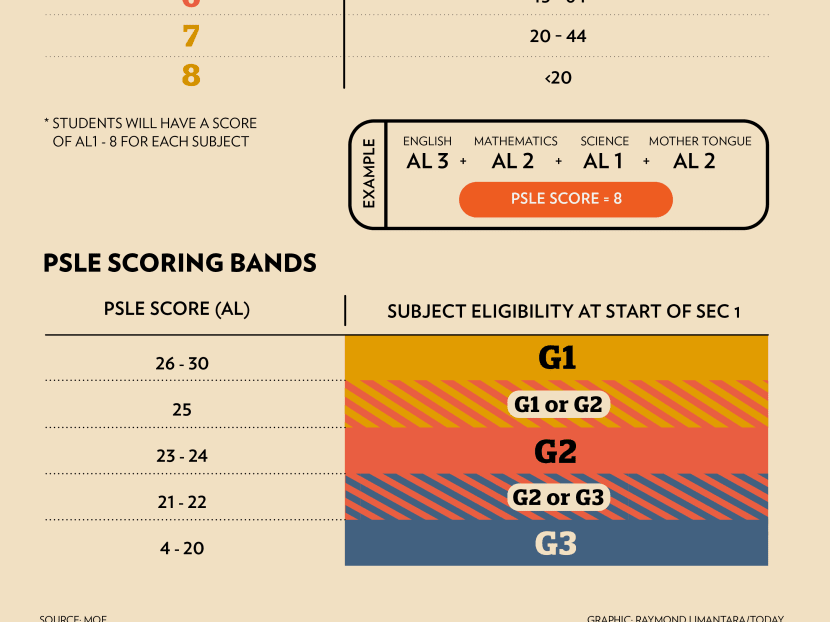
The overall scores determine whether a student goes to the Express or Normal streams.
Come 2024, when secondary school streaming is scrapped, students will be posted to secondary schools where subjects are offered at three levels: G1, G2 and G3.
The Ministry of Education (MOE) has said students who score between AL26 and AL30 in the PSLE will be offered the G1 suite of subjects. Those who score between AL4 and AL20 will be offered the highest G3 suite.
Is it meaningful to sort our students at age 12 based on their scoring ability?
Even my dyslexic child, who is in Primary 5 and has been exempted from mother tongue, will still be given a score between AL6 and AL8 for the subject.
Why should there be a score when one did not sit the exam? My child is baffled, too, but MOE has explained that this is necessary to determine the overall score for secondary school placement.
The broader score bands from AL5 to AL8 are, indeed, demoralising for many “average” students.
They clearly disadvantage the late bloomers and students with special learning needs.
A student who scores 45 and works extremely hard to reach 55 will remain in AL6. He will move up to AL5 only if he scores 65.
Does the system encourage already-struggling students?
Children want to do well in school and make their parents proud.
Most well-meaning parents will continue helping these “average” students in the hope of achieving better outcomes by putting them through tuition if they can afford it.
High-performing students are not spared either as they chase for the next grade, which is only a few marks away. The system entices them to strive for more.
Self-esteem plays a significant role in motivating one to achieve success in life. Without this, it is hard to fulfil one’s potential.
At age 11 or 12, adolescent issues will surface. I can see why mental health issues and suicide rates have been on the rise among young people.
The problem does not manifest overnight, but accumulates under our scarcity mindset that “I am not good enough”.
If this system is supposed to move away from over-emphasising academic grades, how about narrower scores at the bottom (a range of five marks between ALs) and broader cut-offs at the top (10 to 20 marks)?
This will encourage “average” students to work hard and to not give up.
It also eases the pressure on high performers, allowing them to develop other interests and soft skills.
Let us focus on allowing students to enjoy learning in their growing-up years.
Have views on this issue or a news topic you care about? Send your letter to voices [at] mediacorp.com.sg with your full name, address and phone number.
Related topics
PSLE MOE Education schools studentStay in the know. Anytime. Anywhere.

Subscribe to our newsletter for the top features, insights and must reads delivered straight to your inbox.
By clicking subscribe, I agree for my personal data to be used to send me TODAY newsletters, promotional offers and for research and analysis.






