
AI giants to unveil pact to fight political deepfakes
WASHINGTON — Tech giants including Meta, Microsoft, Google and OpenAI are working on a pact to jointly crack down on artificial intelligence (AI) content intended to deceive voters ahead of crucial elections around the world this year, companies involved said on Tuesday (Feb 13).
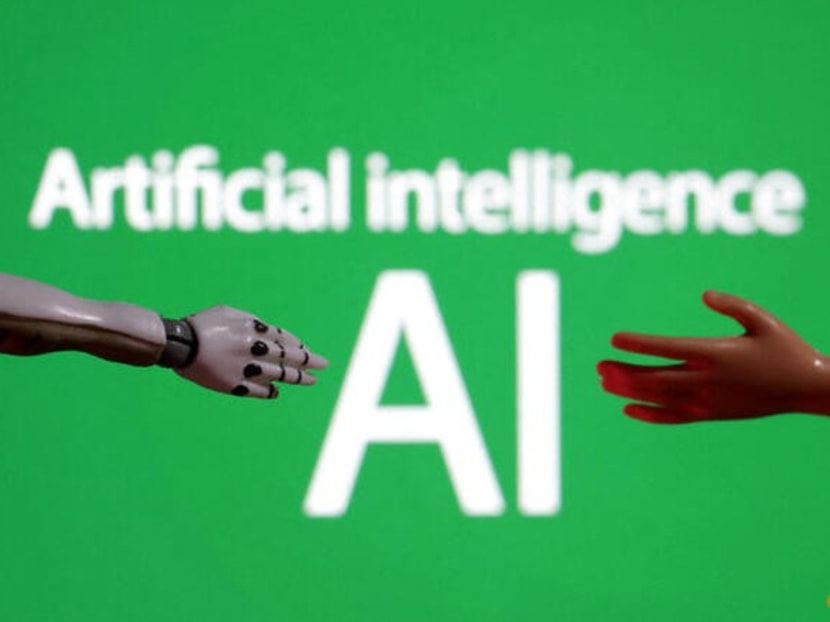
Words reading "Artificial intelligence AI", a miniature of a robot and toy hand are pictured in this illustration taken on Dec 14, 2023.


This audio is AI-generated.
WASHINGTON — Tech giants including Meta, Microsoft, Google and OpenAI are working on a pact to jointly crack down on artificial intelligence (AI) content intended to deceive voters ahead of crucial elections around the world this year, companies involved said on Tuesday (Feb 13).
Currently under negotiation by the companies, this so-called "accord" on deepfakes and other dangerous content is set to be announced during the Munich Security Conference on Friday.
"In a critical year for global elections, technology companies are working on an accord to combat the deceptive use of AI targeted at voters," a spokesperson for Meta said in an emailed statement to AFP on Tuesday.
"Adobe, Google, Meta, Microsoft, OpenAI, TikTok and others are working jointly toward progress on this shared objective," the statement added.
According to the Washington Post, which first reported the existence of the project, the companies will agree to develop ways to identify, label and control AI-generated images, videos and audio that aim to deceive voters.
The idea comes as big tech companies are under considerable pressure over fears that AI-powered applications could be misused in a pivotal election year.
Meta, Google and OpenAI have already agreed to use a common watermarking standard that would tag images generated by their AI applications, such as OpenAI's ChatGPT, Microsoft's Copilot or Google's Gemini (formerly Bard).
Recent examples of convincing AI deepfakes have only heightened worries about the easily accessible technology.
Last month, a robocall impersonation of US President Joe Biden pushed out to tens of thousands of voters urged people to not cast ballots in the New Hampshire primary.
In Pakistan, the party of former Prime Minister Imran Khan has used AI to generate speeches from their jailed leader. AFP
Related topics
Artificial Intelligence OpenAI Meta Microsoft GoogleStay in the know. Anytime. Anywhere.

Subscribe to our newsletter for the top features, insights and must reads delivered straight to your inbox.
By clicking subscribe, I agree for my personal data to be used to send me TODAY newsletters, promotional offers and for research and analysis.





