
Airfares could rise by 50 per cent if social distancing leads to empty middle seats
HONG KONG — Travellers should brace for higher air ticket prices if carriers are expected to maintain social distancing measures on flights to reduce chances of Covid-19 infection, with airlines warning that recovery from the pandemic could be severely jeopardised if middle seats are left empty.
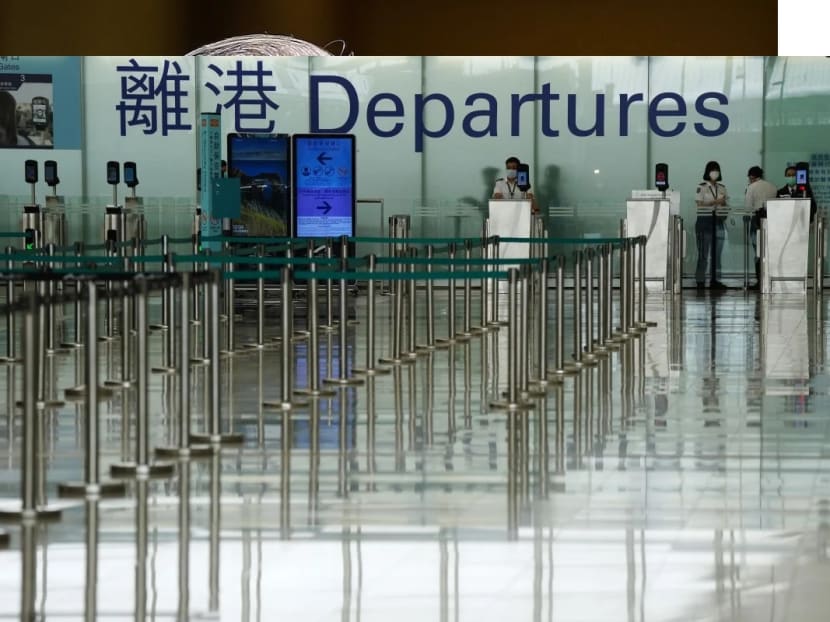
Hong Kong International Airport’s departure hall appears deserted amid the coronavirus pandemic.

HONG KONG — Travellers should brace for higher air ticket prices if carriers are expected to maintain social distancing measures on flights to reduce chances of Covid-19 infection, with airlines warning that recovery from the pandemic could be severely jeopardised if middle seats are left empty.
The International Air Transport Association (IATA) said airfares could soar by 54 per cent for travellers in Asia-Pacific, the highest worldwide, as airlines would be operating at nearly 40 per cent lower capacity if the middle seats were eliminated.
"[By] removing the middle seats, [the] cost of providing services is higher, eventually airlines will have to reflect that in fares to have viable operations," Brian Pearce, IATA's chief economist, said during a teleconference this week.
The organisation, which represents some 290 airlines accounting for 82 per cent of global air traffic, said that more than on-board social distancing, thorough and frequent cabin sanitisation, making passengers wear masks on flights and implementing other health and safety measures at airports would reduce the risk of coronavirus transmission among travellers.
Discussions among governments and aviation bodies are under way to see what standardised rules could be adopted to protect public health in a post-Covid-19 era. If more social distancing is to be enforced, "cheap travel is over", Mr Alexandre de Juniac, IATA's director general and CEO, said.
Airlines would have to increase prices as only four airlines out of 122 surveyed by IATA could break even at load factors below 62 per cent, with the other 118 carriers being loss-making.
There has been some resistance from within the industry to the "middle seat" proposal. Ryanair, Europe's biggest budget carrier, has said that it will not resume services if the requirement is imposed.
Meanwhile in China, where travel restrictions have been eased as the outbreak has been brought under control, airfares on some domestic routes saw significant increases during the Labour Day holiday in the first week of May compared with the Ching Ming Festival holiday in April, according to Trip.com. Still, airfares were 32 per cent lower compared to the year-earlier period, it added.
China's largest online booking platform said that on April 29, airline ticket prices from Beijing to Hangzhou jumped by more than 700 per cent within half an hour after the Beijing government lowered the city's public health warning level imposed in the wake of the coronavirus outbreak, while overall flight bookings from the Chinese capital surged by 1,500 per cent immediately after the announcement.
Guangzhou Civil Aviation College associate professor Qi Qi said that China's domestic air fares will continue to gradually rise, but added that the increases would be controlled because of strict government regulation.
IATA noted that low airfares will help stimulate demand when travel restrictions are eased, but will eventually rise as it is not sustainable in the long term.
The transition from a low-fare environment to a significantly higher pricing will be a delicate dilemma for airlines which are in their largest crisis in history as demand plunged by 96 per cent because of travel restrictions.
Australia's Qantas said cheap airfares were coming to stimulate demand as the airline resumes flying in July. CEO Alan Joyce suggested flights between Melbourne and Sydney, one of the world's busiest domestic routes, could fall to HK$95 (S$17.30) from around HK$195. Similarly, Ryanair has also flagged "significant price discounting" as a means to lure back travellers. SOUTH CHINA MORNING POST
Related topics
air travel coronavirus Covid-19 airlinesStay in the know. Anytime. Anywhere.

Subscribe to our newsletter for the top features, insights and must reads delivered straight to your inbox.
By clicking subscribe, I agree for my personal data to be used to send me TODAY newsletters, promotional offers and for research and analysis.






