
All eyes fall on Thai Crown Prince Maha Vajiralongkorn
SINGAPORE — Poised to succeed the late King Bhumibol Adulyadej, who died on Thursday (Oct 13), Crown Prince Maha Vajiralongkorn has big shoes to fill as he looks to heal a country divided in recent years by populist and royalist forces.
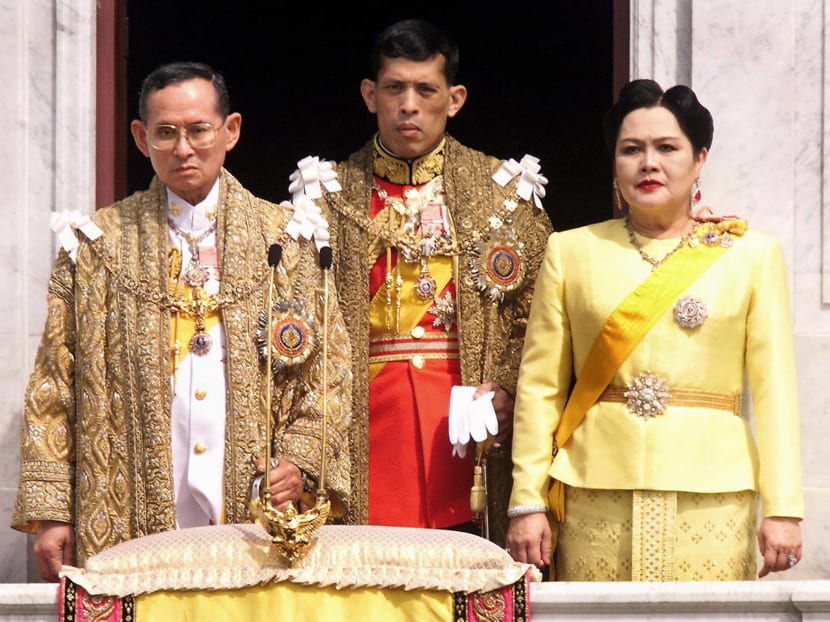
Thai King Bhumibol Adulyadej, Crown Prince Maha Vajiralongkorn and Queen Sirikit appearing at a balcony of Anantasamakom Throne Hall in Bangkok to mark the King's birthday on Dec 5, 1999. Photo: AFP

SINGAPORE — Poised to succeed the late King Bhumibol Adulyadej, who died on Thursday (Oct 13), Crown Prince Maha Vajiralongkorn has big shoes to fill as he looks to heal a country divided in recent years by populist and royalist forces.
His ascension to the throne, announced on Thursday by Thai Prime Minister Prayut Chan-o-cha, will be closely watched for any signs of disruption to the relationship the military enjoys with the palace after the ouster of former premier Thaksin Shinawatra in a 2006 coup.
The only son of the late King and Queen Sirikit, the Crown Prince, 64, was born in 1952 at the Dusit Palace in Bangkok. After completing primary school in Thailand, he spent his teenage years at private colleges in Europe and Australia.
He eventually chose a career in the armed forces, and graduated from the Royal Military College, Duntroon, in Australia and served as a military pilot, taking part in missions against the Communist Party of Thailand in the 1970s.
At 20, he was made heir apparent. He has been married thrice and has seven children — five sons and two daughters — aged between 37 and 11.
His first wife, Soamsawali Kitiyakara, was a first cousin on Queen Sirikit’s side, and the couple were married for 14 years, from 1977 to 1991. After their divorce, she continued to be part of the family and still performs duties as a royal. Their daughter, Princess Bajrakitiyabha, 37, is legally trained and served as Thailand’s ambassador to Austria before she took up a position at the Attorney-General’s Office.
In 1994, the Crown Prince married actress Sujarinee Vivacharawongse, cementing a long-term relationship spanning years. The couple had four sons and a daughter, but the marriage lasted only two years, and they were divorced in 1996. After the break-up, she and her sons were ousted from the royal household and are not permitted to enter Thailand, and are now living in the United States.
Their daughter, however, was spared, though the reasons for this are unclear. Now 29, Princess Sirivannavari Nariratana represented Thailand in badminton in the 2007 SEA Games, a sporting trait she shared with the late King, who donned national colours as part of the country’s sailing teams.
Crown Prince Vajiralongkorn’s third wife, Srirasmi Suwadee, was a consort he married in 2001, when she was 22. The couple had a son, Dipangkorn Rasmijoti, who was once the poster boy for a breastfeeding campaign led by the royal family.
The couple divorced in 2014, and Ms Suwadee was stripped of her royal titles. In 2015, her parents and her extended family were jailed for between two-and-a-half and five years for defaming the monarchy, among other offences.
Apart from his personal life, the Crown Prince’s close bond with his famous poodle, Foo Foo, has also been a subject a much fascination among Thais and foreigners alike.
Princess Sirivannavari had reportedly bought it from the famous Chatuchak market. It was given the rank of air chief marshal in The Royal Thai Air Force. Foo Foo attended important gala dinners with the crown prince and sat with guests as they ate. When it died last year, the pet was cremated after days of Buddhist rites.
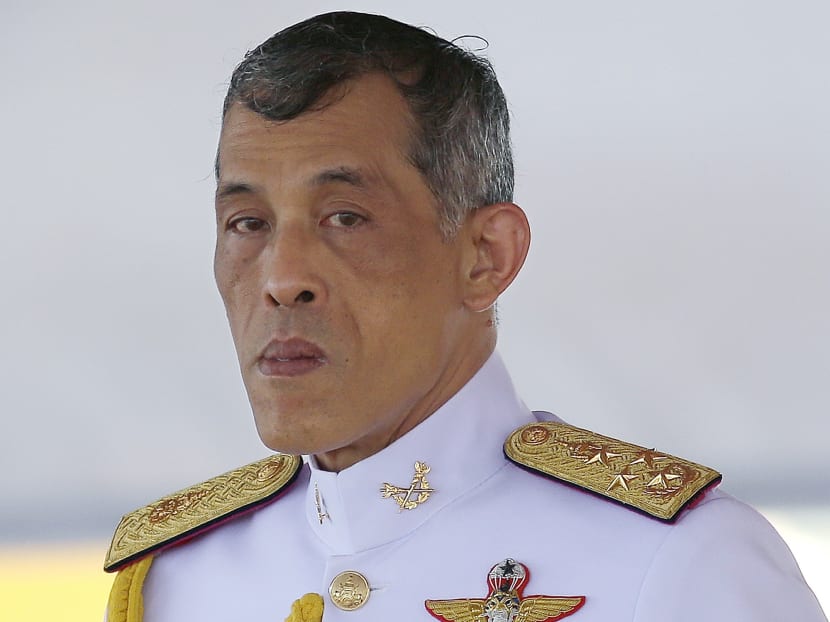
(Photo: AP)
The fascination surrounding the pet reveals a high level of interest in the Crown Prince’s life, especially the years he spent living in Munich in Germany, away from the strictures of palace life.
Over the past two years, however, there has been an effort by the Thai authorities to connect ordinary people to him, In particular, the Bike for Mum and Bike for Dad bicycle rides around Bangkok, led by the prince and his daughters Princess Sirivannavari and Princess Bajrakitiyabha to commemorate the birthdays of Queen Sirikit and the late King, respectively, proved immensely popular.
In interviews with Thai media in the 1980s, the temperamental Crown Prince said he was aware of his colourful image. His own mother had publicly called him “a bit of a Don Juan”.
He said: “When there is a traffic jam, people immediately say it is because of the Crown Prince’s procession,” he told a women’s magazine. “They say so even if they haven’t left home or are abroad.”
On whether he felt hurt to be spoken about as if he were a black sheep, he said: “Sometimes, black sheep serve a purpose, one of helping others. Black sheep help those not-so-white ones seem whiter.”
When asked about the unfavourable press reports over his treatment of his second family, he said he wanted to be a good father and to treat all his children “equally.”
“Our duty is to prepare them, so that they can make the best choices. It’s like a sailing competition. When the whistle blows they will be in the best position to dart off from the starting line.”
As he prepares to turn his back on the privacy he valued, it is unclear how the Crown Prince’s ascension will affect the entrenched influence of palace royalists, say analysts, pointing to his rumoured ties with Mr Thaksin, the former prime minister who is living in self-imposed exile after the 2006 coup. The former premier is a divisive and powerful figure in Thai politics as he is still influential among the populists.
In addition, and perhaps more importantly, there is the broader question of his ability to wield moral authority considering his colourful image and his father’s position as a highly revered unifier in a deeply polarised country.
Stay in the know. Anytime. Anywhere.

Subscribe to our newsletter for the top features, insights and must reads delivered straight to your inbox.
By clicking subscribe, I agree for my personal data to be used to send me TODAY newsletters, promotional offers and for research and analysis.






