
Felda turmoil fails to shake Umno
SINGAPORE — Prime Minister Najib Razak announced a RM1.6 billion (S$508 million) aid package for over 100,000 small Malay landholders last weekend, as he sought to secure a vote bank among a small but important group who has been upset with the mismanagement of state-owned Federal Land Development Authority (Felda).

SINGAPORE — Prime Minister Najib Razak announced a RM1.6 billion (S$508 million) aid package for over 100,000 small Malay landholders last weekend, as he sought to secure a vote bank among a small but important group who has been upset with the mismanagement of state-owned Federal Land Development Authority (Felda).
The announcement is expected to further strengthen ruling United Malays National Organisation’s (Umno) grip on Malay voters in rural heartlands, despite inroads made by opposition Pakatan Harapan (PH) pact.
Interviews with Felda settlers in Johor, which has one of the largest number of Felda settlements in the country, showed that PH may have a tough time breaking Umno’s stranglehold on this bloc of voters.
But not all is lost for the opposition, as there are signs that the children of Felda settlers may be more inclined to vote against ruling Barisan Nasional (BN) coalition amid discontent over Felda as well as other issues including the rising cost of living as well as the implementation of the Goods and Services Tax.
Analysts said the goodies disbursed by the government, which includes RM5,000 (S$1,589) cash for every settler family to providing grants and writing off debts incurred during replanting activities, will make it tougher for PH to win over settlers who are traditionally loyal to Umno due to the party’s legacy and decades long association with them.
“The aid packages look like they may go some way to satisfying ... (settlers’) concerns; if Najib and Umno play it smart and ease the burden of Felda settlers, even temporarily until the election, the strategy may in fact pay off,” said Mr Rashaad Ali, a research analyst at the S Rajaratnam School of International Studies’ Malaysia Programme.
Will the next generation of Felda settlers vote differently?
Mr Asrul Hadi Abdullah, a director with political risk consultancy BowerGroupAsia said: “While the announced incentives will prove to be even more difficult for the opposition to break into Umno’s fortress, however, the second and third generation Felda settlers who do not have a sense of loyalty to the ruling coalition will be key in unlocking this vote bank.”
The announcement has drove the opposition to accuse Umno of buying votes amid rumblings that the general election — due by mid-2018 — could come by the end of this year as Mr Najib seeks to capitalise on an opposition in disarray and expectations that economic growth may slow next year.
That claim however, has been denied by Umno.
Umno youth chief Khairy Jamaluddin told TODAY: “That (accusation) would be true if we did not do anything for Felda settlers over the last few years. But this government has been consistent in helping out the settlers every year.
“We’ve announced incentives, bonuses...so I view this (aid package) very much as part of the continuum of making sure that Felda settlers are well taken care of, their financial burden is reduced, and to ensure that Felda remains a dynamic growth area for Malaysia with the settlers,” added Mr Khairy, who is also the youth and sports minister.
FELDA’S LEGACY
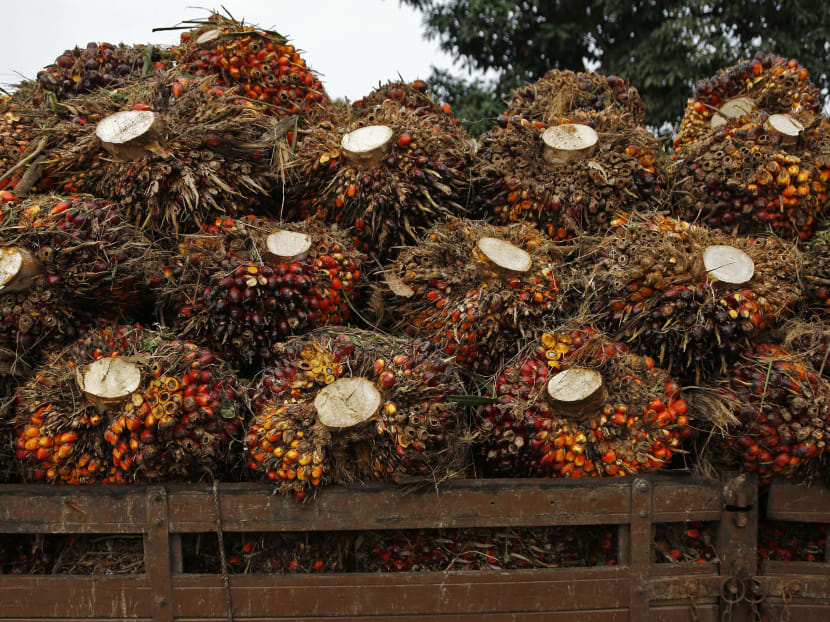
Felda is synonymous with Umno. It was set up by Mr Najib’s father, Malaysia’s second prime minister Abdul Razak Hussein in 1956 in a massive social re-engineering exercise aimed at eradicating poverty and uplifting the lives of poor Malay families through the cultivation of rubber and oil palm.
The scheme now has 112,635 people in 317 settlements nationwide. The states of Pahang and Johor — both Umno strongholds — have the most Felda settlements.
Pahang, which is Mr Najib’s home state, has 115 Felda settlements with a total of 43,123 settlers, while Johor has 73 settlements with 27,641 settlers.
By 1989, Felda was dubbed “one of the most successful land settlement organisations in the world”, and reports were awash with the success stories of settlers leading comfortable lives.
The settlers have time and again voted for BN since the state owned company was set up, extending the ruling coalition’s 60 year grip on power, even as urban Malays have poured into the opposition camp in recent years, alienated by a series of political scandals.
Although they make up less than one per cent of the 13.3 million registered voters nationally, Felda settlers make up the majority of voters in 54 out of 222 parliamentary seats, with many of these seats in remote areas. BN won all but six of those seats in the last general election in 2013.
Dark clouds however started to gather not long after the listing of Felda’s entity, Felda Global Ventures Holdings Berhad (FGV). The listing at the end of June 2012 hogged the news as the world’s second-largest initial public offering (IPO) at US$3.1 billion (S$4.21 billion), behind Facebook.
Many settlers took interest-free loans to purchase 800 units of FGV shares. Since then, FGV’s market capitalisation has plunged by at least 65 per cent, hurting settlers who have also complained about delayed payments from Felda, which buys the palm fruit the settlers produce in their land as well as late assistance payments from the state-backed company.
FGV has also been engulfed in graft probes and a leadership struggle. Malaysia’s anti-graft commission is currently investigating several cases involving FGV and the company’s board ordered Chief Executive Officer Zakaria Arshad to go on leave pending an internal probe.
Mr Zakaria, who denies wrongdoing, has urged the agency to examine alleged improprieties at FGV and said he often disagreed with then-chairman Isa Samad on how the company was managed. Mr Isa resigned last month.
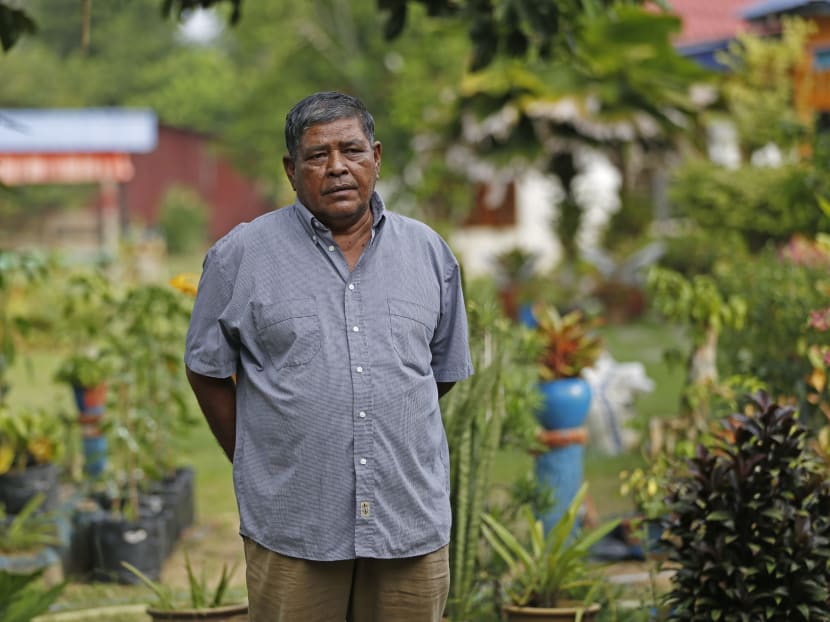
Mr Mahmood Bali, 70, from Felda Pemanis 1 in Johor’s parliamentary constituency of Sekijang said he was both angry and disappointed at the turmoil within Felda and FGV.
“I am already old and at my age, I should be living a comfortable life. I should be going to Mecca to perform my Haj. Instead, I am saddled with debt of over RM140,000 and worst, I can’t even sell the FGV shares (as it is less than one lot, or 1,000 units),” he said.
The debt that Mr Mahmood referred to comprises the money that Felda spent on replanting settlers’ holdings with new trees, as well as a RM1,500 monthly allowance given to them during the three-year replanting period while they waited for the trees to bear fruit. The accumulative sum of the monthly allowances must be returned to Felda once the replanting has been completed.
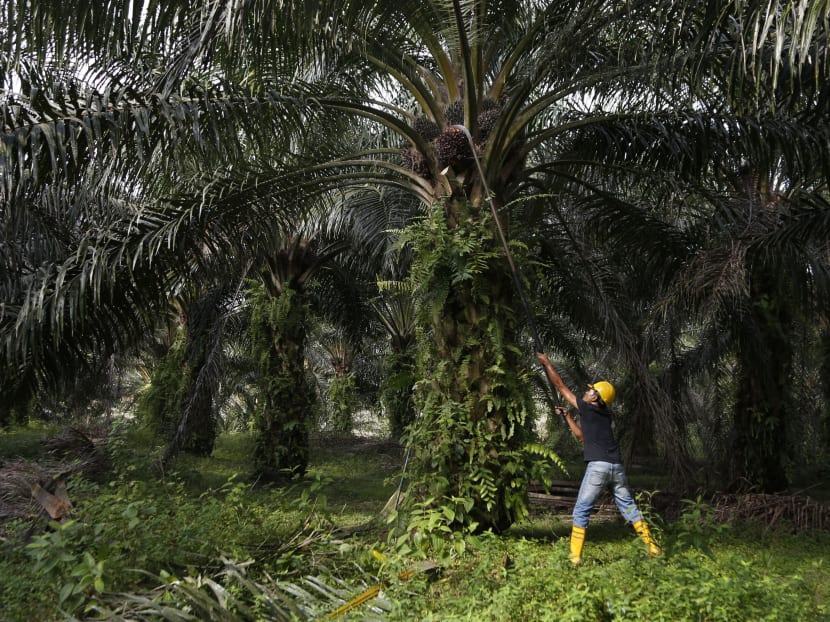
After the trees start producing, settlers could opt to let Felda handle the harvesting while they continue to earn a monthly allowance. Or they could take back their land and harvest it themselves.
During this period, some trees may die, which mean settlers going back to Felda to take an additional loan to replace the trees as well as additional costs that incurred during the process.
Settlers such as Mr Mahmood and Mr Normisan Jumain, 47, from Felda Sungai Sibol in Kulai district accept that they have to repay Felda for the replanting service, which carries an interest of 6.5 per cent, but they question the actual amount of that debt.
“Felda claimed that I owed them RM32,400 but when I request for a statement, they could not give it to me. There was no explanation on how much the monthly instalments that we have paid so far have reduced our debt,” said Mr Normisan.
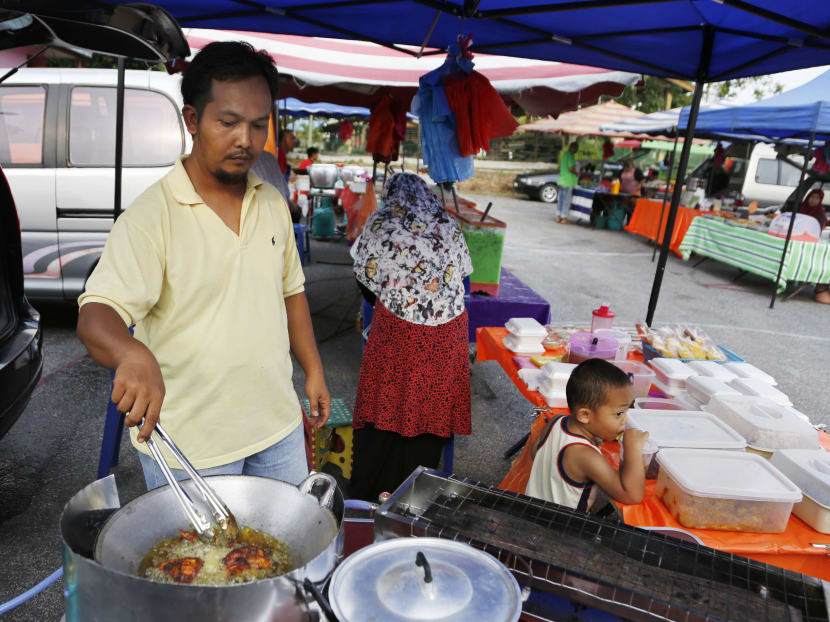
As a result of mounting debt, many, like Mr Mohd Sawaludin Salleh, are forced to take up second jobs to make ends meet.
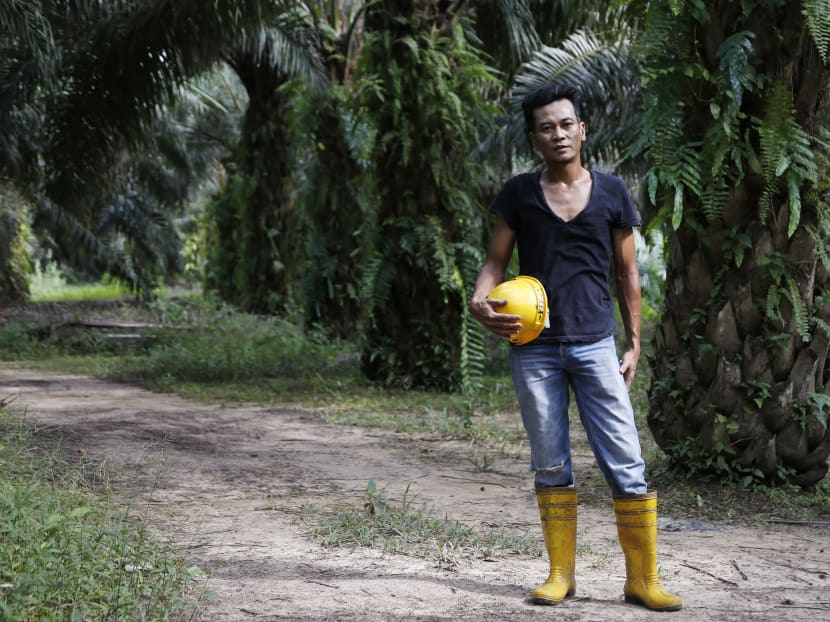
The 37-year-old has been selling food at pasar malam around Kota Tinggi district since early this year as the yield from the 8-acre smallholding he and his siblings inherited from their parents are not enough to sustain his family of six, which includes four children aged between three and 12.
“The income from our holding is divided between my four siblings and I. As a result, I only get about RM400 a month which is not enough to support my family,” he said.
Despite the anger and frustration with Felda, many are still loyal to Umno.
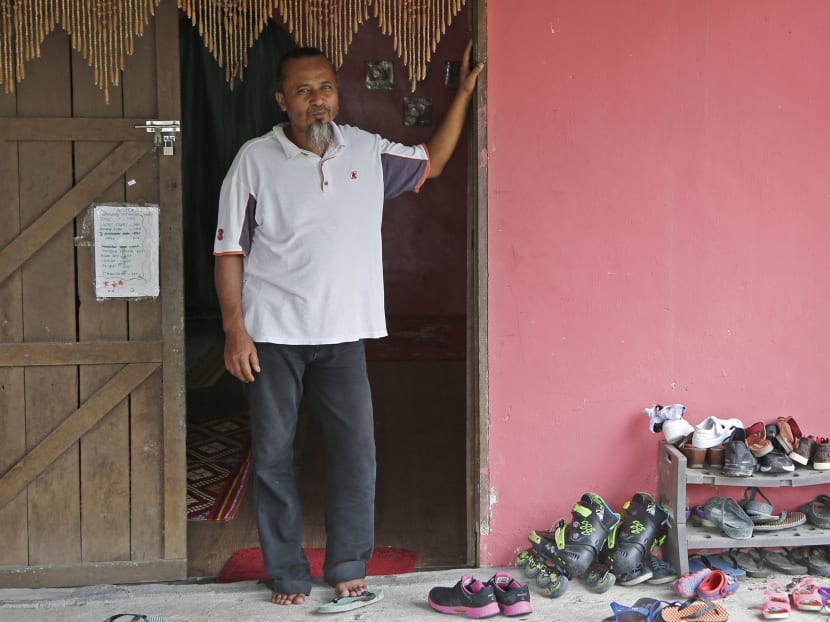
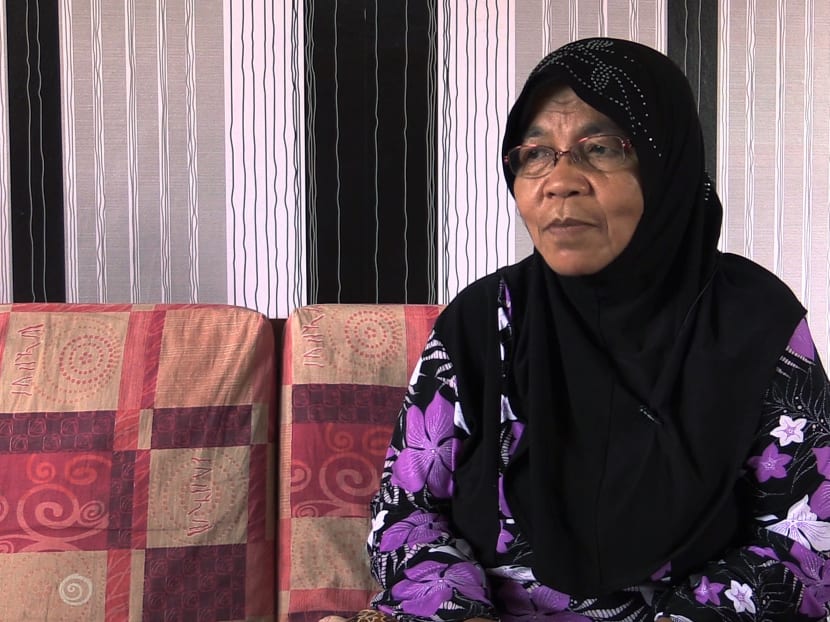
“It’s the sense of gratitude they have towards (Mr Najib’s father) Razak,” and by extension to Umno whom many described as a “parti keramat” or sacred party, for improving their lives, said Madam Fatimah Daud, who moved to Felda settlement of Tenggaroh 1 in Mersing with her husband and children in the early 1980s.
And because Umno has featured prominently in their lives — with many settlers having benefited from Umno’s brand of patronage system of politics and with many of the settlers themselves being party members and grassroot leaders — many fear they will be asked to leave the settlement if they vote for the opposition or be associated with anyone going against the norm.
The rare settlers who have supported the opposition in the past were subtly ostracised from the close-knit community, said Mdm Fatimah who herself was subjected to such behaviour as her son was an activist with the National Felda Settlers’ Children Society (Anak), a group that was closely link to Islamist opposition party Parti Islam Se-Malaysia (PAS), and now PAS splinter group Parti Amanah Nasional (Amanah).
“I was accused of being ungrateful. My neighbours refused to speak to me or even looked my way, as they were afraid of being associated with me. It was painful but I soldiered on. Only after some time they resumed talking to me,” she said.
OPPOSITION INROADS
The settlers’ loyalty to Umno have, in the past, made it hard for PH to penetrate Felda settlements and analysts said the latest package announced by Mr Najib will further bind Felda’s voters with BN.
“Putrajaya will be defended at all costs. Don’t believe the lies spread about Felda settlers not supporting the government,” the prime minister told some 25,000 settlers moments before his Sunday announcement.
The announcement comes a month after the premier announced a RM500 incentive for each Felda settler family to assist them in celebrating Hari Raya plus a FGV dividend of RM280 to each Felda settler.
“The goodies is a strategic move to block the inroads made by PH in Felda settlements. As such, the challenge for PH now is to come up with policies that could capture the votes of settlers. Without attractive offers, PH will have to forget about getting the Felda votes in the coming election,” said Mr Mohd Hisomudin Bakar the executive director for Malaysian think tank Ilham Centre.
Still, PH allies Amanah and Parti Pribumi Bersatu Malaysia (PPBM) claimed they have, in the past few months, made inroads into Felda.
In a clear warning to Umno, PPBM deputy president Muhyiddin Yassin said last week: “Do not dream of winning big again. This is because we received a very clear message from the grassroots in Felda. The support we received from the settlers in those areas was huge.”
Dismissing the latest aid package as a “gimmick to retain its hardcore voters”, Amanah deputy president Salahuddin Ayub told TODAY all PH needs to break Umno’s hold is to gain a 10 to 15 per cent swing vote from the Felda voters in the 54 federal seats. This will result in more than 70 per cent of the 54 seats going to PH, he added.
Already, the opposition can see some positive changes among Felda settlers, which they attribute to the PPBM leaders: former prime minister Mahathir Mohamad and Mr Muhyiddin.
“Previously the opposition parties cannot even muster 200 people to attend their talks near the Felda settlements, and some can’t even enter the areas. But since PPBM teamed up with the opposition, we manage to rally up to 5,000 settlers who are receptive to what we said,” Mr Wan Mohd Shahrir Wan Abdul Jalil, the party’s Felda task force chairman told TODAY.
PH also believes the aid package will not be enough to appease settlers’ anger, as it is only a smokescreen that does not directly address settlers concerns over their mounting debts and the ongoing problems in Felda.
On PH’s part, it has in March proposed a five point resolution to resolve Felda’s woes which includes setting up a Royal Commission of Inquiry to probe the losses suffered by the company, increasing the monthly living allowance of settlers from RM1,500 to RM2,000, creating a mechanism to manage the land of settlers who die without naming an heir and setting up a Felda university.
“To Felda settlers, I call on them to compare the offers made by us and BN. (It’s clear) our proposal is more beneficial in the long run compared to Umno’s which has failed to address and resolve the problems faced by settlers,” said opposition Parti Keadilan Rakyat secretary general Saifuddin Nasution Ismail in a statement on Wednesday.
The opposition’s hope lies in the settlers children who live outside the settlements. These are people who are working in urban and semi-urban centres who have been exposed to alternative views compared to their parents who are still loyal to Umno.
Settler Faisal Arifien Mohd Kassim, 42, who is also an activist with Anak, said the older generation Felda settlers are too complacent with what they have and are afraid of change. The same attitude is prevalent among the younger ones who live within the settlements.
This is especially expected to be further entrenched as FGV embarked on a nationwide recruitment drive among younger settlers to take up jobs in its plantation and security services arms
But to wholly improve their lives, “change has to come from within,” said Mr Faisal Arifien.
“Those residing within the settlements are not exposed to alternative views or what is happening outside. As such, the children of settlers who are working outside has a duty to come back and spread the message of change.” WITH AGENCIES
Stay in the know. Anytime. Anywhere.

Subscribe to our newsletter for the top features, insights and must reads delivered straight to your inbox.
By clicking subscribe, I agree for my personal data to be used to send me TODAY newsletters, promotional offers and for research and analysis.