
Indonesian presidential poll may be decided by educated swing voters
JAKARTA — The increasingly tight battle for votes in the Indonesian presidential race could be decided by well-educated and middle-class Indonesians, who comprise the bulk of undecided voters, analysts have said.
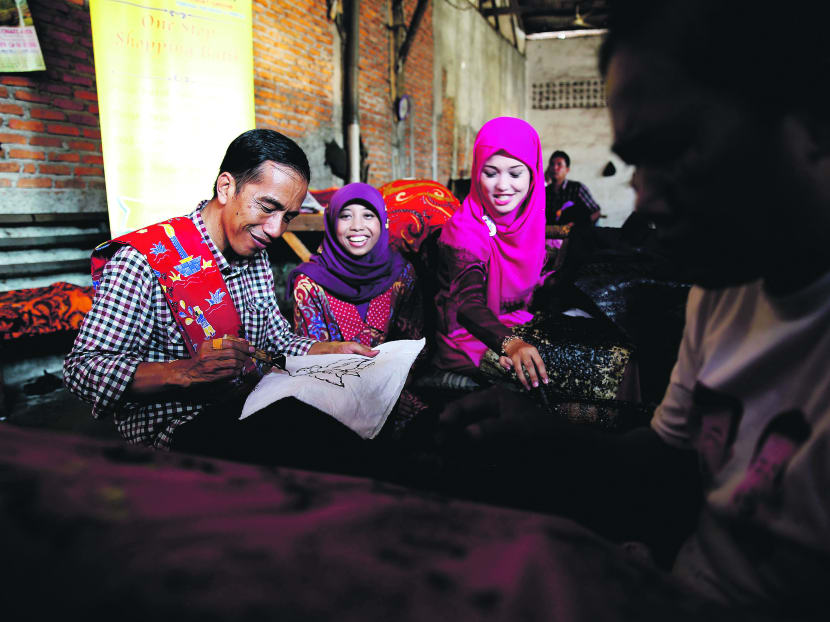
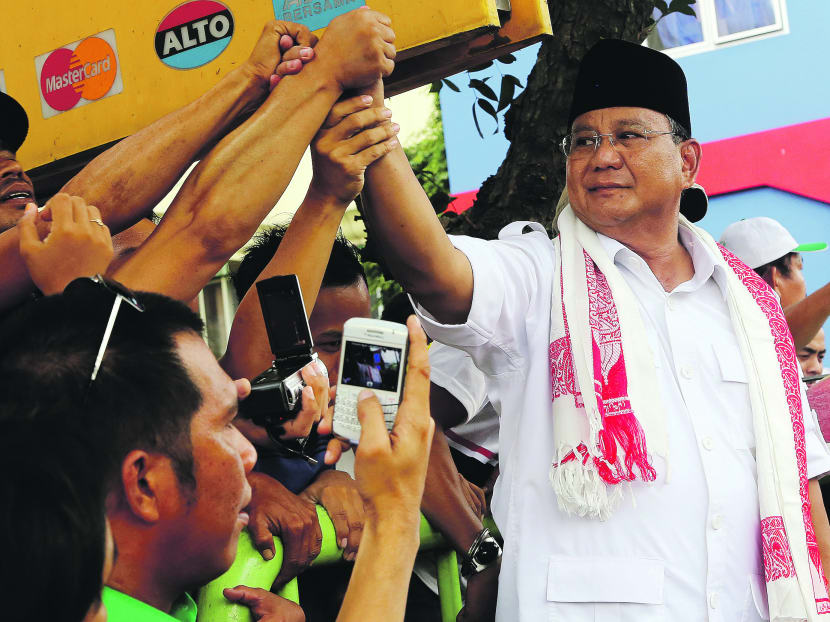

JAKARTA — The increasingly tight battle for votes in the Indonesian presidential race could be decided by well-educated and middle-class Indonesians, who comprise the bulk of undecided voters, analysts have said.
And the two-horse race will probably go down to the wire, with swing voters making their decision just before they head to the polls on July 9.
Recent opinion polls showed the margin separating front-runner Joko “Jokowi” Widodo and his rival Prabowo Subianto has narrowed to as low as 6 to 7 per cent, in what is shaping up to be the tightest presidential election in the country’s history. About 10 per cent of voters are still undecided.
“Swing voters normally comprise educated society and, economically, they are okay. They are rational and think logically about their choice,” said Dr Siti Zuhro from the Indonesian Institute of Sciences.
Undecided voters tend to adopt a wait-and-see approach, Dr Zuhro added, and they are likely to make their decision after the fifth and final televised presidential debate on July 5, which is the last day of campaigning before a three-day cooling-off period.
Political analyst Bawono Kumoro, a researcher at think-tank The Habibie Centre, similarly felt middle-class Indonesians, who are well-educated and well-informed, would influence the outcome. “They will (scrutinise) both candidates in all aspects and make a decision at the last minute,” he said.
Undecided voters in the Indonesian capital of Jakarta whom TODAY spoke to cited both candidates’ lack of appeal and few differences between their policy proposals as reasons they had yet to decide who to vote for.
Said interior designer Andri Malik, 39: “I’m still undecided as I still don’t trust the people behind the candidates. Both are supported by old crooks and military generals with blood on their hands. I would like to see the rest of the presidential debates to validate my choice.
“I want to vote for (those) who bring real changes for the people, not for the previous elites; (those) who would manage state money for the good of the people, not for the oligarchs,” he added.
Some voters TODAY spoke to also said they were apathetic about the election and would not be voting.
Mr Widodo, the Jakarta Governor whose populist and can-do style has earned him much support, has led former army general Prabowo in opinion polls for months. But Mr Prabowo’s slick campaigning in past weeks and a recent smear campaign against Mr Widodo by unknown people questioning his religious and family background may have dented his popularity.
To become President, a candidate must win more than 50 per cent of the national vote and 20 per cent of the vote in more than half of Indonesia’s 34 provinces. If either condition is not met, a run-off will be conducted.
This is only the third time Indonesians will be directly electing their President since the army-backed rule of Suharto ended in 1998. The voter turnout for the presidential election is expected to be higher than the 75 per cent in the April legislative polls, partly because voters have greater awareness of the presidential candidates.
“They also know this election matters more — the future of the country is, for just that few seconds it takes to vote, in their hands,” said Mr Keith Loveard, a senior risk analyst at Jakarta-based Concord Consulting.
With the close electoral battle, some observers have raised concerns about the poll dividing the nation.
“This may prove to be the closest presidential election and I pray it will be peaceful after July 9, as both sides may not want to accept the outcome,” said National University of Singapore political scientist Bilveer Singh.
Stay in the know. Anytime. Anywhere.

Subscribe to our newsletter for the top features, insights and must reads delivered straight to your inbox.
By clicking subscribe, I agree for my personal data to be used to send me TODAY newsletters, promotional offers and for research and analysis.






