
Legality of churches does not arise under constitution, says interfaith council
KUALA LUMPUR — A church does not have to be registered in order to exist and operate, the national interfaith council said today (April 22), citing Article 11 of the Federal Constitution on freedom of religion.
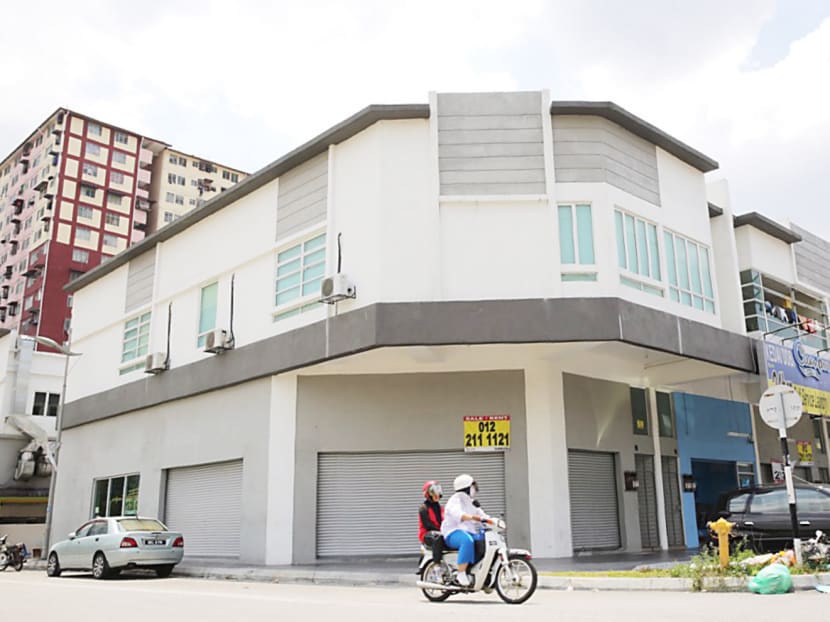
The new church in Taman Medan without the cross it had installed earlier. The cross was taken down by church leaders a few hours after the protest. Photo: Malay Mail Online

KUALA LUMPUR — A church does not have to be registered in order to exist and operate, the national interfaith council said today (April 22), citing Article 11 of the Federal Constitution on freedom of religion.
The Malaysian Consultative Council of Buddhism, Christianity, Hinduism, Sikhism and Taoism (MCCBCHST) said there was nothing in the constitution requiring a church to register its place of worship.
“Article 11(3) states that each religion has a right to acquire property and to regulate their own affairs without any approval,” MCCBCHST President Jagir Singh told The Malaysian Insider.
“So the question of illegality does not, at all, (or) arise here.”
Mr Jagir was responding to a statement by the Petaling Jaya City Council (MBPJ) which said the church in Taman Medan, Petaling Jaya that was forced to remove its cross after a protest against it on Sunday was illegal.
MBPJ public relations officer Ms Zainun Zakaria had said the corner shop lot unit, which the church occupies, did not have a licence to operate as a place of worship as required under Act 133 Section 70 (12).
He said the church did not have a permit from the council to put up a cross on its facade, and needed one to do so.
But Mr Jagir said that Article 11 meant that the act of worship, even if done at a commercial building, was not illegal.
“I don’t know whether we require a licence to be able to pray, I don’t think you do,” the lawyer said in jest.
“Worship can be done in every house, in every shop in commercial areas. You don’t need special permission for that. Those who have shops have altars in their premises and pray, does this mean they require a licence to do so?”
Christian Federation of Malaysia Executive Secretary Tan Kong Beng concurred with Mr Jagir, and told The Malaysian Insider that there was a general misconception that churches had to be registered before they could operate.
“This is not true. They don’t actually have to be registered. But registration does help facilitate buying land, setting up bank accounts and other purposes,” he said.
“There are different avenues of registration as well. Some churches go to the ROS (Registrar of Societies), some to the Companies Commission of Malaysia, some through a trust deed, and there are others who register as non-profit companies,” said Mr Tan.
The Selangor state government put the matter to rest yesterday when its State Committee on Non-Islam Affairs (Hesi) said that churches were allowed to operate in commercial premises without a permit and that they only needed to notify the committee.
This has been the case since the previous administration, according to a statement issued by Hesi Co-Chairperson, Ms Elizabeth Wong, yesterday.
“MBPJ Councillors also clarified that since 2008, the previous state committee on Non-Islam Affairs (then known as State Committee on Non-Islam Places of Worship) had allowed churches to operate in commercial premises or offices without the need for application of permits, but only by way of notification to the committee.
“This is based on the principle that Article 11 of the Federal Constitution embodies freedom of worship.”
As such, Mr Wong, who is Bukit Lanjan assemblyperson and a Selangor executive committee member, noted that the MBPJ statement was inaccurate.
“There is no such policy put forward by the state committee, Hesi. A notification to Hesi committee suffices. And if any local councils have any issues or questions, they are to refer back to the Hesi committee.”
On Sunday, some 50 people gathered outside the new church in Taman Medan to demand that the cross affixed to the building be removed.
One of the United Malays National Organisation (UMNO) leaders present at the protest was Mr Abdullah Abu Bakar, the older brother of Inspector-General of Police (IGP) Khalid Abu Bakar.
The protesters said the presence of a cross in a Muslim-majority area posed a challenge to the religion and could sway the faith of youth.
The cross was taken down by church leaders a few hours later.
MCCBCHST’s Mr Jagir said that MBPJ’s contention on the legality of the church had no bearing on the actual protest itself.
“For calling for the cross to be removed and forcing the church to do so, that is an immediate offence under Section 298 of the Penal Code which is uttering words with the intent on hurting the religious feelings of another.
“It is also an offence under the Sedition Act,” the lawyer added.
Mr Jagir said the protesters had no authority or court order to make the church remove the cross, which is a religious symbol to the Christians.
“So what they did was illegal and this is notwithstanding the church is illegal or not,” he added. THE MALAYSIAN INSIDER
Stay in the know. Anytime. Anywhere.

Subscribe to our newsletter for the top features, insights and must reads delivered straight to your inbox.
By clicking subscribe, I agree for my personal data to be used to send me TODAY newsletters, promotional offers and for research and analysis.






